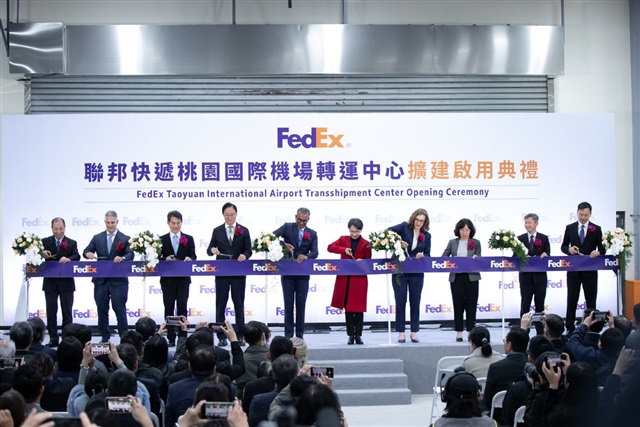
Taiwan’s government-run free trade zone is seeing a sharp jump in air cargo moving through Taoyuan International Airport, a clear sign of how quickly the global artificial intelligence boom is reshaping supply chains. As demand for AI servers and advanced computing hardware accelerates worldwide, Taiwan is stepping even deeper into the center of the action—moving more high-value components through its busiest air hub than in the past.
At the heart of the surge is a growing flow of premium memory chips and other key parts that power AI systems. These components are being imported in large volumes and then handled through the free trade zone’s streamlined logistics setup, which is designed to speed up processing, reduce delays, and keep valuable shipments moving efficiently. With AI hardware often built on tight schedules and fast product cycles, air freight has become the preferred choice for time-sensitive deliveries—especially for smaller, expensive items like advanced chips.
This cargo spike points to a bigger story: Taiwan’s expanding role in the global AI supply chain is no longer just about manufacturing and assembly. It’s also about logistics and rapid distribution. As companies race to build and ship AI infrastructure—data center hardware, accelerators, high-bandwidth memory, and server-grade components—airports that can support high-security, high-value cargo are becoming critical. Taoyuan International Airport, supported by the free trade zone’s operations, is increasingly positioned as a key gateway for moving AI-related technology in and out of the region.
For businesses watching the AI hardware market, the rise in air cargo activity is a practical indicator of real-world demand. When shipment volumes climb for products like memory chips, it often reflects broader momentum in AI data center expansion, cloud investment, and next-generation computing rollouts. It also highlights how supply chains are adapting: speed, reliability, and secure handling matter as much as production capacity when the products being shipped are both expensive and essential.
As AI continues to drive global tech investment, Taiwan’s logistics network—especially the free trade zone connected to Taoyuan International Airport—looks set to remain a vital link. The current cargo surge suggests the island is not only helping make the parts that power AI, but also helping move them quickly to where the world needs them next.