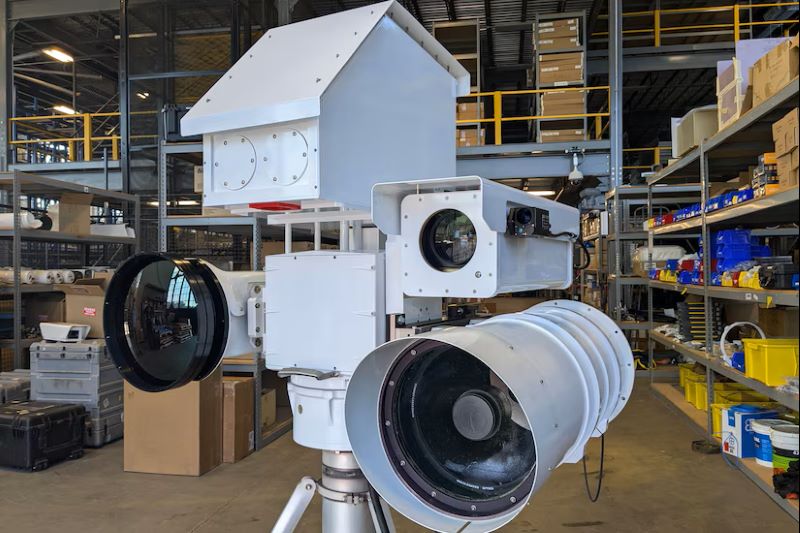
In an exciting leap forward for national security, state-of-the-art AI-enabled cameras are revolutionizing airspace monitoring across the Washington, D.C. area. This new level of surveillance comes as part of an extensive upgrade to the integrated air defense system originally set up post-9/11. Known as the Enhanced Regional Situational Awareness (ERSA) system, this technology is being diligently overseen by the Eastern Air Defense Sector in New York, ensuring a vigilant eye on potential airborne threats.
Air Force Master Sgt. Kendrick Wilburn, a key figure in this operation, emphasizes the enhanced capabilities of the system. This involves verifying radar data through advanced visual means, thereby augmenting the security checks around the National Capital Region (NCR).
The adoption of these new cameras marks a significant shift from the older models. Designed by the innovative tech company Teleidoscope, the cameras provide both electro-optical and infrared views, thus extending visual ranges and improving image clarity significantly. These upgrades are not just a technological refresh; they represent a massive leap from standard to high definition, with impressive features like IR colorization and red-green-blue filters to highlight targeted objects through their heat signatures.
These cameras also come equipped with a laser range finder to calculate an object’s altitude and distance safely. Even more impressive is the integration of machine-learning elements, with auto-tracking that adjusts and improves with use.
Despite some initial growing pains, the system demonstrates an impressive ability to track small, fast-moving objects like birds—a task that older systems struggled with. Marine Corps Maj. Nicholas Ksiazek, a project manager for this upgrade, compares the advancement to the jump in smartphone camera quality over the years, highlighting how the new system makes monitoring far more efficient for operators.
A particularly fascinating feature is the visual warning system, which uses lasers to alert non-compliant aircraft, urging them to communicate with the FAA and adjust their course. This system acts as a cost-effective measure compared to deploying military aircraft for interception.
Teleidoscope’s cameras stood out among competitors due to their sophisticated software enhancements. The Defense Innovation Unit was instrumental in facilitating the rapid deployment of this cutting-edge technology, with funding from the Air Force and specialized programs to expedite procurement.
Currently, two cameras are operational, with plans to steadily increase their presence over the coming years, thus ensuring a continually strengthened defense over the nation’s capital. This advancement not only signifies a technical upgrade but also a bold step toward a safer airspace, leveraging AI and machine learning to stay ahead of potential threats.