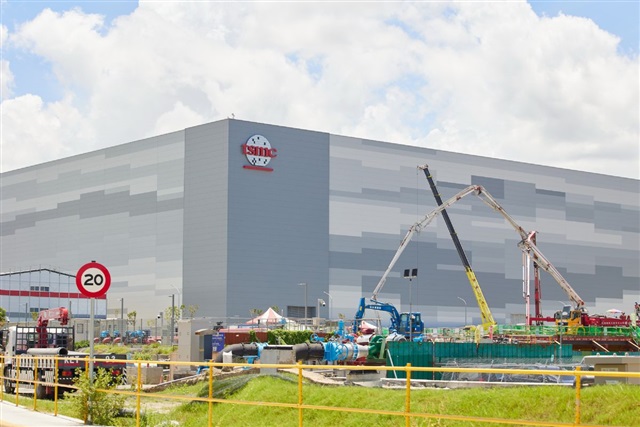
AI Boom Reshapes the Chip Industry as TSMC Faces a New Competitive Era
The global semiconductor industry is entering one of its most important turning points in decades. For years, advanced chip manufacturing has been largely defined by one company: TSMC. Its cutting-edge process technology, massive production capacity, and deep partnerships with leading tech firms made it the central force behind the world’s most powerful processors.
Now, that dominance is being tested in new ways.
The rapid rise of artificial intelligence is changing demand across the entire chip market. AI data centers, advanced GPUs, custom accelerators, and high-performance computing chips are driving unprecedented pressure on global foundries. Companies no longer want only smaller and faster chips; they also need reliable supply, advanced packaging, energy efficiency, and manufacturing partners that can scale quickly.
This shift is creating room for rivals to challenge TSMC’s long-standing lead.
Artificial intelligence has become the strongest growth engine for the semiconductor sector. As cloud providers, chip designers, and enterprise technology companies race to build AI infrastructure, demand for advanced nodes and packaging technologies continues to surge. TSMC remains a major beneficiary of this trend, especially because many of the world’s leading AI chipmakers rely on its production capabilities.
However, the same AI boom that strengthens TSMC also attracts more competition. Governments and major technology companies are investing heavily in local chip production to reduce reliance on a single manufacturing hub. The United States, Europe, Japan, South Korea, and other regions are pushing semiconductor expansion through subsidies, partnerships, and new fabrication plants.
Geopolitical pressure is also playing a larger role. Semiconductor supply chains are now viewed as national security priorities, not just business operations. This has encouraged countries to build more resilient chip ecosystems and reduce exposure to potential disruptions in East Asia.
For TSMC, this means the company is no longer competing only on technology. It must also navigate political expectations, global expansion costs, customer diversification, and rising demands for regional production.
Another major change is the growing importance of advanced chip packaging. In the AI era, performance is not determined only by transistor size. Technologies that combine multiple chiplets, memory stacks, and specialized processors into one powerful package are becoming essential. This has opened another competitive front where foundries, memory makers, and packaging specialists are all racing to gain an advantage.
TSMC is still widely regarded as the leader in advanced chip manufacturing, but its challengers are becoming more aggressive. Competitors are investing in next-generation fabrication technologies, improving yields, and targeting large customers that want alternative suppliers. Even if TSMC keeps its technological edge, the market may become more balanced as customers seek backup options and governments support domestic manufacturing.
The pressure is especially visible in the race for AI chips. Demand is so high that capacity constraints can shape product launches, cloud expansion plans, and hardware availability. Companies designing AI processors want guaranteed access to production lines, and that gives emerging manufacturing alternatives a stronger opportunity to win business.
Still, catching TSMC will not be easy. Advanced semiconductor manufacturing requires years of experience, enormous capital investment, precision engineering, and a reliable supplier network. TSMC’s strength comes not only from its technology but also from its execution. The company has built a reputation for delivering high-volume production at leading-edge nodes with strong yields, something very few rivals can match.
But the landscape is no longer as predictable as it once was.
AI is pushing the chip industry into a new phase where speed, scale, supply security, and packaging innovation matter as much as raw process leadership. TSMC remains at the center of the market, yet the forces surrounding it are changing quickly. The company’s first real challenge may not come from a single competitor, but from a global shift toward diversified manufacturing and strategic independence.
As demand for AI hardware continues to grow, the semiconductor industry could become more competitive, more regionalized, and more politically important than ever before. TSMC is still the company to beat, but the era of unchallenged dominance may be giving way to a more complex and contested future for advanced chip production.