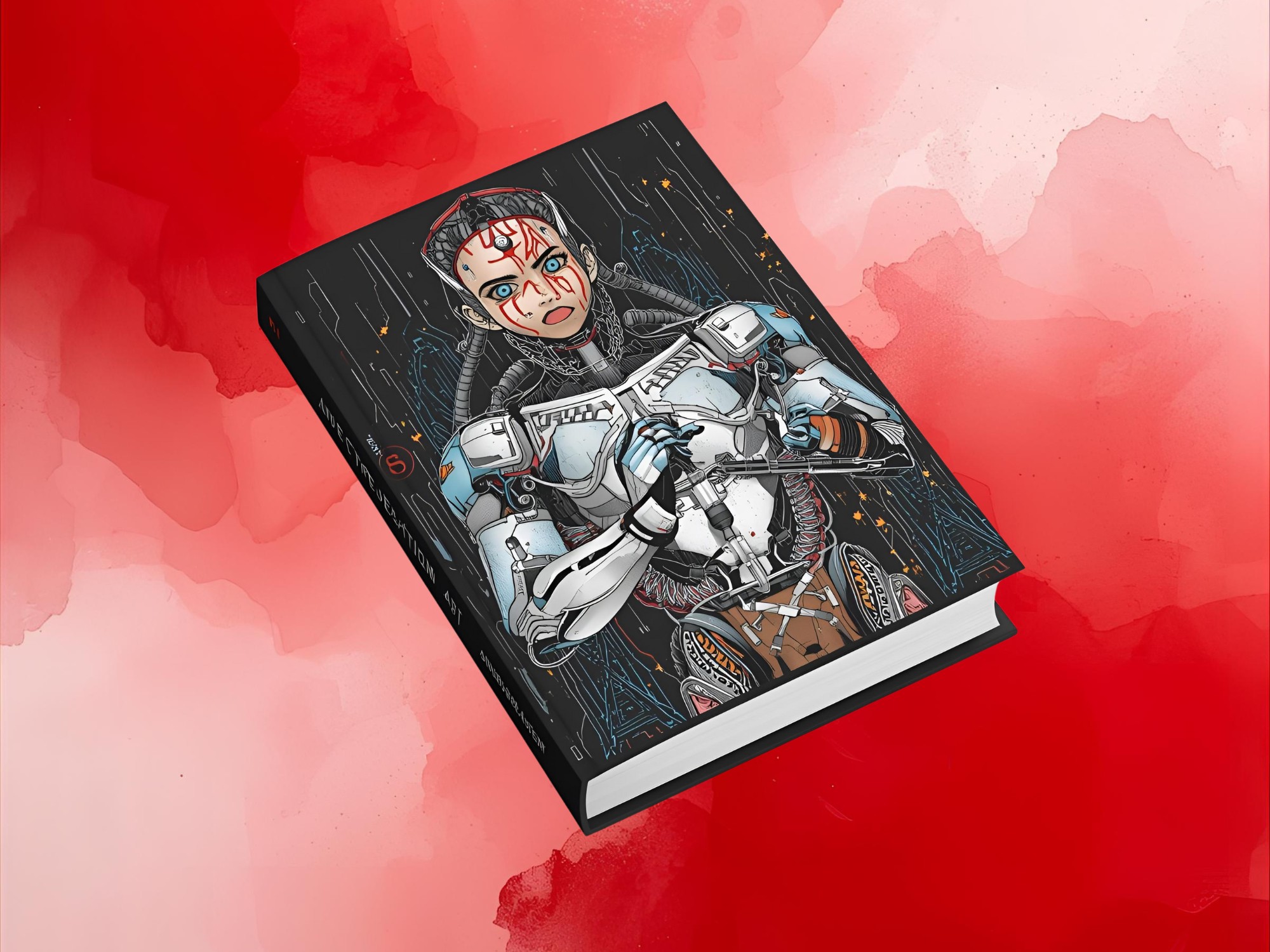
Japan may be about to test the limits of AI and copyright law in a way the world hasn’t seen before. According to local reports, police in Chiba Prefecture have recommended criminal charges against a 27-year-old who allegedly used Stable Diffusion to recreate a recognizable image and then sold the result as a book cover. If prosecutors move forward, it could become the first known case in Japan where an individual user—not an AI company—is targeted over an AI-generated image.
Up to now, most high-profile copyright disputes around generative AI have focused on the developers behind the tools. This case shifts attention to the person entering the prompts, raising urgent questions about user intent, the line between inspiration and replication, and what counts as unlawful copying in the age of machine-generated art.
Reports say the man submitted roughly 20,000 prompts to Stable Diffusion and selected one image for commercial use. A legal scholar cited in the coverage argues that the volume of prompts and the alleged specificity of instructions could be central to the case, especially if the goal was to reproduce a particular copyrighted work. That makes intent a potential focal point: did the user aim to closely mimic a protected image, or did the output merely resemble it by chance or genre style?
Global context shows how unsettled this terrain remains. Courts and agencies have reached differing conclusions about AI-generated imagery. In the United States, judges and the Copyright Office have repeatedly signaled that purely machine-created works aren’t eligible for copyright protection, complicating some infringement theories. Meanwhile, lawsuits targeting Stable Diffusion and similar systems have faced an uphill battle; some claims have not delivered the outcomes plaintiffs hoped for. In the United Kingdom, attempts to prevail against open-source models have so far struggled to secure a decisive win. None of that, however, settles the narrower question at issue here: whether a user’s deliberate attempt to recreate a specific copyrighted image can trigger criminal liability under Japanese law.
Why this case matters
– It targets a user, not a platform, highlighting individual responsibility in AI-assisted creation.
– It could hinge on evidence of intent, such as prompt history and the degree of similarity to the original.
– A conviction or even a formal indictment would set a powerful precedent for artists, publishers, and anyone selling AI-generated content in Japan.
– The outcome may influence how marketplaces, printers, and retailers vet AI-derived covers, posters, and merchandise.
Possible legal paths
– Prosecutors pursue charges emphasizing deliberate reproduction of a protected work.
– The case is narrowed or dropped if similarity and intent can’t be proven to a criminal standard.
– A negotiated outcome leads to guidance rather than a sweeping court ruling.
– A court decision creates a framework for how Japan will treat user-directed replication with generative models.
What creators and businesses should consider now
– Keep clear records of your creative process, including prompts and edits.
– Use robust reference and style guides that avoid direct copying of specific works.
– Consider image provenance tools and content authenticity indicators where available.
– When in doubt, seek licenses or choose references that don’t target a single identifiable, copyrighted source.
– Review platform rules and local laws before selling AI-generated visuals.
However this case unfolds, it underscores a turning point: as generative AI becomes a mainstream creative tool, courts are starting to probe not just what the technology can do, but how people use it. Japan’s decision on whether to prosecute—and any subsequent ruling—could reshape best practices for prompt engineering, clarify the risks of near-replication, and influence future policies far beyond its borders.