AI demand is reshaping the memory industry at a speed few expected, and the latest numbers show just how powerful the shift has become. The global NAND flash market posted record revenue in Q1 2026, driven by massive demand from AI data centers, enterprise storage, and high-capacity SSD deployments. At the same time, the traditional PC market is struggling under higher component costs and softer consumer demand.
According to market data from Counterpoint Research, global NAND revenue surged 3.5 times year over year in the first quarter of 2026, reaching about $46 billion. That figure is especially notable because Q1 2026 alone surpassed the entire NAND revenue total recorded for full-year 2023.
The main force behind this growth is the AI infrastructure boom. As companies race to build and expand data centers for agentic AI workloads, demand for high-capacity storage has climbed sharply. These systems require enormous amounts of fast, reliable memory to handle petabytes of data, model training, inference, and real-time enterprise applications.
Enterprise storage has become the strongest growth engine in the NAND market. In Q1 2026, enterprise demand accounted for around 43% of total NAND revenue. Analysts expect that share to climb beyond 60% by the end of the year if current AI server and data center deployment trends continue.
NAND prices have also been rising as demand outpaces supply. That price increase is helping suppliers generate record revenue, even as some consumer markets remain under pressure. The result is a memory market increasingly dominated by AI infrastructure rather than traditional PCs, smartphones, or consumer electronics.
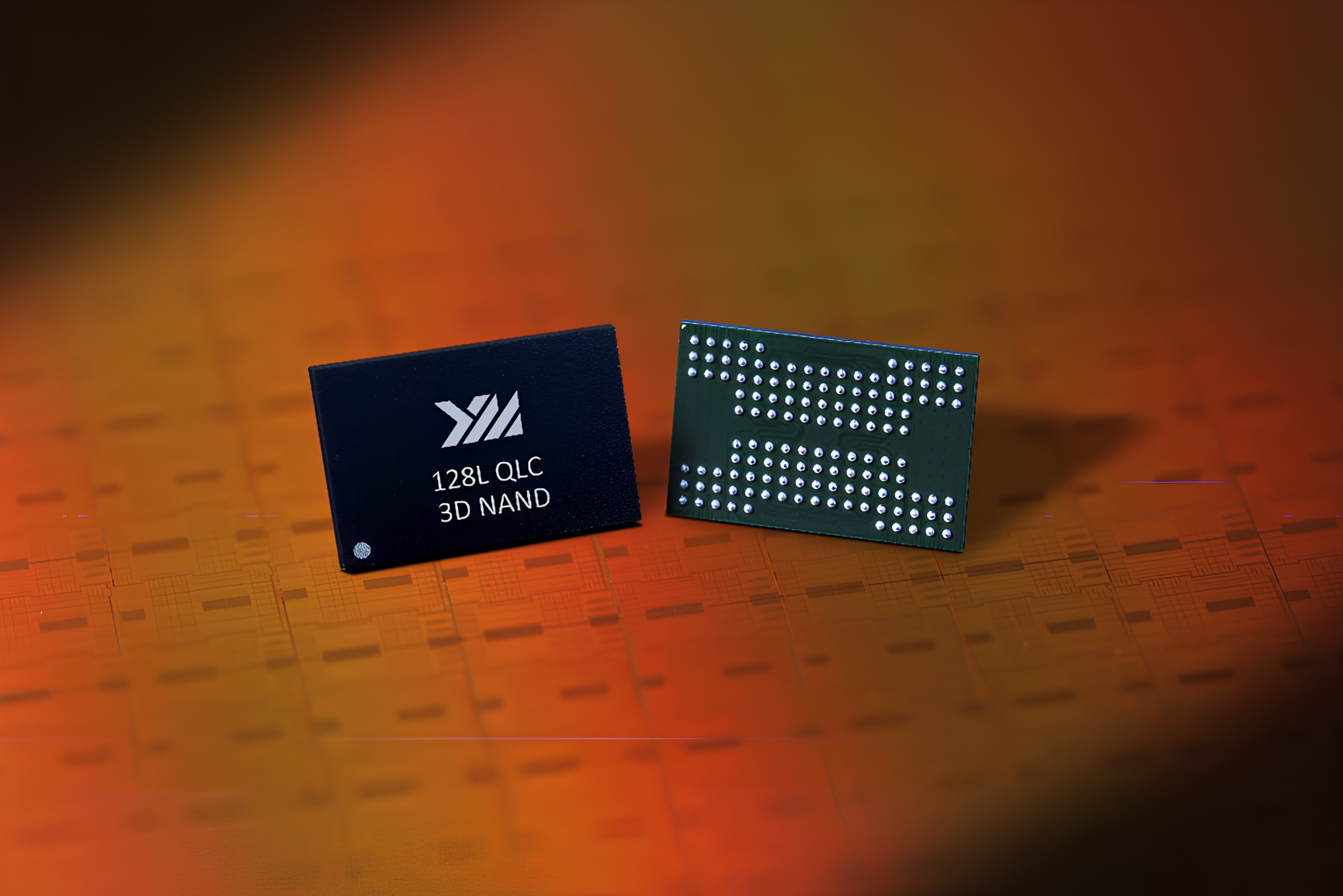
Samsung remained the leading NAND supplier in Q1 2026 with a 29% revenue share. SK Hynix followed with 18%, while Kioxia, Micron, and SanDisk each held shares in the low-to-mid teens. However, one of the biggest developments came from China’s YMTC, which climbed to a 13% global NAND revenue share.
YMTC’s growth is significant because it reflects the rapid rise of Chinese memory manufacturers in a market historically dominated by South Korean, Japanese, and American companies. The company posted 246% year-over-year growth, allowing it to narrow the gap with established NAND suppliers such as Micron and SanDisk.
This momentum is part of a broader expansion push in China’s semiconductor memory sector. YMTC is reportedly preparing for a potential public listing in China, while CXMT continues to gain attention for its fast-growing DRAM business. Both companies are pursuing aggressive production expansion strategies, including new manufacturing facilities designed to significantly increase wafer output over the coming years.
For the global NAND industry, this creates a competitive but complicated environment. Demand is extremely strong, pricing remains elevated, and supply is tight. However, new fabs take years to build and ramp up. Meaningful supply relief may not arrive until around 2029 or 2030, when the next wave of DRAM and NAND manufacturing capacity becomes fully operational.
While memory suppliers are benefiting from the AI boom, the PC market is facing a much tougher outlook. IDC estimates that global PC shipments will decline by 11.3% in 2026. The market is expected to remain weak in 2027, with only gradual signs of recovery appearing between 2028 and 2029. A more complete rebound is not expected until around 2030.
Global PC shipments are projected to fall to roughly 260 million units, down from more than 290 million units in the previous year. Higher DRAM and NAND prices are one of the major reasons behind this decline, as they increase the cost of laptops, desktops, and other personal computing devices.
The industry is still trying to adapt. New platforms are expected to help refresh demand, including Apple’s upcoming MacBook Neo and Intel Wildcat Lake-based laptops. Devices such as future Dell XPS 13 models may compete directly in the premium thin-and-light segment, offering updated performance and efficiency improvements.
Qualcomm is also preparing its entry-level Snapdragon C-series chips, aimed at more affordable laptops and budget-conscious users. These products could help PC makers maintain competitive pricing in a market where memory and component costs remain high.
Even with these new platforms, the broader PC recovery will likely depend on memory supply normalization. As long as AI data centers continue absorbing large amounts of NAND and DRAM capacity, PC manufacturers may continue to face elevated prices and tighter margins.
The current market shows a clear split: AI-driven enterprise storage is booming, while consumer PC demand is under pressure. NAND suppliers are enjoying record revenue, Chinese memory makers are gaining ground, and the industry is entering a new era where AI infrastructure may define the direction of memory technology for years to come.