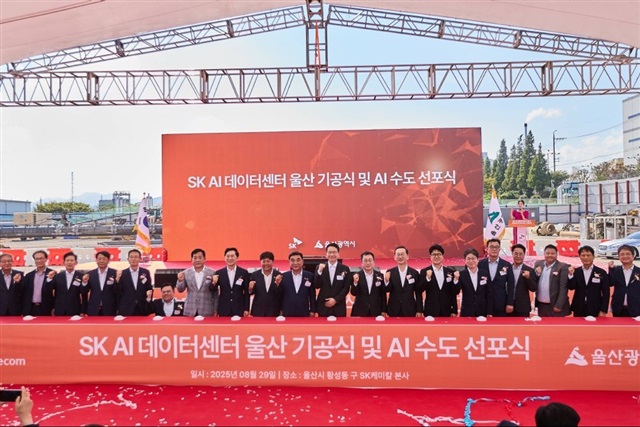
SK Telecom breaks ground on massive AI data center in Ulsan after major cyberattack
South Korea’s leading telecom provider is moving fast to strengthen its digital backbone. In the wake of a significant hacking incident, SK Telecom (SKT) has begun building a large-scale AI data center in Ulsan, signaling a decisive push to expand artificial intelligence capabilities while hardening its cybersecurity posture.
The new facility underscores SKT’s strategy to accelerate AI-driven services and deliver more resilient, secure infrastructure for consumers and businesses. By investing in a next-generation data hub, the company aims to support rapid growth in AI training and inference workloads, bolster network reliability, and reduce recovery times in the event of future disruptions.
Why this matters now
– Reinforced security and resilience: Following the cyberattack, SKT is prioritizing infrastructure designed to enhance threat detection, response, and recovery. An AI-focused data center can power advanced analytics and real-time monitoring to help identify anomalies faster and contain incidents more effectively.
– Scaling AI services: Demand for intelligent applications is rising across cloud, mobile, and enterprise environments. Centralizing compute-intensive AI workloads in Ulsan positions SKT to improve performance, reduce latency, and support a broader ecosystem of AI tools and services.
– National digital competitiveness: Building a state-of-the-art facility in South Korea strengthens the country’s data sovereignty and AI innovation pipeline, while creating a foundation for future growth across telecom, manufacturing, and smart city initiatives.
What the Ulsan data center is expected to deliver
– High-performance infrastructure to handle training and inference for large AI models and next-gen applications
– Enhanced reliability and business continuity with robust backup, recovery, and failover capabilities
– Capacity to support 5G- and future 6G-enabled services that rely on low-latency, AI-powered decisioning
– A scalable platform for enterprises looking to deploy secure AI workloads within South Korea
A turning point after the hacking incident
The timing of this build signals a broader reset. Beyond immediate recovery, SKT’s focus is on long-term resilience: modernizing core systems, deploying more automated defenses, and integrating AI throughout its security and network operations. For customers, that translates to more dependable connectivity and faster restoration in the face of cyber threats. For enterprise partners, it promises stronger compliance controls and a more predictable performance environment for mission-critical applications.
What to watch next
– Construction milestones as SKT brings the Ulsan site online and ramps capacity
– New AI-driven services for consumers and businesses, from smarter network management to enhanced cloud offerings
– Continued investments in security, reliability, and localized AI compute to meet rising demand
Bottom line
SK Telecom’s new AI data center in Ulsan is both a response to a recent cyberattack and a forward-looking bet on the future of AI infrastructure in South Korea. By expanding its AI footprint and focusing on resilience, SKT is positioning itself to deliver faster, safer, and more intelligent digital services—while rebuilding trust and strengthening its role in the country’s evolving tech landscape.


