Adobe Finds Itself at the Center of a Privacy Update Controversy
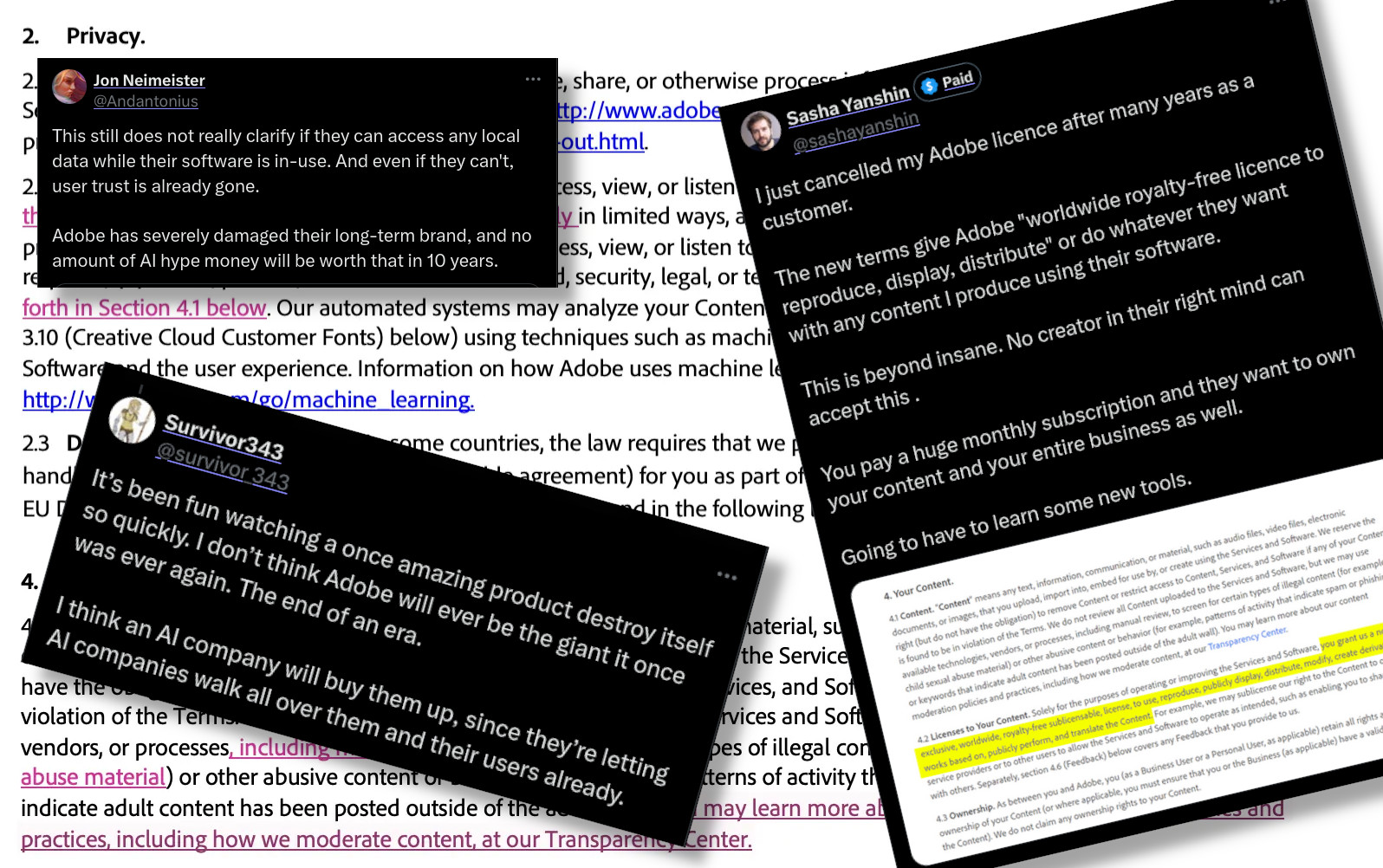
Adobe has been thrust into the spotlight following concerns raised by users on social media over a recent update to its terms of use. Customers feared that the changes might grant the company overarching rights to view and use their content, particularly for training its Firefly generative AI. The backlash was immediate and widespread, prompting a response from the software giant.
In an effort to quell the discontent and clear the air, Adobe revised the language of its terms and directly addressed users’ worries. A key assurance provided was that Adobe has no intention of usurping ownership of user-generated content. The statement emphasized that the firm’s usage of data is strictly for operational purposes, ensuring the functionality of its applications and services. Users still retain full ownership of their work, and Adobe made it clear it does not claim any rights to customer work.
Adobe further explained that accessing user data is a necessary part of making their features functional. For example, certain machine learning capabilities within Adobe’s suite require the processing of images, but this is done with no other intention than to enable those specific features. Additionally, Adobe screens content stored on its platforms, but this action is part of the regular operation and security measures undertaken by cloud-based services.
The clarification from Adobe arrived after users voiced their discontent, especially via online forums such as Reddit. The anxiety among the user base included concerns over privacy, the safeguarding of potentially sensitive projects, particularly ones under non-disclosure agreements, and the consent for AI training – a notion that Adobe denies entirely.
Despite Adobe’s response to the backlash, some remain skeptical, referencing past instances where the company was alleged to have enabled AI training features by default in an update, which users had to opt out of manually if they wished not to participate. This has seemingly led to a lingering distrust among some of its user base.
In an example of quick marketing, Serif Affinity, a competitor to Adobe’s Creative Cloud, seized the opportunity to launch a promotional sale of its software suite. Such tactics highlight the competitive nature of the software industry, where companies are always seeking to capitalize on their competitors’ missteps.
For those new to the digital art scene and seeking alternatives to Adobe, recommendations for drawing tablets like the Wacom One or Huion Kamvas 12 Pro are available. They are tools that can help budding artists embark on their creative journeys, with the promise of software choices that suit their individual privacy preferences and usage requirements.
Exploring the world of digital art and software is not just about the creative process but also involves understanding the policies and terms that govern the use of such software. Privacy concerns and data usage continue to be hot topics that can influence both individual and organizational choices when it comes to selecting the right tools for digital creation.


