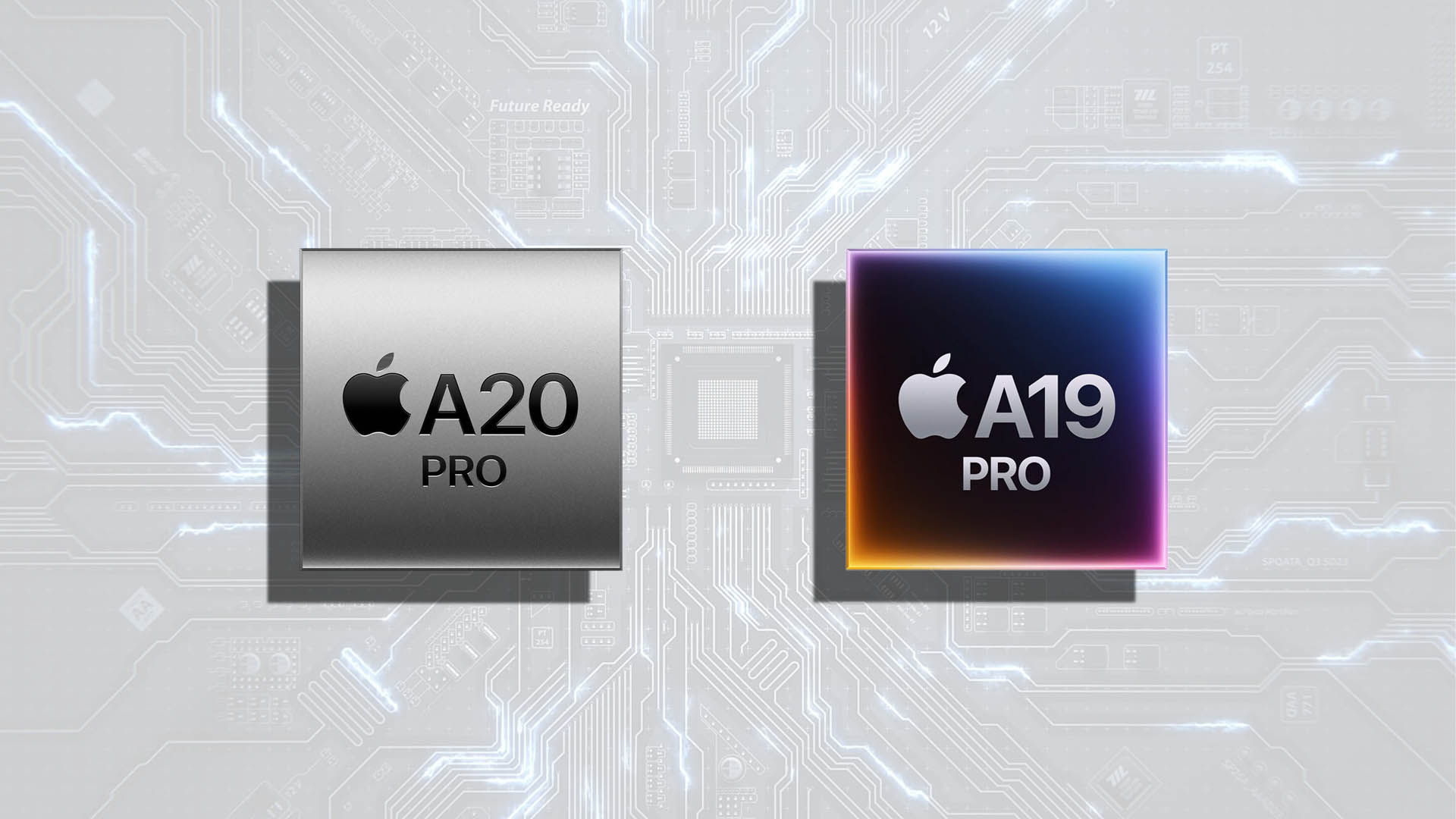
iPhone 18 Pro’s A20 Pro Shows a Bigger Gaming Leap Than Apple Claimed
Apple’s iPhone 18 Pro announcement gave only a quick look at the new A20 Pro chip, but the early gaming results are already making it look like one of the biggest performance jumps in recent iPhone history. Apple claimed that the A20 Pro’s 7-core GPU delivers up to 40 percent faster graphics performance than previous-generation iPhone chips. However, real-world gaming tests suggest the improvement may be even larger.
In a fresh comparison between the iPhone 18 Pro Max and iPhone 17 Pro Max, the new A20 Pro was tested against last year’s A19 Pro in demanding console-quality mobile games. The results show that Apple’s latest 2nm chipset can reach up to a 50 percent performance improvement in certain titles, beating Apple’s own marketing claim.
The most impressive result came from Resident Evil 4 Remake. In this test, the iPhone 18 Pro Max powered by the A20 Pro achieved an average of 58 FPS. By comparison, the iPhone 17 Pro Max with the A19 Pro managed 38.6 FPS. That works out to a 50.3 percent gain in average frame rate, which is a huge jump for mobile gaming performance.
Average FPS is important, but it does not tell the whole story. For serious gaming, 1% lows are just as important because they show how stable the performance remains during demanding scenes. When 1% lows are higher, gameplay feels smoother, with fewer stutters and frame drops.
This is where the A20 Pro appears to shine even more. In Resident Evil 4 Remake, the A20 Pro delivered 1% lows that were 77.3 percent higher than the A19 Pro. That means the iPhone 18 Pro Max was not only faster on average, but also much more consistent during gameplay.
This improvement likely comes from a combination of upgrades. The A20 Pro benefits from Apple’s move to a more advanced 2nm process, improved chip packaging, and better thermal handling. The iPhone 18 Pro models are also expected to benefit from an upgraded vapor chamber cooling system, which helps the chip sustain higher performance for longer periods without quickly throttling.
In simpler terms, the iPhone 18 Pro Max does not just hit higher frame rates for a short burst. It appears to hold onto that performance more effectively, making high-end games feel smoother and more stable.
The second game tested was Assassin’s Creed Mirage. This title did not show the same massive jump, but there is a clear reason: the game appears to be capped at 30 FPS. Because of that frame rate limit, the A20 Pro could not fully stretch its legs.
Even with that restriction, the iPhone 18 Pro Max still delivered an 18.6 percent average FPS improvement over the iPhone 17 Pro Max. Its 1% lows were also 36.1 percent higher, again showing better sustained performance and fewer dips during gameplay.
These early results suggest that Apple may have been conservative with its A20 Pro performance claims. While the company promoted up to a 40 percent GPU improvement, real-world gaming in Resident Evil 4 Remake shows that the A20 Pro can go beyond that under the right conditions.
For mobile gamers, this could be a major upgrade. Games like Resident Evil 4 Remake and Assassin’s Creed Mirage are far more demanding than typical mobile titles, and they are designed to bring console-style experiences to smartphones. If the A20 Pro can deliver this kind of improvement in AAA games, it may set a new standard for iPhone gaming performance.
Of course, these results come from a limited test sample, with only two games compared so far. More benchmarks and gaming tests will be needed to see how the A20 Pro performs across a wider range of titles. Performance can vary depending on game optimization, frame rate caps, graphics settings, and thermal conditions.
Still, the early signs are strong. The iPhone 18 Pro Max appears to offer a major GPU upgrade over the iPhone 17 Pro Max, especially in games that can take full advantage of the new hardware. Better average FPS, much stronger 1% lows, and improved sustained performance all point to a chip that is more capable than Apple initially suggested.
If these results hold up across more games, the A20 Pro could become one of Apple’s most important mobile gaming upgrades yet. For anyone interested in AAA gaming on iPhone, the iPhone 18 Pro series may be a much bigger step forward than expected.