Semiconductor paradox could define the next chip boom, says Singapore industry leader
The semiconductor industry is gearing up for its next big cycle, and it may be driven by a paradox. On one hand, demand for compute power is exploding thanks to AI, cloud services, and data-heavy applications. On the other, traditional consumer electronics are maturing, costs at the leading edge are soaring, and supply chains are still recalibrating after years of disruptions. According to a director in Singapore’s tech ecosystem, this collision of forces is exactly what will shape the next chip boom.
The paradox looks like this: shortages and gluts can coexist. Advanced nodes are tight, while mature nodes still carry pockets of excess capacity. AI accelerators and high-performance chips grab headlines, yet industrial, automotive, and power management semiconductors quietly underpin growth across factories, vehicles, and energy systems. Capital spending is high, but so are barriers to efficiency as the gains from classic scaling slow. Companies are being pushed to innovate not just in transistor density, but in architecture, packaging, software, and energy efficiency.
What will matter most in the upswing is where the value pools shift. Advanced packaging and chiplet-based designs are moving center stage, enabling modularity, better yields, and quicker time to market. Mature process nodes remain indispensable for sensors, analog, and power devices that feed into electric vehicles, renewable energy, and industrial automation. AI demand is encouraging new approaches to memory bandwidth, interconnects, and on-device intelligence, creating opportunities across design, fabrication, assembly, and test.
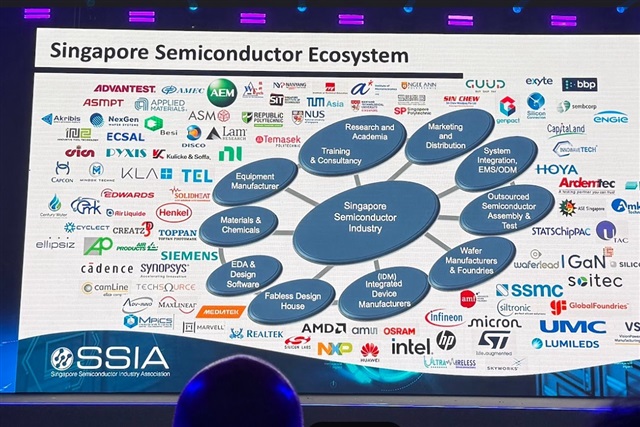
Singapore’s role is increasingly strategic in this environment. As a trusted hub for manufacturing, R&D, and advanced packaging, the country offers diversified supply chains, strong IP protection, and a skilled workforce—key assets when resilience and reliability are top priorities. With continued investment in talent, sustainability, and next-generation manufacturing, the ecosystem is well-positioned to support both cutting-edge and specialty semiconductor production.
Key forces shaping the next cycle:
– AI everywhere: Training clusters and inference at the edge are driving demand for accelerators, memory, and power-efficient designs.
– Packaging as a growth engine: Chiplets, 2.5D/3D integration, and advanced test capabilities are unlocking performance without relying solely on smaller nodes.
– The rise of specialty semis: Automotive-grade components, power electronics, RF, and industrial chips are powering secular growth beyond consumer gadgets.
– Supply chain resilience: Multi-region manufacturing and logistics strategies are becoming a competitive necessity, not just a risk hedge.
– Efficiency and sustainability: Energy use, water management, and greener fabs are now core to cost and brand value, influencing where and how capacity is added.
For companies preparing for the rebound, three priorities stand out. First, align product roadmaps with the fastest-growing end markets—AI, automotive, and industrial—while preserving flexibility across nodes. Second, invest in packaging, verification, and software co-optimization to extract system-level value. Third, build partnerships across the ecosystem—foundries, OSATs, EDA, materials, and research—to shorten cycles and share risk.
Investors should watch leading indicators such as equipment orders in packaging and test, capacity announcements at both advanced and mature nodes, and the mix shift toward power and analog content in autos and industrials. Talent development and power availability around fabs and data centers will also signal the pace and durability of the next uptrend.
The takeaway: this “semiconductor paradox” is not a contradiction but a blueprint. Scarcity at the leading edge paired with broad-based growth in specialty chips, combined with a pivot to packaging and system-level optimization, can fuel a robust and more diversified boom. Regions and companies that execute on resilience, innovation, and sustainability are likely to capture outsized gains as the cycle turns.
Subscriber sign-in tip
If you prefer faster access to your account, you can choose to save your User ID and Password on your device by selecting the “Save my User ID and Password” option at login. Use this only on a private, secure computer or phone. If you log out, your saved information will be cleared and you’ll need to sign in again the next time you visit.