Year-over-year smartphone upgrades can feel incremental, but zoom out a decade and the progress is staggering. If you’re wondering how far iPhones have really come since the iPhone 6S, new aggregated Geekbench 6 data paints a jaw-dropping picture of just how powerful today’s devices are for gaming, 4K video editing, and even on-device AI tasks.
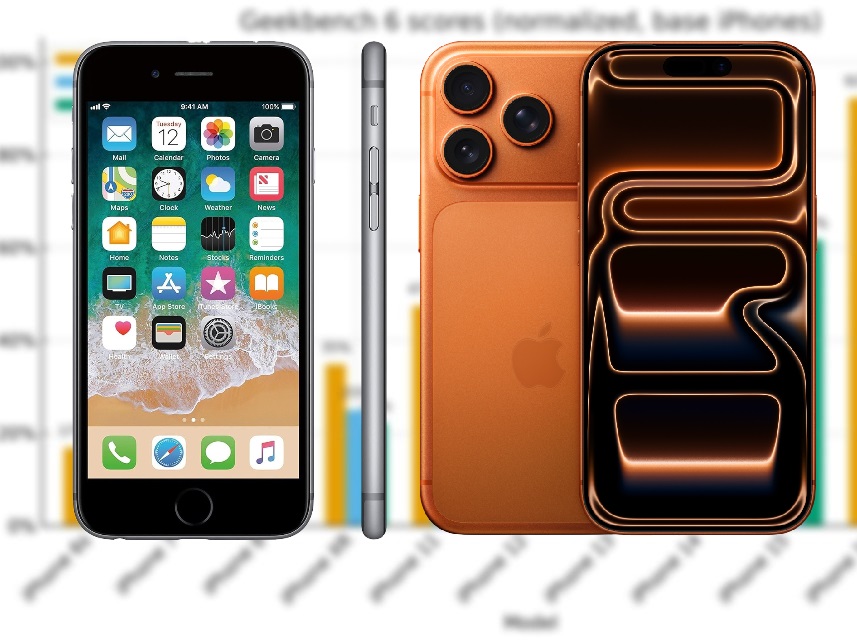
A community analysis based on Geekbench 6 scores compares models from the iPhone 6S era (A9 chip, 2015) to the current iPhone 17 lineup. The result: the performance curve over ten years looks less like a gentle slope and more like a rocket launch.
What a decade of iPhone performance gains looks like
– iPhone 17 vs iPhone 6S
– Single-core performance: up roughly 588%
– Multi-core performance: up roughly 1,000%
– Graphics performance (GPU): up roughly 1,250%
– iPhone 17 vs iPhone 16 (gen-on-gen)
– Single-core: about 8% faster
– Multi-core: about 11% faster
– GPU: about 34% faster
– Biggest iPhone standouts by generation
– Largest single-core leap: iPhone 11 (A13 Bionic) at roughly 36% over its predecessor
– Largest multi-core leap: iPhone 8 (A11 Bionic)
– Largest graphics leap: iPhone XR (A12 Bionic)
And if you’re eyeing the Pro line, the gains are even more dramatic over the long arc:
– iPhone 17 Pro Max vs iPhone 6S
– Single-core: about 625% faster
– Multi-core: about 1,111% faster
– GPU: about 1,667% faster
– iPhone 17 Pro Max vs iPhone 16 Pro Max (gen-on-gen)
– Single-core: about 9% faster
– Multi-core: about 14% faster
– GPU: about 40% faster
Taken together, the numbers make one thing clear: modern iPhones aren’t just “fast enough”—they’re in a different league. Over ten years, single-core speed has climbed well beyond 500%, multi-core results have surpassed 1,000%, and GPU performance has exploded past 1,200%. That’s why today’s phones can handle console-quality games, professional-grade video workflows, and increasingly complex AI features without breaking a sweat.
The price story, in context
Performance hasn’t come for free, but the pricing trend isn’t as steep as you might expect. The iPhone 6S started at $649, while the base iPhone 17 comes in at $799. Over a decade, that’s a relatively modest increase compared to the colossal performance jump, particularly if you keep your phone for several years.
Why gen-on-gen feels smaller—and why it still matters
As chips mature, annual percentage gains often shrink, especially in single-core performance. But GPU and multi-core boosts continue to deliver tangible benefits in real-world tasks like high-refresh gaming, computational photography, multitasking, and on-device AI. For anyone upgrading every three to four years rather than every year, the leap is especially noticeable.
A quick note on benchmarks
Synthetic benchmarks like Geekbench 6 aren’t the whole story, but they’re a useful way to track long-term CPU and GPU progress. Pair them with real-world use—faster app launches, smoother gaming, shorter export times—and the decade-long evolution is impossible to miss.
Bottom line
From the A9 in the iPhone 6S to today’s A-series chips in the iPhone 17 lineup, Apple’s silicon has delivered a decade of compounding gains. Whether you care about AAA mobile gaming, creator workloads, or future-facing AI features, the current iPhone generation offers a level of performance that would’ve been unthinkable in 2015—and it’s only getting faster.