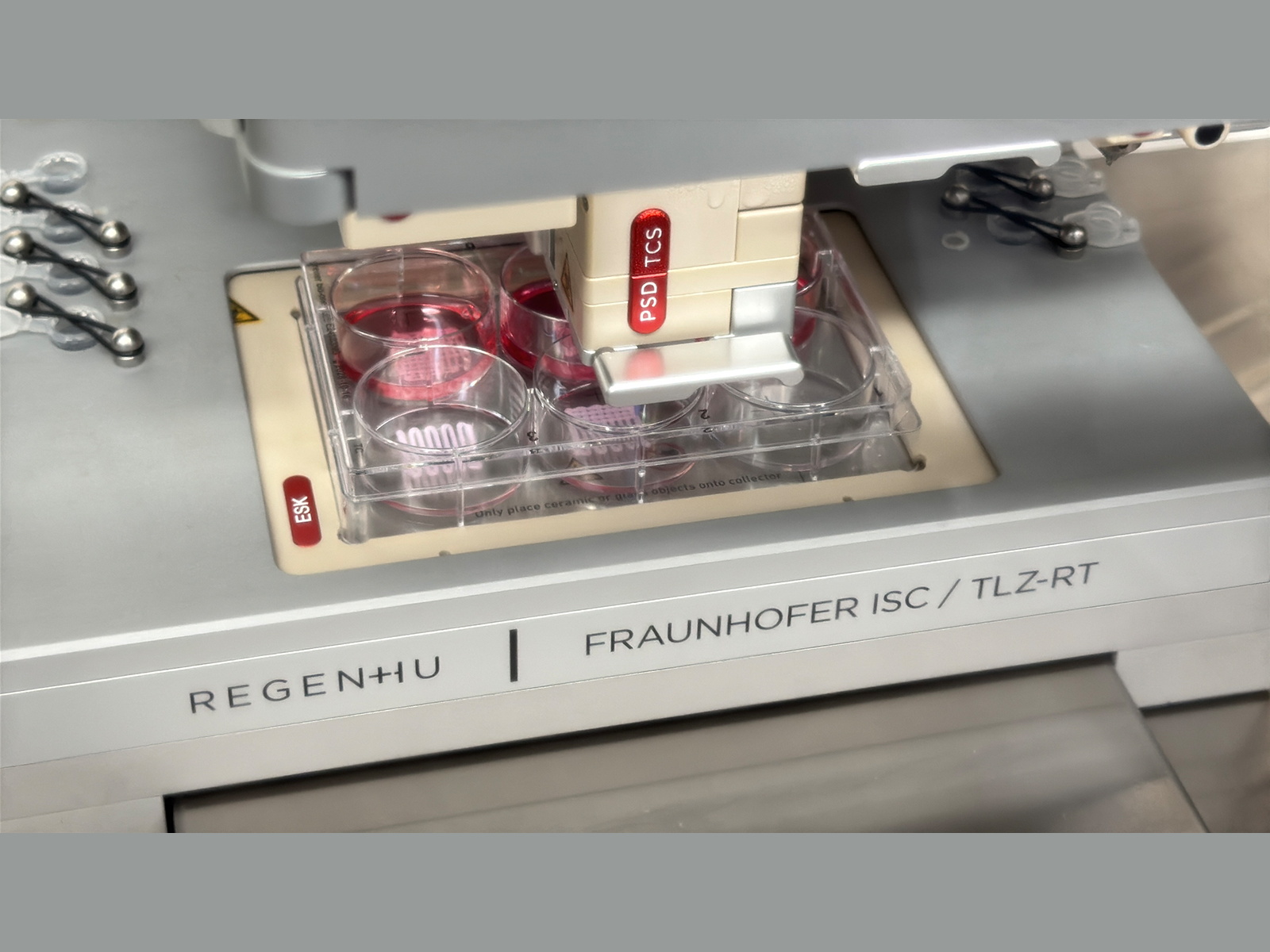
3D-Printed Living Skin Cells Bring Donor-Free Organs One Step Closer
For millions of people around the world, organ transplantation can mean the difference between life and death. Yet donor organs remain limited, and patients often spend years on waiting lists with no guarantee that a suitable match will arrive in time. Now, researchers at the Fraunhofer Institute are working on a technology that could one day change the future of regenerative medicine: 3D-printed human tissue made with living cells.
As part of the PhysioINK project, scientists are developing advanced bio-inks designed to mimic the natural materials found in the human body. These bio-inks are made using collagen and elastin, two essential structural proteins that help give skin, organs, blood vessels, and connective tissue their strength, flexibility, and shape.
The goal is ambitious: create printable biological materials that behave like real tissue.
Printing with living cells is far more complicated than standard 3D printing. The bio-ink must be liquid enough to pass through a printer nozzle, but once printed, it needs to form a stable, fibrous structure similar to natural tissue. At the same time, the living cells inside the material must remain healthy and survive the printing process.
To overcome this challenge, the research team developed a method that uses cellulose sulfate to stabilize collagen molecules before printing. This makes the collagen-based material suitable for 3D printing. After the printing process, a carefully controlled temperature change allows the collagen to reorganize itself into a more natural tissue-like structure.
This approach is especially promising because it relies on physiological materials rather than heavily synthetic or chemically modified substances. In other words, the bio-ink is based on proteins that already exist in the human body, making it more similar to the building blocks found in real organs.
Temperature control is a key part of the process. Along with a higher collagen concentration, it helps keep the bio-ink stable and prevents it from turning into gel too early. This balance is crucial for printing precise tissue structures while keeping the embedded living cells viable.
One of the first major milestones of the project is the successful creation of 3D-printed skin tissue models. While fully printed transplantable organs such as hearts or kidneys are still a future goal, printed skin tissue could have important near-term uses. It may help in medical research, wound healing studies, drug testing, and the development of alternatives to animal testing.
The long-term potential is even more significant. If researchers can continue improving bio-inks and tissue-printing techniques, the technology may eventually contribute to customized tissue replacement and, one day, lab-grown organs created from a patient’s own cells. That could reduce the risk of rejection and ease the global shortage of donor organs.
Although donor-free organs are not yet ready for hospitals, this breakthrough marks an important step forward. By combining 3D printing, cell biology, and natural human proteins, scientists are moving closer to a future where replacement tissues can be produced on demand. For patients waiting for transplants, that future could be life-changing.


