ASUS ROG Astral RTX 5090 Buyer Faces $11,000 Bundle Headache Over Faulty USB-C AMOLED Port
The ASUS ROG Astral GeForce RTX 5090 Edition 20 is already one of the most extreme graphics cards on the market, with a massive 800W power profile and a listed price of $5,499. But for some buyers, getting the card has not been as simple as paying the sticker price. Due to limited availability and retailer bundle requirements, one customer reportedly had to purchase a complete hardware package costing nearly $11,000.
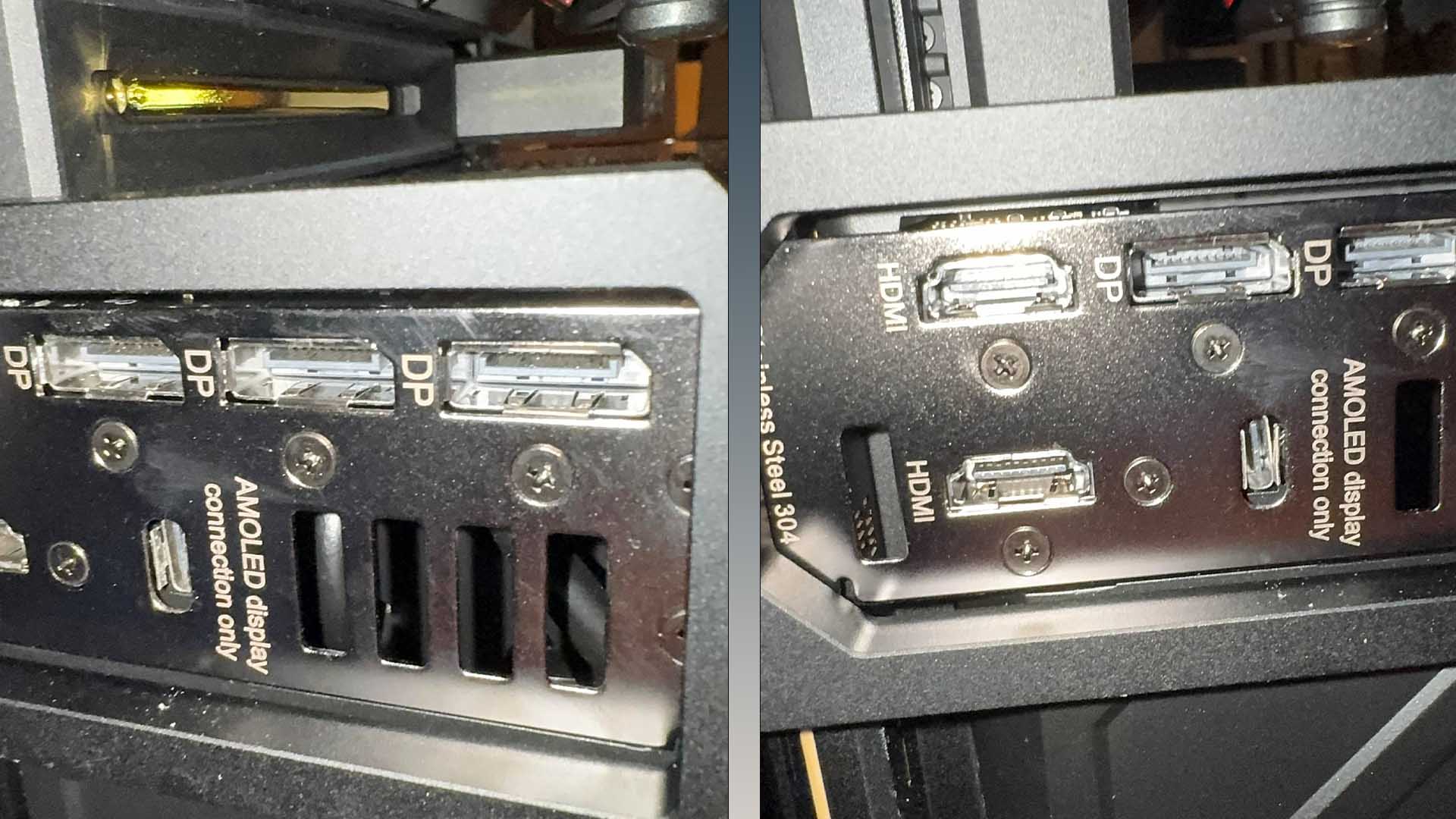
For that kind of money, buyers naturally expect premium build quality, careful packaging, and strong after-sales support. However, one customer claims their high-end ASUS GPU arrived with a serious defect: the USB-C AMOLED port was recessed behind the graphics card’s faceplate, making it impossible to properly connect the included display feature.
The issue was shared by Reddit user “Madsoul19897,” who explained that the problem is not just cosmetic. If the port were slightly misaligned but still usable, it might have been frustrating but manageable. In this case, the recessed connector appears to be blocked by the faceplate, preventing access to the port entirely. That means one of the card’s standout features cannot be used.
The situation becomes even more frustrating because of the way the product was purchased. The customer did not simply buy the ASUS ROG Astral GeForce RTX 5090 Edition 20 on its own. Instead, the GPU was part of a much larger retailer bundle priced at almost $11,000. When a product at this level arrives with a physical defect, most buyers would expect a straightforward replacement or full resolution.
According to the customer, the retailer stated that a replacement could only be issued if the exact graphics card was available in stock. That creates a major problem, since RTX 5090 graphics cards are reportedly difficult to find in the consumer market. If no replacement unit is available, the retailer’s alternative would be a partial refund covering only the graphics card portion of the bundle, not the entire purchase.
That kind of response may not satisfy a buyer who purchased a full premium hardware package largely to secure the rare GPU in the first place. Returning only part of the cost could leave the customer stuck with a bundle they may not have wanted without the specific flagship card.
ASUS has also reportedly responded with its own warranty position. If the company cannot repair the current unit and does not have the same ROG Astral GeForce RTX 5090 Edition 20 available, it may offer a “comparable” replacement model. While that may sound reasonable on paper, it is unlikely to be what a customer wants after spending close to $11,000 to obtain a specific limited high-end graphics card.
The customer also pointed to a teardown video of the custom RTX 5090 design, claiming that the USB-C connector appears to be poorly supported near the faceplate. They described the port as essentially “hanging on for its life,” calling the design questionable for such an expensive product.
The Reddit discussion has drawn sympathy from other users, many of whom believe the buyer should continue pushing both the retailer and manufacturer for a better outcome. Some users suggested escalating the support ticket, documenting the defect carefully, and insisting on either a proper replacement or a repair that restores full functionality.
This case highlights a growing concern in the enthusiast PC hardware market. As flagship graphics cards become more expensive, harder to find, and increasingly tied to costly bundles, buyers are taking on more risk. When a product costs thousands of dollars, especially as part of a larger premium package, quality control and warranty service become just as important as performance.
For ASUS, the ROG Astral GeForce RTX 5090 Edition 20 is supposed to represent the top tier of gaming GPU engineering. But for this buyer, the experience has turned into a frustrating support battle over a defect that should have been caught before shipping. For consumers considering ultra-premium GPUs, this situation is a reminder to inspect hardware immediately after delivery, document any issues, and understand the return and replacement policies before committing to expensive bundles.