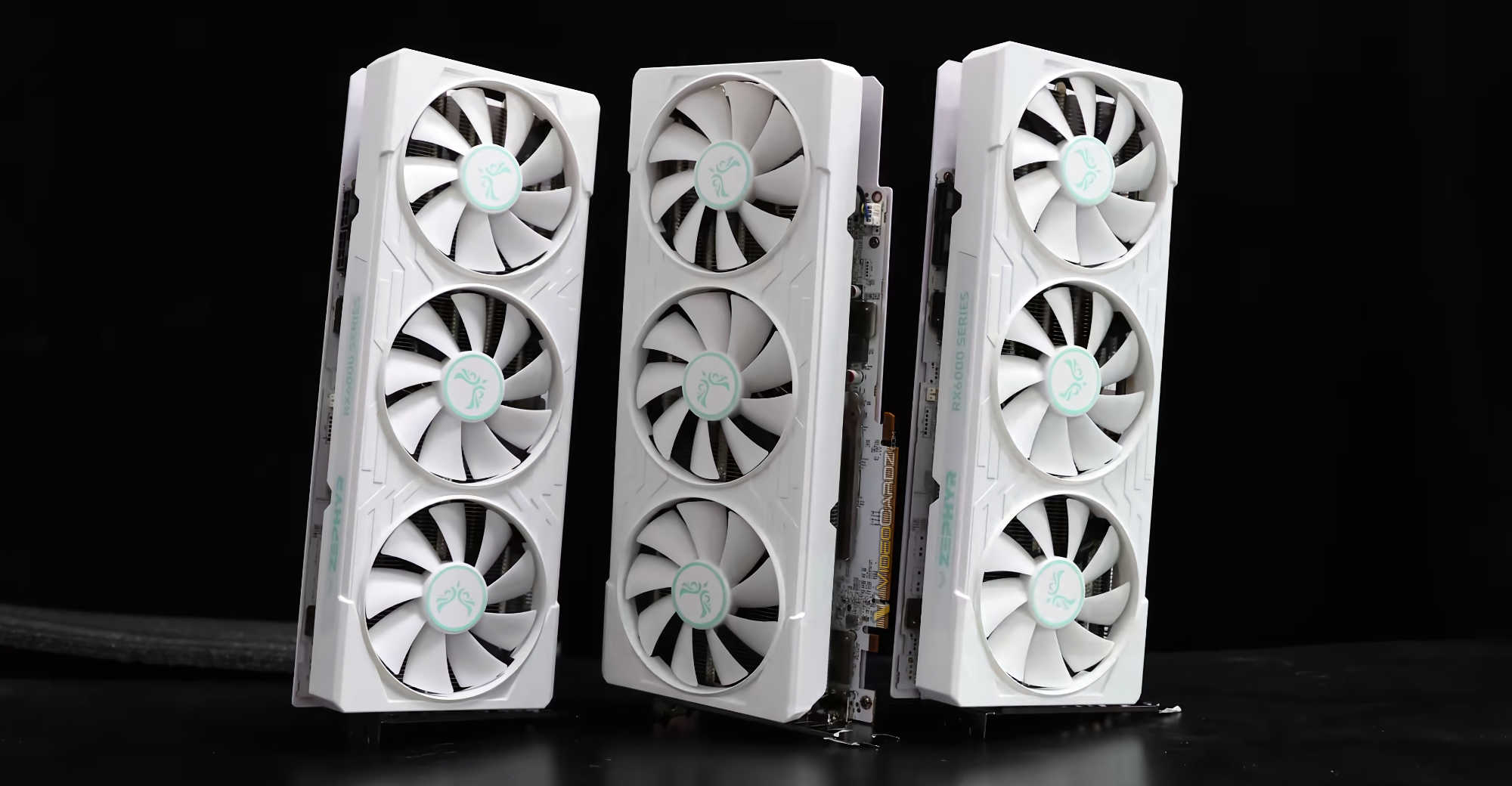
In an unexpected turn of events in the graphics card landscape, Zephyr, a prominent Chinese manufacturer, has unveiled new Radeon RX 6800 and RX 6900 series graphics cards. What makes this launch remarkable is that these cards are based on AMD’s RDNA2 architecture, despite being introduced nearly four years after the initial launch of the Radeon RX 6000 series.
The graphics community raised eyebrows and curiosity about why Zephyr would release these RDNA2-based cards in 2024. Zephyr responded by explaining the intricate challenges they faced. This is the company’s first foray into high-end GPUs using AMD hardware, demanding sophisticated cooling solutions and complex PCB manufacturing processes, reportedly more intricate than what is required for GeForce RTX cards. Part of Zephyr’s endeavor involved sourcing essential components from companies that are now obsolete.
Even with these hurdles, Zephyr managed to meet AMD’s stringent requirements, which are notably higher than NVIDIA’s. The company diligently worked through research and development, as well as meticulously organized the supply chain to obtain the necessary materials. This perseverance has paved the way for the upcoming RX 7000 series, set to make its debut in the months ahead. In fact, Zephyr has hinted that the design for the RX 7000 series PCB technology is complete, and some models will be equipped with advanced VC heat plates.
The release includes three models: the RX 6800, RX 6800 XT, and RX 6900 XT, with each card featuring a uniform cooling design but varying in specifications and thermal performance. During intense Furmark stress tests, these coolers reportedly maintain temperatures between 69°C and 73°C, though specifics might fluctuate slightly between the individual cards.
A fascinating tidbit from Zephyr is about the RX 6900 XT. Some of these cards carry chips originally intended for the RX 6950 XT, which use the Navi 21 KXTX chip. Out of the limited approximately one hundred chips available, these will be part of the Navi 21 XTX series. This means that some lucky users could receive a card crafted for enhanced power, as the 6950 XT boasts a Total Board Power (TBP) of 335W compared to the 6900 XT’s 300W.
Rather than attempting to outpace competitors in the GPU launch race, Zephyr aims to cater to budget-conscious gamers. This strategy is reflected in the pricing of the cards, making them an appealing option without compromising performance. The RX 6900 XT is priced at 2,999 RMB, translating to about $410 USD. Meanwhile, the RX 6800 XT is set at 2,799 RMB ($383 USD), and the RX 6800 at 2,499 RMB ($342 USD).
By taking this unique approach, Zephyr not only revives the legacy of the Radeon RX 6000 series but also positions itself as a key player for cost-effective, high-performance graphics solutions in an ever-evolving market.