Yope Wants to Reinvent Social Media With Private, Ad-Free Communities
Social media was once about keeping up with friends and family. Today, many major platforms are built around endless entertainment feeds, creator content, recommendations, and advertising. Yope is taking a different path.
The startup is building a private social networking app designed for close friends and family, with no public posts, no algorithmic feed, and no ads. Instead of pushing users toward viral content, Yope focuses on what it calls “micro communities” — small, private groups where people can share photos, videos, messages, stickers, and soon, play games together.
Yope has now raised $12.3 million in new funding led by Northzone, bringing its total funding to $20 million. The investment will help the company expand its product, grow its team, and open a U.S. office.
The app is positioning itself as an alternative to traditional social media platforms such as Facebook, Instagram, Snapchat, TikTok, and X. While those platforms rely heavily on engagement-driven feeds and public sharing, Yope is built around private interaction and real-world relationships.
A private social app for real friends
Yope’s core idea is simple: many young people still want to express themselves online, but they do not necessarily want to become influencers or post publicly for a wide audience.
According to Yope co-founder and CEO Bahram Ismailau, the company studied how young users interact with social platforms and found a major shift in behavior. Many people now prefer smaller, more private spaces, such as “photo dump” or casual secondary accounts, where they share less polished moments with close friends.
Others have stopped posting publicly altogether and rely mostly on messaging apps to stay connected. Yope aims to combine both behaviors: the creativity of a social profile with the privacy of a group chat.
Accounts on Yope are private by default. There is no public feed and no algorithm deciding what users should see next. The company also does not rely on advertising. Instead, it plans to build premium subscription features for its most active users.
How Yope works
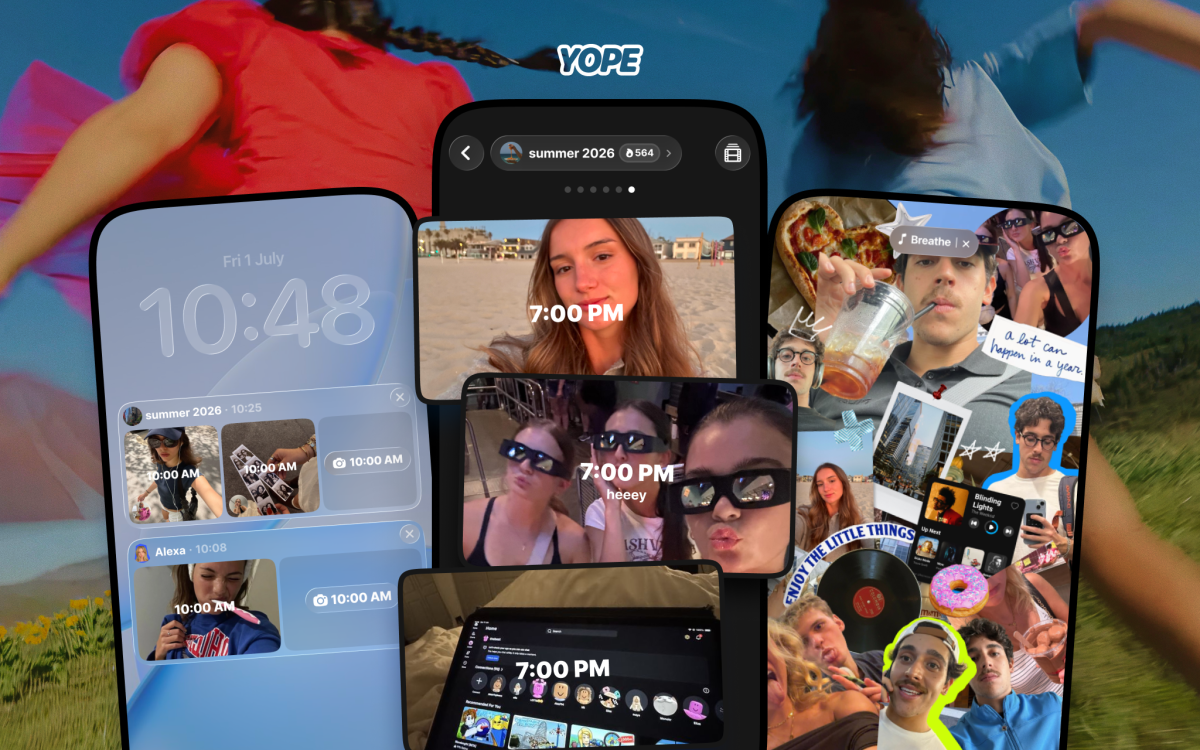
Yope lets users build personal profiles by sharing photos, which can also be turned into cut-out stickers. Rather than organizing images into neat albums, the app displays them in a freeform, collage-style layout on each user’s wall.
The result is designed to feel more personal, expressive, and playful than a standard profile page. Users will soon be able to customize their spaces even further by adding interests, favorite music, mini-games, colors, and wallpapers.
That approach brings back some of the creative energy of early social networking, when users could shape their online spaces around their personalities rather than fitting into a uniform profile template.
Yope also includes familiar social features such as private messaging, lock screen widgets that show friends’ photos, and AI-generated recaps of top moments. During setup, the app guides users through adding friends, enabling features, and starting private conversations.
AI for connection, not content creation
Yope describes itself as an AI-native social platform, but the company says its goal is not to flood the app with AI-generated content. Instead, it wants to use artificial intelligence to improve how people connect.
One upcoming feature will use AI to create mini-games that friends can play together inside the app. The company also sees opportunities for AI to help users meet in real life, such as finding events, suggesting places to watch a football match, or helping groups choose restaurants or bars.
This focus on social utility could help Yope stand apart in a market where many platforms are using AI mainly for content creation, filters, recommendations, or automated feeds.
Nearly 15 million registered users
Yope’s private-first model appears to be gaining traction. The app now has nearly 15 million registered users. Collectively, users share between 10 million and 20 million pieces of content every week, including photos, videos, and stickers.
The company also says more than half of its users open the app at least five days per week, suggesting strong engagement among its core audience.
Interestingly, Yope is not only attracting young users. Around 20% of active users have invited an older family member to join, showing that private social networking may appeal across generations when it is centered on real relationships rather than public performance.
A different business model for social media
Yope’s decision to avoid ads is one of its biggest differences from mainstream social platforms. Advertising-based social networks are often designed to maximize time spent in the app, which can lead to addictive feeds, aggressive recommendations, and viral content loops.
Yope wants to create a safer and more controlled experience where users decide who they interact with and what they share. The company’s long-term plan is to monetize through premium features rather than ads, though it has not yet detailed the full subscription model.
The challenge will be keeping users engaged without relying on public content, influencers, or algorithmic discovery. Many previous private social apps have struggled to maintain growth once the novelty fades. Yope is betting that customization, messaging, AI-powered games, and real-life coordination tools can keep users coming back.
What the new funding means
The $12.3 million funding round gives Yope more resources to build out its vision for private social media. The company currently has a team of about 35 people and plans to expand as it develops new features and grows internationally.
The new U.S. office could also help Yope compete in one of the world’s most important social media markets, especially among younger users looking for alternatives to public posting and algorithm-driven feeds.
Yope is available as a free download on iOS and Android. While the app is still evolving, its rapid user growth suggests there is demand for a more private, friend-focused social network in an era dominated by public content and recommendation algorithms.


