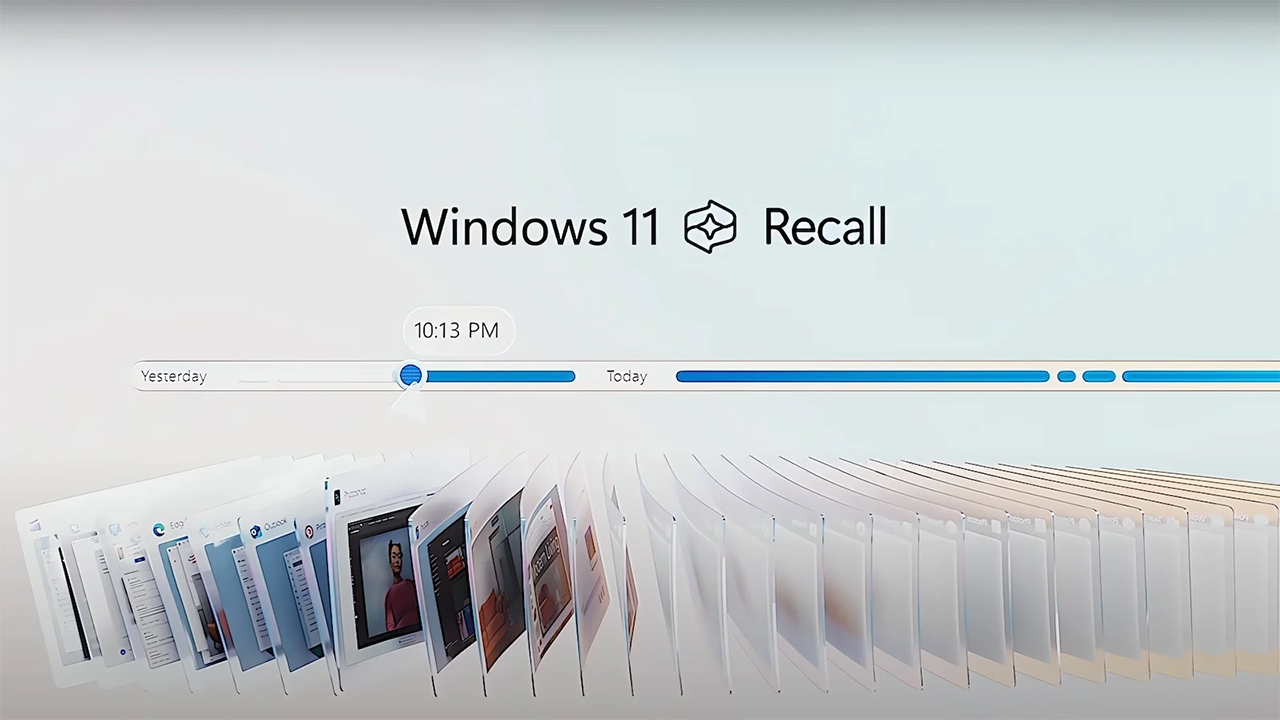
Windows 11 has rolled out an innovative AI feature named Recall which promises to enhance user productivity and data retrieval. Positioned as a highlight of the latest Copilot Plus PCs, Recall works in the background to take snapshots of your computer activity, allowing you to search for past content just by describing it. If, for instance, you can’t recall the name of a product you previously saw online, Recall aims to help you find it merely through a keyword or descriptive search.
Despite any potential security concerns this always-on capture functionality might inspire, Microsoft assures users that the processing is entirely local. This assurance should, in theory, ensure complete privacy since no data is transmitted to external servers while employing Recall.
For optimal operation of Recall and similar Windows 11 AI features, Microsoft initially indicated that devices need to be equipped with a Neural Processing Unit (NPU) capable of at least 40 Tera Operations Per Second (TOPS) in AI performance. Currently, devices fitted with the Snapdragon X series processors are known to fulfill these specifications, marking them as the prime candidates for these advanced AI capabilities.
Interestingly, recent findings by a developer known as Albacore hint at the possibility of enabling Recall on various CPUs that don’t meet the official 40 TOPS benchmark. Demonstrations were carried out on an ARM64 processor that falls beyond the recommended spec, and it was further suggested that the feature might also be deployable on systems powered by AMD and Intel processors.
While Recall is operational on the ARM64 system, the experience isn’t as refined as when it’s run on the intended Snapdragon hardware. This shortfall is primarily due to the lack of a robust NPU that is necessary to handle the intensive data processing. This means that on systems without the recommended NPU, performance is expected to wane, especially under the weight of processing numerous screenshots.
The revelation that Recall can function on a spectrum of processors beyond the Snapdragon X series offers a glimpse into more inclusive compatibility in the future. This development is particularly exciting as the tech community anticipates the arrival of Intel’s Lunar Lake processors and AMD’s Strix Point technology, which may open doors for broader support of advanced AI features on a range of devices.
In the evolving technological realm, features like Recall exemplify the industry’s move towards seamless, AI-driven experiences that cater to intuitive search and productivity solutions. As advancements continue to materialize, users can look forward to a widening array of devices capable of supporting such cutting-edge features, empowering them to work smarter and more efficiently.


