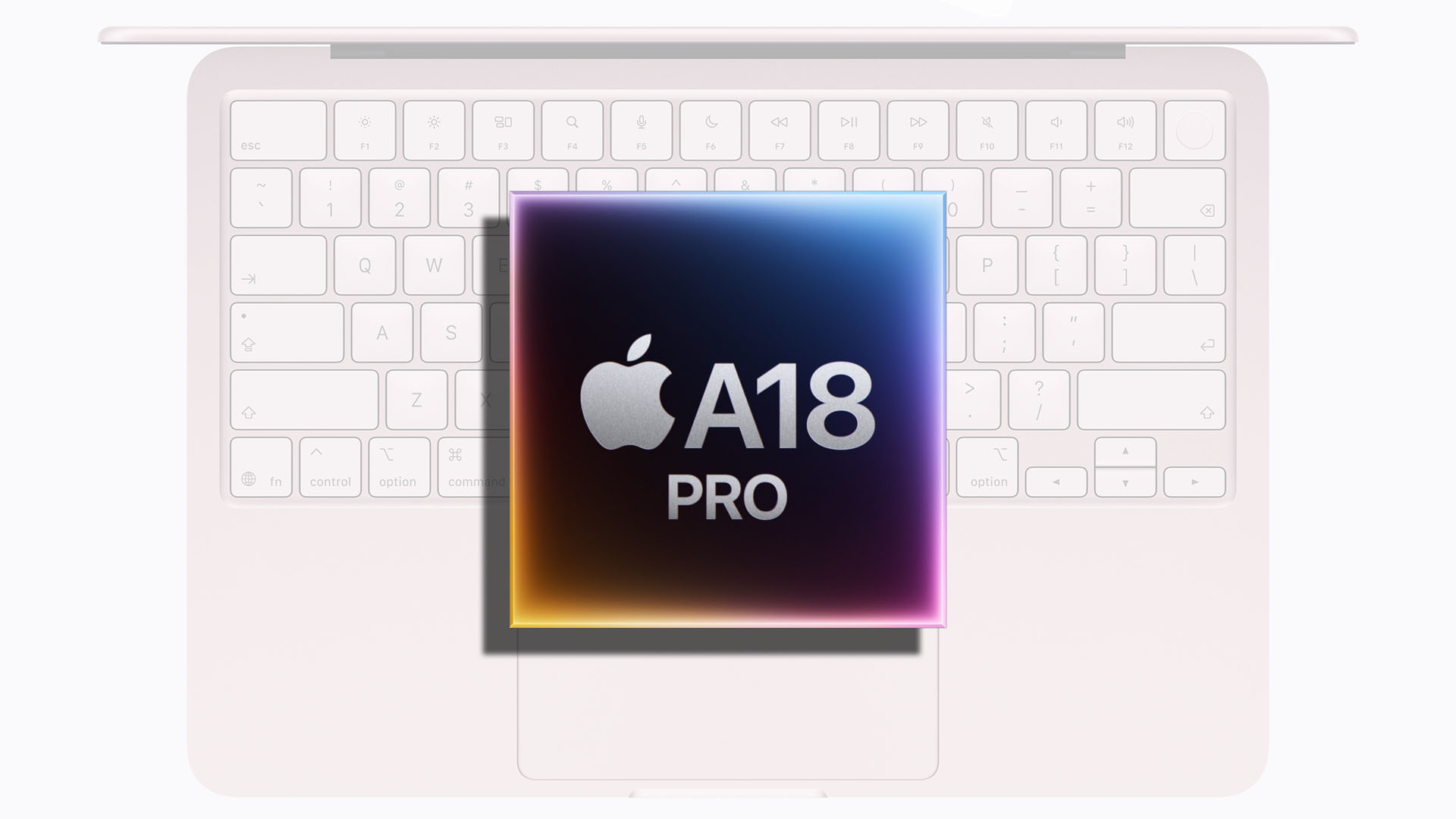
Apple’s new MacBook Neo is turning heads for one big reason: a $599 Mac sounds almost too good to be true. But there’s a catch that’s frustrating some buyers right away—8GB of RAM, with no practical path to upgrade it. That limitation isn’t a simple case of Apple being stingy with specs. It comes down to how the A18 Pro chip is physically built.
The MacBook Neo uses Apple’s A18 Pro from 2024, the same core silicon family used in the iPhone 16 Pro lineup. This chip is manufactured with TSMC’s InFO-PoP (Integrated Fan-Out Package on Package) design, where the DRAM is stacked directly on top of the system-on-chip as part of a single enclosed package. In other words, the memory isn’t sitting separately on the motherboard like it is in many laptops. It’s fused into the chip package itself. That packaging choice helps reduce size and improve efficiency, but it also makes RAM upgrades essentially a non-starter.
That’s why the MacBook Neo tops out at 8GB: Apple reused the same A18 Pro package configuration, and that package comes with 8GB baked in. If you were hoping Apple could offer a higher-memory version later, the design makes that far more complicated than swapping a few parts on a board.
Could Apple have shipped the MacBook Neo with more RAM anyway? Technically, yes—but it would have changed the entire point of the product. Apple could have opted for a different A18 Pro memory configuration, such as replacing the 8GB module with a 12GB module. The problem is that doing so would push costs up enough that the MacBook Neo likely wouldn’t be able to hit its headline-grabbing $599 starting price.
There’s also the question of why Apple didn’t simply use the newer A19 Pro, which is packaged with 12GB of RAM. The reality is that hardware sourcing and product design decisions are made far in advance—often many months, and sometimes years, before a device reaches store shelves. On top of that, a continuing DRAM shortage is impacting pricing, and Apple is reportedly paying around $70 per 12GB LPDDR5X unit. Add that to a budget-focused laptop and the math quickly stops working if Apple wants a true entry-level MacBook for the masses.
For the audience Apple is targeting, the A18 Pro paired with 8GB of RAM is being positioned as a sensible, cost-effective combination. The MacBook Neo is meant to be a portable, affordable macOS machine for everyday tasks, not a spec monster designed for heavy pro workloads.
One more detail caught the attention of sharp-eyed chip watchers: the A18 Pro inside the MacBook Neo isn’t identical in every way to the top iPhone variant due to chip binning. While the underlying 6-core GPU configuration exists on the silicon, Apple has reportedly disabled one GPU core through software, effectively making it a cut-down configuration to better fit the product tier and pricing.
The end result is a MacBook that prioritizes price and efficiency over upgradability. If you’re looking for a budget Mac for schoolwork, web browsing, media, and light productivity, the MacBook Neo’s A18 Pro and 8GB RAM setup is designed to match that mission. But if you’re the kind of buyer who wants more memory headroom—or expects upgrades later—the chip packaging choice is the reason this particular MacBook is locked to what you buy on day one.


