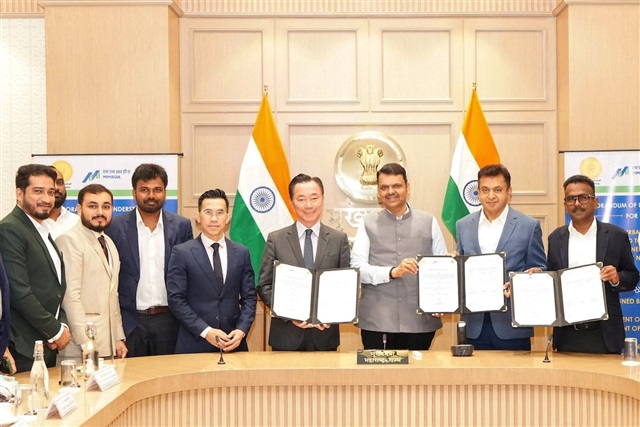
Vingroup is stepping up its presence in India with a major new investment framework that could bring around US$6.5 billion into Maharashtra, one of the country’s most economically important states. Through a memorandum of understanding with the Government of Maharashtra, the Vietnamese conglomerate is setting the stage for wide-ranging cooperation that spans urban development, electric mobility, renewable energy, and social infrastructure—areas that increasingly define how fast-growing regions like Mumbai and its surrounding districts will evolve over the next decade.
While the agreement is a framework rather than a final, project-by-project funding confirmation, its scale signals serious intent. If translated into approved developments and on-the-ground execution, the planned investments could play a meaningful role in reshaping parts of the Mumbai metropolitan region, where demand is rising for cleaner transport, more reliable energy, and upgraded public services to support continued growth.
A central theme of the MoU is modern urban development. Maharashtra’s cities are expanding rapidly, and pressure on housing, transport networks, and essential services continues to grow. Investments tied to smarter planning, newer infrastructure, and improved connectivity could help address some of the most urgent needs—especially in dense urban corridors where building efficiently and sustainably is no longer optional.
Electric mobility is another major pillar of the agreement, aligning with India’s push to accelerate EV adoption and develop a stronger local ecosystem for electric vehicles. Support for EV manufacturing, charging infrastructure, and related mobility solutions could help strengthen the region’s transition away from fossil-fuel-heavy transportation. For city residents, this can translate into practical benefits such as improved air quality, quieter streets, and more modern transit options, provided deployment is wide enough to meet real commuting demand.
Renewable energy is also expected to be a key focus, reflecting both national and regional priorities to expand clean power capacity. With energy demand climbing across urban and industrial areas, renewables paired with modern grid planning and storage solutions can improve energy security while reducing emissions. If pursued at scale, these efforts could support not only households and commercial districts, but also the power needs of new industrial and mobility projects that depend on stable electricity supply.
The MoU further highlights social infrastructure, a broad category that typically includes facilities and services that shape everyday living—such as healthcare, education, community services, and public-use developments. For fast-growing urban areas, social infrastructure often determines whether growth feels manageable or overwhelming. Better access and improved capacity can raise quality of life and help cities keep pace with population and economic expansion.
This announcement places Maharashtra—particularly the Mumbai region—at the center of a potentially significant cross-border investment story. It also reflects a larger trend: major Asian conglomerates are looking beyond their home markets to participate in the next wave of urban and clean-energy development, especially in high-growth regions. For India, investment frameworks like this can bring not only capital, but also long-term partnerships, technology collaboration, and expanded industrial capabilities—assuming projects move from planning to execution.
As next steps unfold, attention will likely turn to which specific projects are prioritized first, how timelines are structured, and how the partnership addresses practical challenges such as permitting, land use, grid readiness, and supply chain coordination. If those pieces align, the proposed US$6.5 billion framework could become a standout example of how investment can support cleaner mobility, greener energy, and more livable cities in one of India’s most important states.