Verizon recently encountered an internet outage that had a noticeable impact on its network traffic, but the specific cause remains a mystery as the telecom giant has yet to release an official statement. In the meantime, the Federal Communications Commission has launched an investigation to uncover more details about the incident.
To shed some light on the situation, Cloudflare has published a blog post analyzing the effects of Verizon’s downtime, particularly focusing on AS6167—Verizon’s autonomous system dedicated to its mobile network. An autonomous system, or AS, represents a massive network or a collection of networks identified by a unique ASN.
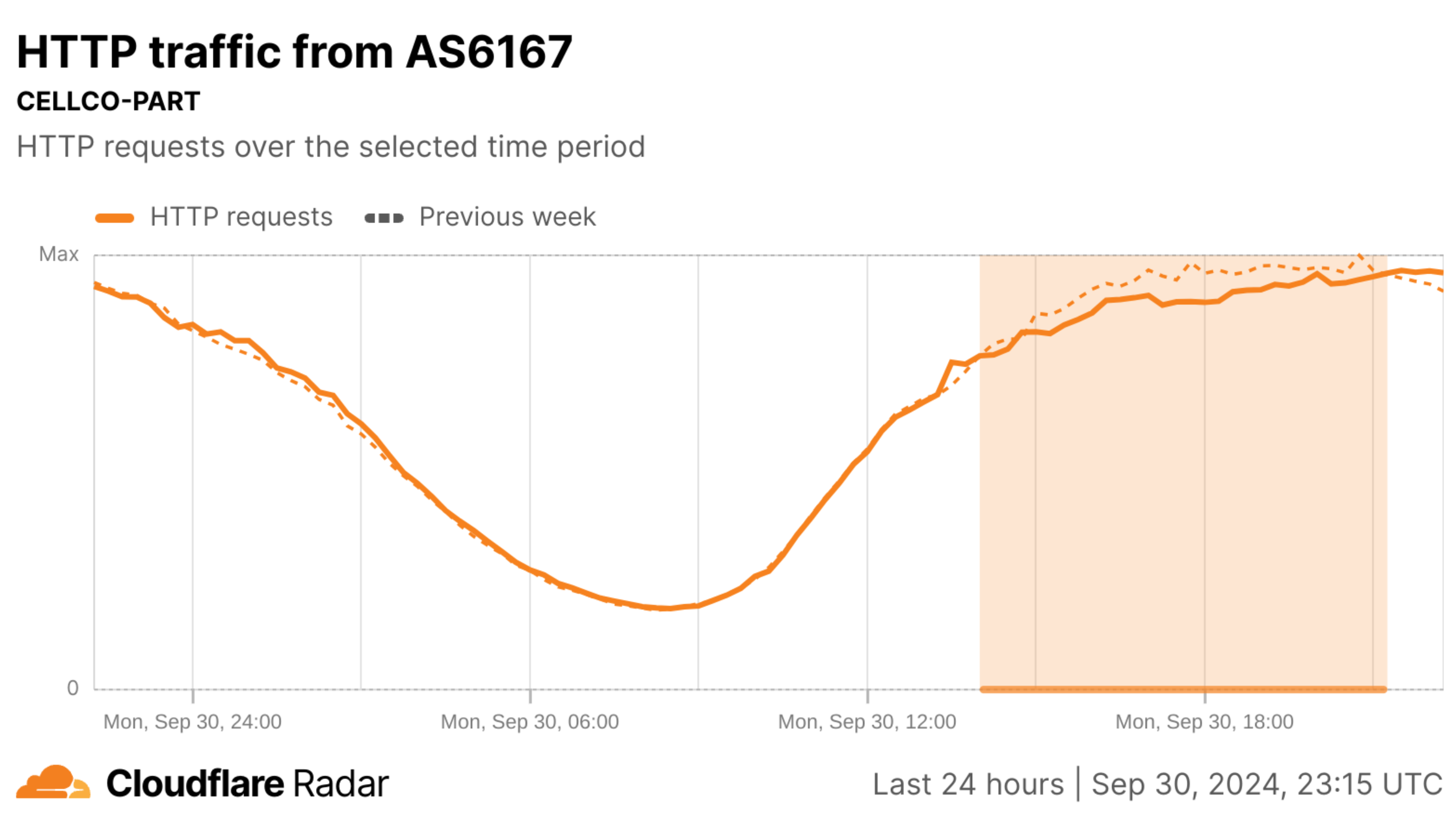
Cloudflare’s analysis started broadly before narrowing down to cities that appeared most affected by the outage. Initially, at 09:00 ET, Cloudflare observed no significant disruptions, even though Verizon had already acknowledged experiencing network issues on social media. But by 11:00 ET, Cloudflare Radar detected a five percent drop in HTTP requests, which continued to plummet, reaching around nine percent over the next few hours.
As the day progressed and Verizon announced that engineers were addressing the problem, HTTP request volumes began to recover. By 17:15 ET, not only had the traffic returned to normal, but it also exceeded the previous week’s activity levels for the same period. This bounce-back matched Verizon’s updates about resolving the network issue.
However, not all cities experienced the same level of recovery. Areas like Omaha, Denver, Chicago, and Phoenix saw more drastic reductions in traffic, with HTTP requests dipping between 10-20 percent during the outage. Omaha was the hardest hit, experiencing a roughly 30 percent drop compared to the same time last week, although Cloudflare noted that Omaha’s traffic was already trending lower this week, which might have amplified the perceived impact.
Interestingly, major cities like New York and Atlanta saw minimal traffic changes despite reports of connectivity issues. In these locations, internet requests even trended slightly higher.
From this data, Cloudflare infers that Verizon’s problems primarily impacted its voice services rather than data services. Fortunately, despite affecting numerous cities, no single location experienced a complete internet blackout.
This detailed investigation offers a glimpse into the breadth of the outage and how different regions were variably affected. While we await further clarification from Verizon, the insights provided by Cloudflare help illustrate the complexity and scope of modern network infrastructure and its vulnerabilities.


