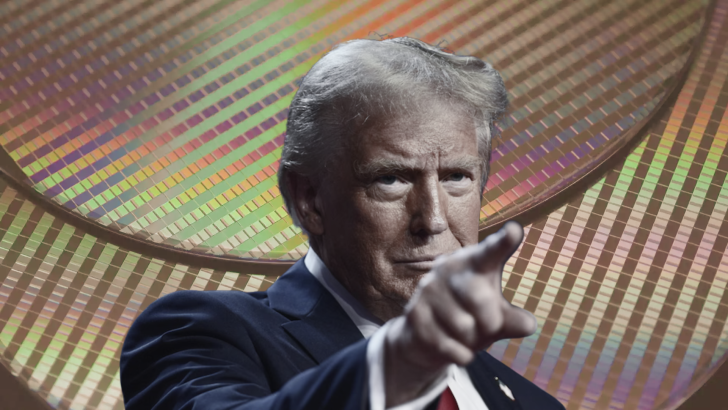
The Trump administration is gearing up to introduce “aggressive” chip tariffs this week, a move that could heavily impact the IT industry. President Trump has argued for a “100% chip tariff” on Taiwan, a measure he believes is justified but one that could prove detrimental to the industry.
This push is part of a larger strategy to prioritize domestic chip production. The administration aims to compel companies like TSMC to relocate their manufacturing operations to the United States. Recently, the US Commerce Department started an investigation to assess the potential impact of these tariffs and invited local organizations to provide input. Surprisingly, only ten responses were recorded, indicating a possible lack of opposition.
The expected announcement of these tariffs could arrive by Wednesday, with semiconductors playing a key role in this policy shift. Trump has previously claimed that Taiwan “stole US tech,” justifying high tariffs. The limited feedback received by the Commerce Department might further embolden his stance.
Simultaneously, the department is considering ways to bolster domestic chip production to meet market demand. This could benefit companies like Intel and TSMC, particularly since TSMC has already pledged over $100 billion in U.S. investments, possibly as a strategy to avoid these impending tariffs.
The deadline for submitting public comments is May 7. The scant number of submissions suggests that the tariffs will proceed. This mirrors a previous situation with timber tariffs, where extensive public feedback led to a policy reevaluation. Public comments are treated as a reflection of consumer and industry sentiment, emphasizing their significance in shaping policy decisions.