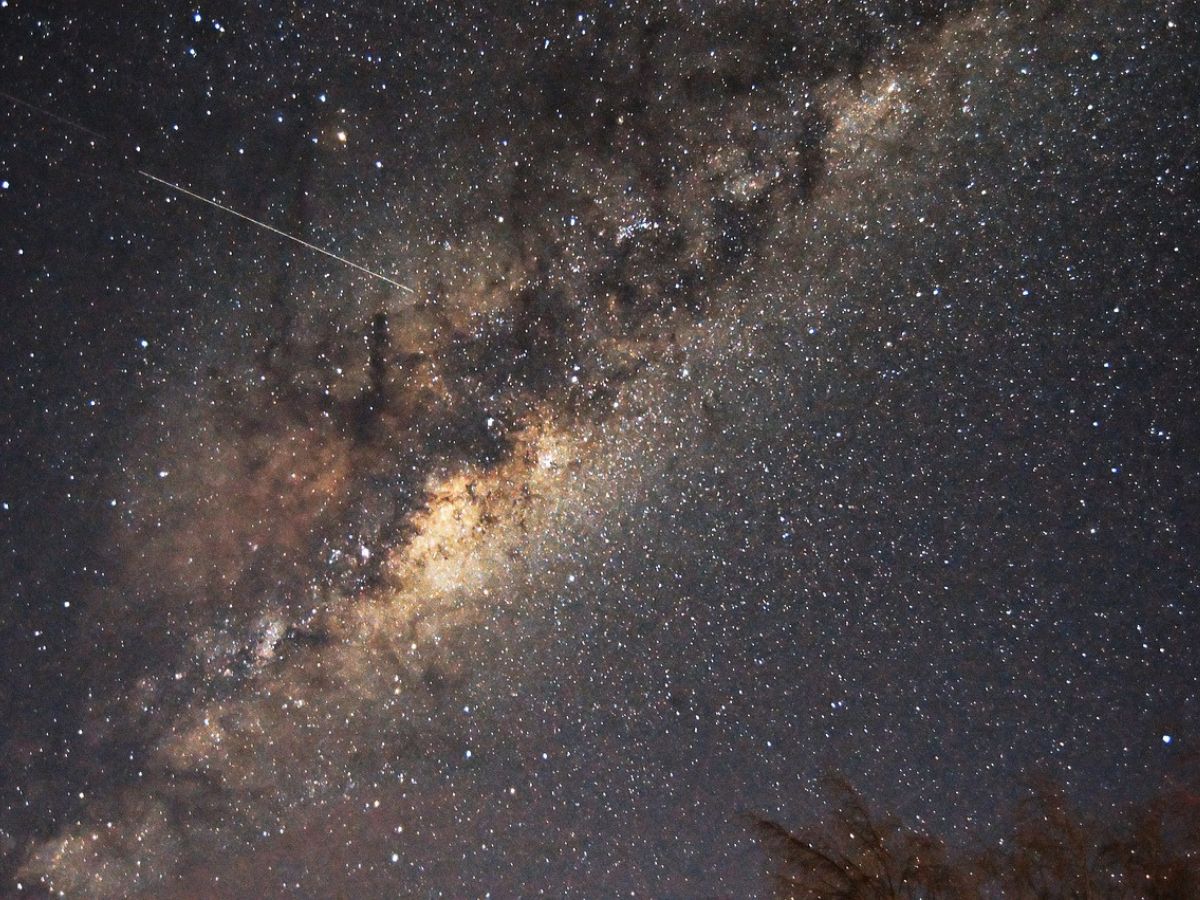
As 2025 winds down, the night sky is still delivering memorable moments for stargazers. After a year filled with notable celestial sightings, the final meteor shower of 2025 is about to put on its show—and the timing couldn’t be better, with peak activity arriving soon and viewing conditions expected to be especially favorable.
This late-December display is the Ursids, a meteor shower linked to comet 8P/Tuttle. The comet itself was discovered back in 1790 by astronomer Pierre Méchain and is estimated to be around 4 kilometers wide. While 8P/Tuttle is the source associated with the Ursids, observers note that the meteor stream doesn’t always behave as a simple “follow-the-comet” event. The debris swarm appears to travel on its own established path, which can influence how the shower performs from year to year.
In 2025, the Ursids will be active from December 17 through December 26, giving skywatchers several nights to catch meteors streaking across the darkness. Still, it’s worth setting expectations: this shower is typically more modest than the more dramatic meteor events earlier in December. Under normal conditions, you might see around 10 meteors per hour. However, the peak is expected on December 22, 2025, when activity could climb as high as 50 meteors per hour.
One of the biggest reasons this year’s Ursids are worth planning for is the Moon—or rather, the lack of it. With minimal moonlight washing out the sky, faint meteors should be easier to spot, improving visibility and making the shower more enjoyable even for casual observers.
To boost your chances of seeing the Ursids, aim your gaze toward Kochab, the orange star in the Ursa Minor constellation. The best time to watch is before sunrise, when the radiant area is better positioned in the sky. For the clearest view, choose a location with an unobstructed horizon, as well as a dark sky away from streetlights and city glow. If clouds cooperate, the last meteor shower of 2025 could be a fitting finale to the year’s skywatching calendar.