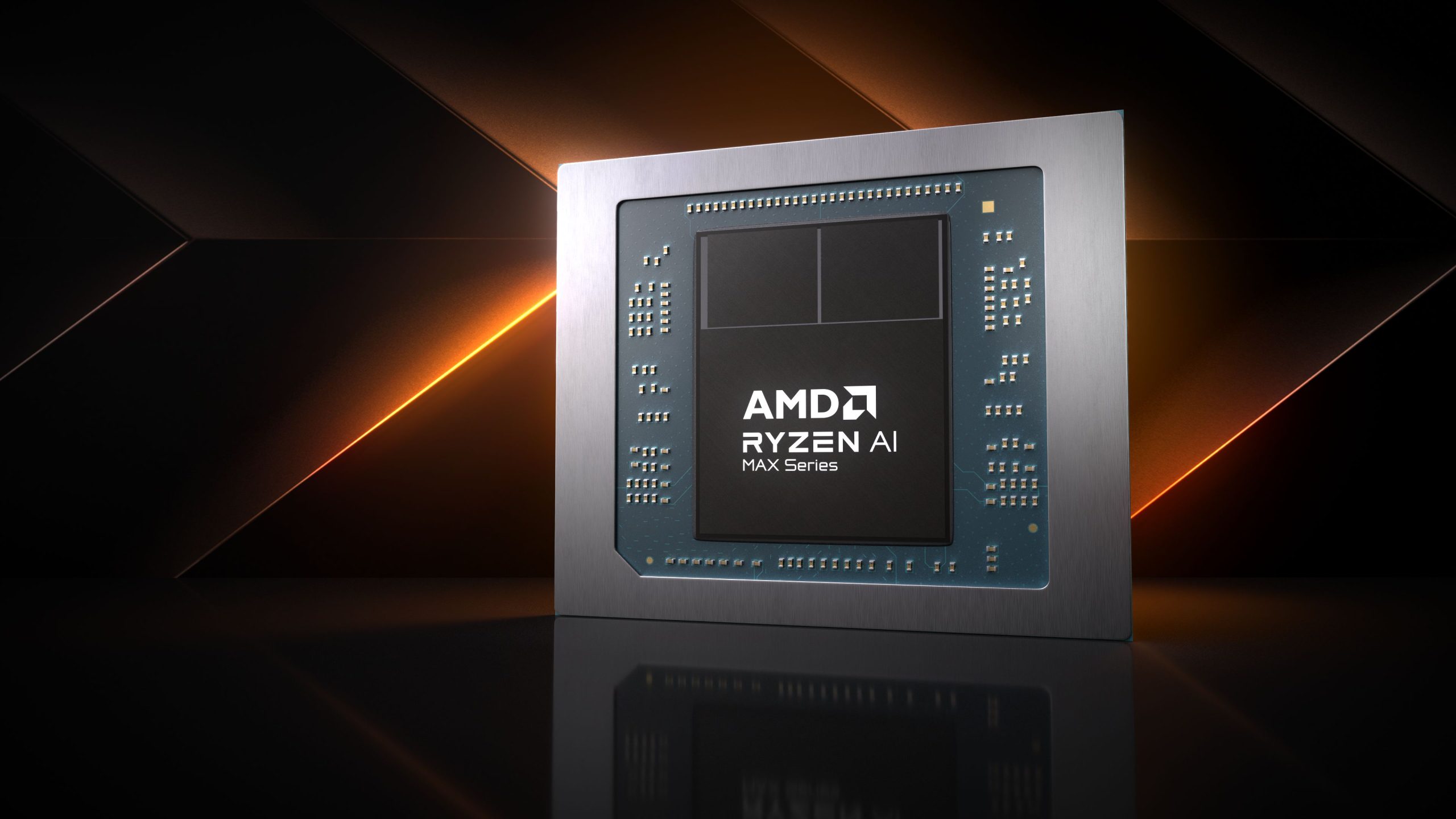
Prepare yourself for a leap into the future of computing with the arrival of AMD’s latest powerhouse: the Ryzen AI Max “Strix Halo” APUs. These innovative chips are set to transform mobile workstation platforms with their robust specs, offering up to 16 CPU cores and a staggering 40 GPU cores.
The Strix Halo series represents a new era of AI-focused processing power, crafted specifically for the mobile AI PC platform. Officially branded as the Ryzen AI Max and Max Pro, these chips redefine what’s possible in laptops, promising cutting-edge performance that was previously a mere dream. The lineup includes two classes of chips: the top-tier Max+ and the standard Max, with the Max+ delivering unparalleled specs.
Under the hood, the Strix Halo APUs combine AMD’s impressive Zen 5 and RDNA 3.5 technologies, utilizing advanced packaging solutions such as chiplets. Each Zen 5 core has its dedicated CPU Core Complex Die (CCD), supporting up to 16 cores across two CCDs. Unlike some competitors, these don’t use Zen 5C dies—they’re full-throttle Zen 5 powerhouses.
On the graphics front, the APU’s IO die holds an integrated GPU featuring up to 40 RDNA 3.5 compute units and integrated controllers. This setup is enhanced by LPDDR5x memory, allowing a swift 256 GB/s bandwidth, and the impressive 50 TOPS “XDNA 2” Neural Processing Unit (NPU), setting a new standard in the Copilot+ AI PC field.
When it comes to performance tiers, the AMD Ryzen AI Max “Strix Halo” series does not disappoint. Topping the lineup is the Ryzen AI Max+ 395, with 16 cores and 32 threads, a maximum boost clock of 5.1 GHz, and a sprawling 80MB cache. Its 40 compute units ensure top-notch graphics, cementing its position as a leader in AMD’s release.
Meanwhile, the Ryzen AI Max 390 and Max 385 cater to different needs with 12/24 and 8/16 cores/threads, respectively. Both chips feature a remarkable boost clock of 5.0 GHz, supporting robust performance. At the entry level, the Ryzen AI Max Pro 380 offers 6 cores and 12 threads, a 4.9 GHz peak clock, and the same potent 50 TOPS NPU.
In the performance arena, AMD positions the Ryzen AI Max+ 395 as a formidable competitor, showcasing up to 3x better performance than Intel’s Lunar Lake “Core Ultra 9 288V” CPU. Even when comparing the baseline TDP, AMD boasts a 2.5x TDP advantage, with graphic performance surpassing competitors by up to 158%.
The Strix Halo APUs don’t just shine against Intel but also outperform Apple’s Macbook M4 Pro in benchmarks, ensuring they maintain a compelling edge or equal footing. Particularly in AI tasks, the Ryzen AI Max+ 395 is heralded as the first Copilot+ PC APU capable of running 70B LLM, delivering AI performance in LM Studio that’s 2.2x faster than the NVIDIA GeForce RTX 4090 24 GB GPU while maintaining up to 87% lower TDP.
Looking to the future, the AMD Strix Halo, Ryzen AI Max, and their APUs are slated for availability in Q1 and Q2 of 2025. Consumers can expect these chips to power laptops and Mini PCs from leading brands, including HP and ASUS, with potential expansions to other OEM options in the months that follow. With these advancements on the horizon, AMD is firmly planting its flag in the future of mobile computing.