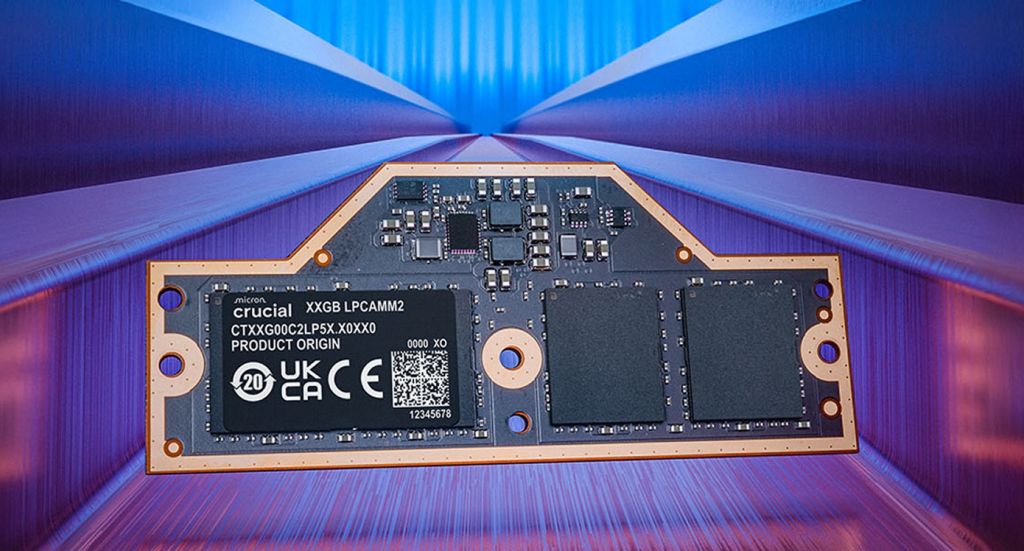
Laptop memory just got a major upgrade. Crucial has introduced its LPCAMM2 modules for notebooks, bringing desktop-class speed and efficiency to portable machines with up to 64GB capacity and blistering speeds up to 8,533 MT/s. Built on LPDDR5X technology in a compact, replaceable form factor, LPCAMM2 is designed for next‑generation AI PCs and high-performance mobile workstations.
Key highlights
– Speed: up to 8,533 MT/s
– Capacity: up to 64GB per module
– Architecture: LPDDR5X-based, standards-compliant LPCAMM2
– Size: less than half the footprint of a standard DDR5 SODIMM
– Performance and efficiency: up to 1.5x faster than traditional DDR5 SODIMMs with lower power draw
– Upgradeable and repairable: designed to extend device lifespan and reduce e‑waste
– Compatibility: works with next‑gen AI mobile workstations from Lenovo and Dell, with broader support expected
– Availability and pricing: available now through select retailers and channel partners; 32GB from $232.99 and 64GB from $451.99 (US)
Why it matters
LPCAMM2 combines the speed and energy savings of LPDDR5X with the convenience of a user-replaceable module. That means thinner, lighter laptops can deliver more performance without sacrificing battery life, and users aren’t stuck with soldered memory that can’t be upgraded later.
Who benefits
– AI developers and data scientists: faster memory bandwidth helps accelerate local inference, model experimentation, and data-intensive workflows.
– Creators and engineers: improved throughput for rendering, photo/video editing, CAD, and simulations.
– Mobile professionals: smoother multitasking across web browsing, video conferencing, and productivity apps, with better efficiency on the go.
– IT teams and sustainability-focused buyers: upgradeable memory supports longer refresh cycles, reduced e-waste, and a more sustainable device strategy.
Engineered with close collaboration across the PC ecosystem, LPCAMM2 is built for seamless integration in AI-ready laptops. If you’re configuring a new mobile workstation or planning an upgrade path, these modules offer a compelling alternative to traditional SODIMMs—delivering higher bandwidth, lower power consumption, and a smaller footprint without locking you into fixed, soldered RAM.