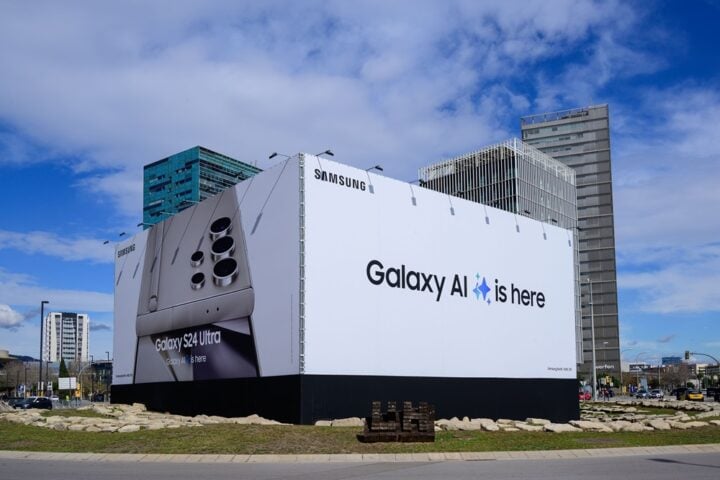
Samsung’s Galaxy AI, introduced with the latest Galaxy S24 series, has been spotlighted as an innovative step forward in smartphone technology. The company has discussed the AI capabilities at length, suggesting that it could revolutionize the way we use our phones. While the potential of Galaxy AI is evident, its current iteration still leaves room for growth towards a more autonomous and proactive assistant.
As it stands, user initiation is necessary for the AI to function. It does not predict needs or take action independently, such as notifying you of an imminent package delivery based on an email alert. Instead, Galaxy AI waits for direct commands to operate.
The range of features provided by Galaxy AI is commendably diverse, including efficient live translation for multilingual interactions and the ability to summarize notes and web content. Most impressively, the AI capabilities within the camera app allow for sophisticated image manipulation and the creation of slow-motion videos, greatly enhancing Samsung’s photographic offerings.
However, the need to manually activate these features can limit their discovery and utilization, particularly for new users unfamiliar with Samsung’s user interface. There is a missed opportunity for a more intelligent and intuitive AI experience here.
The future could see Galaxy AI become an unobtrusive yet ever-available presence. Imagine an AI that proactively offers to edit obstructions from photos or converts fast-action videos into slow-motion samples without prompting. It could also integrate with SmartThings to activate home automation as you arrive, or assist in finding lost items with Galaxy Smart Tag 2, streamlining the user experience in multiple scenarios.
This vision includes a seamless operation where AI capabilities extend beyond isolated tasks, such as translating not only live conversations but also pre-recorded, language-different YouTube videos. Achieving this level of integration and convenience will undoubtedly demand substantial technological developments and collaboration across the AI sector.
Although realizing these advancements might take some time, they reflect the aspirations for smartphone AI that transcends current limitations. A truly holistic AI solution that works fluidly across applications, services, and ecosystems could redefine smartphone usage. As AI technologies evolve, we may gradually approach an era where our digital assistants anticipate our needs and facilitate a new standard of device interaction.
Embracing Galaxy AI’s potential means looking forward to an ambitious, interconnected future where our smartphones are not just tools but proactive partners in our daily lives.


