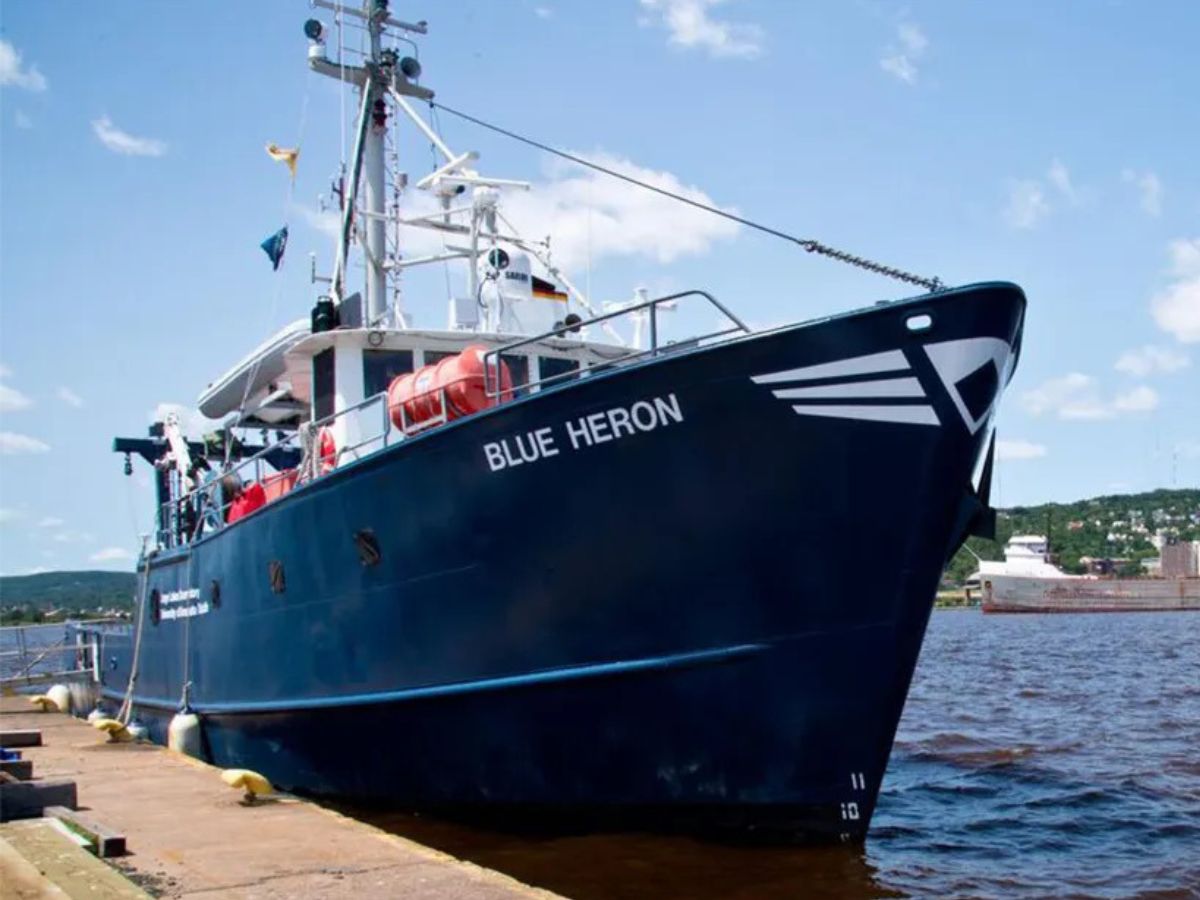
A fascinating discovery has surfaced from the depths of the Great Lakes, thanks to the University of Minnesota Duluth’s research fleet. While the Blue Heron boat was undergoing routine maintenance, a curious, viscous substance was spotted clinging to its rudder. This substance turned out to be something entirely unexpected—a potential new species of microorganism.
The discovery was made in the warm, oxygen-deprived, and greasy environment of the boat’s rudder, an area not commonly associated with such finds. Upon closer examination, scientists described this enigmatic substance as resembling tar or jelly. Led by Professor Cody Sheik, the research team believes this organism possibly belongs to an unfamiliar genus, tentatively named ShipGoo001.
ShipGoo001 appears to thrive in biofilm alongside other microbial species, some of which have been identified in places as extreme as oil wells and tar pits. The revelation of life within the “ship goo” was a surprise, as expectations for finding viable DNA in such conditions were low. Yet, the DNA was surprisingly intact, sparking excitement and curiosity among the researchers.
Although the slime appears dark and sticky like tar, the scientific team has not yet captured microscopic images of ShipGoo001. Consequently, the exact appearance of this microorganism remains a mystery. The upcoming genome study promises to shed light on its origins and peculiar ability to form without oxygen—challenging conventional understanding of life in aquatic environments.
This remarkable find not only opens a new chapter in microbiological research but also poses intriguing questions about life’s adaptability in extreme conditions. As further studies unfold, researchers are eager to unveil more secrets of this mysterious microorganism from the deep.