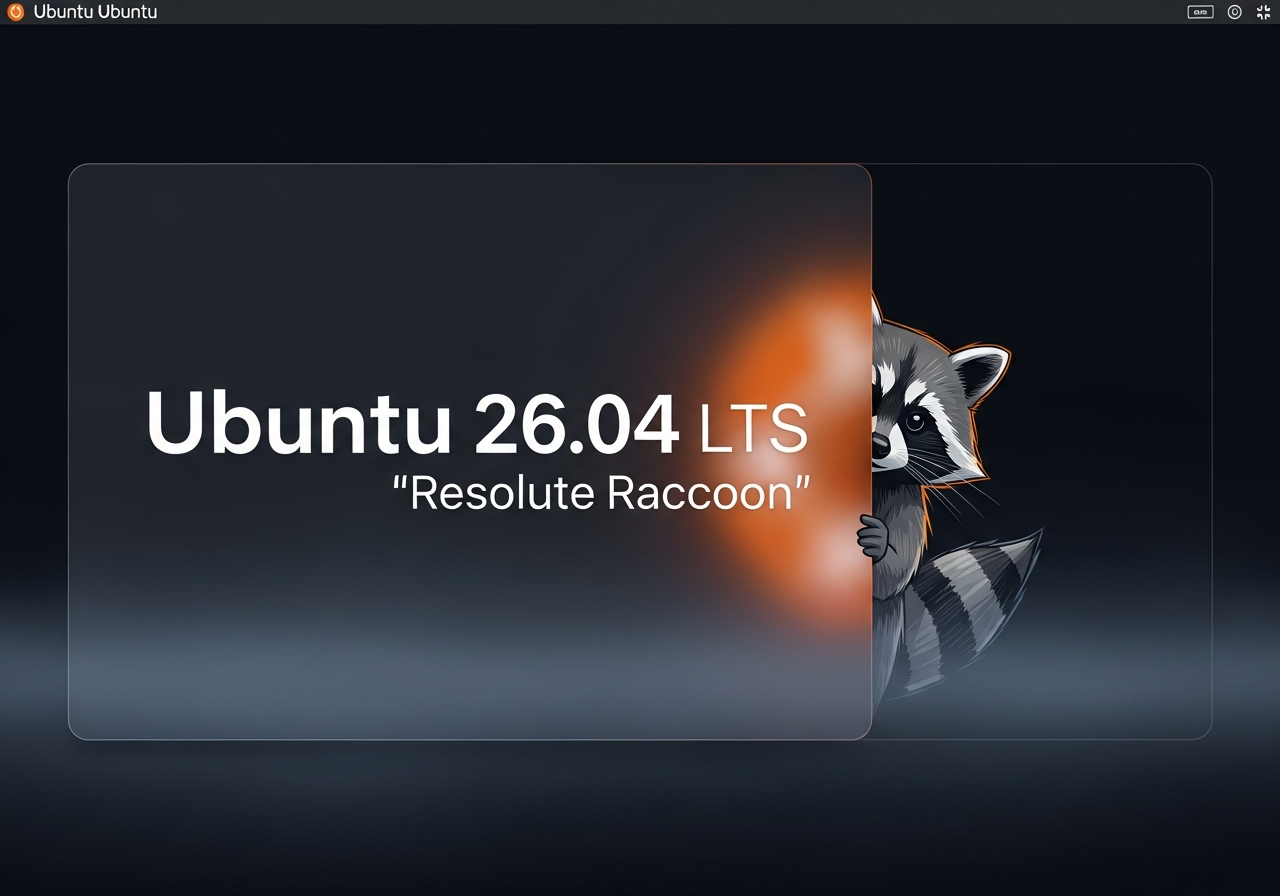
Ubuntu 26.04 LTS “Resolute Raccoon” beta is now available, giving Linux fans and developers an early look at what’s coming ahead of the stable release planned for April 23. As the next long-term support edition, this beta is a key milestone for anyone who relies on Ubuntu for workstations, development, or long-lived deployments and wants to test hardware, applications, and workflows before launch.
One of the biggest highlights in Ubuntu 26.04 LTS beta is the move to the GNOME 50 desktop. Alongside the new desktop release, Ubuntu includes a broad mix of refreshed visuals and usability refinements, such as a new default wallpaper, a fully opaque dock, and a set of colorful new folder icons that make the desktop feel more modern and polished.
Under the hood, this beta is also notable because it ships with a release candidate build of Linux kernel 7.0. Since kernel 7.0 has not yet reached final release, Ubuntu is using the latest candidate to provide early compatibility and performance testing. For users with newer laptops, desktops, and peripherals, this can be especially important for validating device support ahead of the final Ubuntu 26.04 LTS rollout.
System monitoring also gets attention in this release. Ubuntu 26.04 LTS beta introduces a new default system monitoring app called Resources, designed to make it easier to track CPU, memory, disk, and other system activity without relying on third-party tools.
Developers and AI practitioners will also notice improvements aimed at modern workloads. AMD ROCm and NVIDIA CUDA packages and related tools are available directly from the Ubuntu archives, making it simpler to set up GPU-accelerated environments for machine learning, compute, and other high-performance tasks without as much manual configuration.
On the software stack side, Ubuntu 26.04 LTS beta brings a wave of updates. OpenJDK 25 becomes the new default (with older Java versions still available for compatibility), Mesa is updated to 26.0.2 for improved graphics support, and the time server component is updated to Chrony 4.8.
Ubuntu’s settings and installation experience also see changes. The Settings app includes various tweaks, and there’s a new Ubuntu Telemetry controls panel. The installer adds a new telemetry-related slide, along with smaller text and design adjustments intended to improve clarity during setup.
Early adopters should be aware of one notable beta hiccup: the Software & Updates utility is not preinstalled in this beta build. That’s the kind of issue typically resolved before the final release, but it’s still worth knowing if you depend on that tool for managing repositories and update sources.
For anyone looking to download and test it, Ubuntu 26.04 LTS beta is available in the standard 64-bit build for Intel and AMD PCs. There are also ARM options, including a generic ARM image and a preinstalled image for Raspberry Pi. In addition, Ubuntu variants with alternative desktop environments (such as community flavors) may receive beta images on a different schedule, and the lineup also includes a server install image and a WSL image for Windows-based workflows.
If you like testing upcoming Linux releases, this beta is a solid opportunity to try GNOME 50, preview kernel 7.0-era hardware support, and see how Ubuntu 26.04 LTS is shaping up before the final April release.