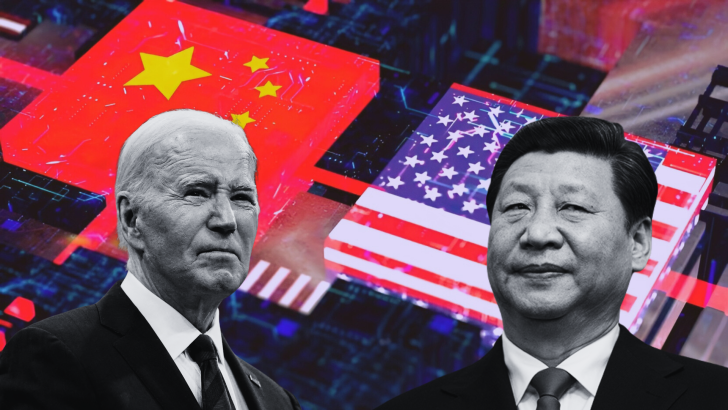
The ongoing US-China rivalry over semiconductor supremacy is reaching new heights, as both countries are fiercely committed to advancing their domestic industries. As the US navigates this complex landscape, Commerce Secretary Gina Raimondo recently acknowledged that attempts to curb China’s rapid semiconductor development are proving to be ineffective. In her view, the true path to success lies in fostering innovation at home.
Raimondo emphasizes that trying to hold back China’s progress is futile. Instead, she believes that the key for the US is to outpace China with faster innovation and technological advancements. Her sentiments underscore the importance of staying ahead in this competitive field.
Under President Biden, the US has made significant strides to boost its semiconductor sector. The introduction of the CHIPS Act, which allocates $53 billion in tax incentives, grants, and loans, has encouraged companies like Samsung, TSMC, and Intel to invest in building state-of-the-art facilities on American soil. This development marks a significant leap towards achieving national semiconductor independence, though the journey is far from over.
Despite efforts by the US and its allies, such as Japan and the Netherlands, to limit China’s access to advanced semiconductor technology, China continues to make notable gains in semiconductor production, particularly in mature nodes. Chinese manufacturers like SMIC have achieved significant advancements, suggesting that US strategies to impede China’s progress have not been entirely successful.
As the semiconductor saga unfolds, the stance of the US might evolve, especially with potential changes in leadership. Former President Trump has expressed skepticism about the effectiveness of the CHIPS Act, and his administration’s return could bring shifts in policy. Regardless, it’s clear that the competition between these global powers is poised to intensify, making it a critical watch for industry stakeholders and policymakers alike.