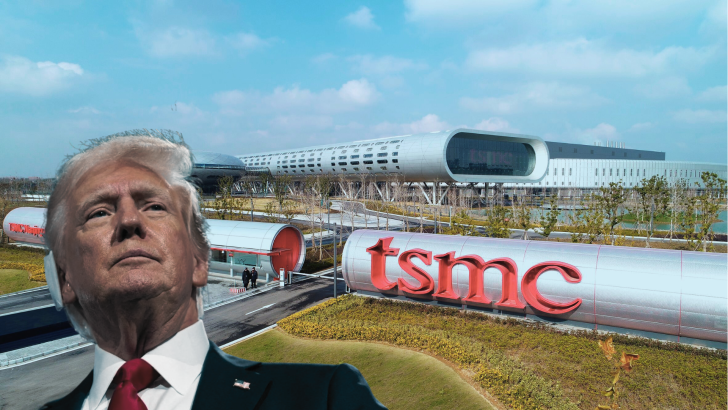
The grand opening of TSMC’s Arizona facility is set to be a landmark event in America’s chip manufacturing landscape. However, the much-anticipated inauguration has been pushed to January, a strategic shift to coincide with the potential return of Donald Trump as a political force in the United States. The decision reflects the complex interplay between the semiconductor giant’s ambitions and the evolving political scene.
TSMC, a leading player in the semiconductor industry, finds its Arizona expansion subject to new dynamics as the political atmosphere in the U.S. prepares for a shift. Originally scheduled for December, the opening has been rescheduled to align with what could be a pivotal moment as Trump and his chosen policymakers potentially take the helm. This move might be construed as an effort to usher in a favorable reception from the incoming administration, which may hold significant sway over future business dealings.
The Arizona facility, a product of the CHIPS Act fostered by the current administration, aims to boost domestic semiconductor production capabilities. Questions linger about the effectiveness of the initiative, though it successfully captured TSMC’s investment. The facility represents a calculated strategy to mitigate tensions between China and the U.S., underscoring a step toward more autonomous chip production.
There are expectations that Trump’s administration could impose stricter conditions on TSMC, including the possibility of an “exclusive tax,” though these remain speculative at this stage. Such measures could see TSMC navigating tighter regulatory waters under the new leadership.
The U.S. is keenly aware it cannot rely solely on domestic producers like Intel to fulfill its semiconductor needs. Intel, despite being a significant beneficiary of financial support, has not consistently met expectations. TSMC thus emerges as a critical partner. As Trump is expected to recognize TSMC’s importance, there may be cautious optimism rather than apprehension about the administrative transition’s impact on TSMC’s prospects.
Simultaneously, friction persists between the U.S. and Taiwan regarding the directions of semiconductor collaborations, especially with Taiwan’s recent statements resisting the development of advanced nodes like 2nm abroad. This shift necessitates careful maneuvering by TSMC in anticipation of new administrative policies.
In sum, TSMC’s move in Arizona is at the crossroads of technological ambition and political currents, marking a significant chapter in the semiconductor narrative of both the U.S. and Taiwan.