TSMC Nears AI Packaging Demand as CoWoS and SoIC Capacity Rapidly Expands
TSMC’s advanced chip packaging business is finally getting close to matching the explosive demand created by artificial intelligence hardware. After several years of aggressive expansion, the company has been roughly doubling its CoWoS and SoIC capacity every year, helping ease one of the biggest bottlenecks in the AI semiconductor supply chain.
CoWoS, short for Chip-on-Wafer-on-Substrate, has become a critical packaging technology for high-performance AI processors, especially those paired with high-bandwidth memory. As AI accelerators continue to grow larger and more complex, packaging has become just as important as chip manufacturing itself. Without enough advanced packaging capacity, even the most powerful AI chips cannot be produced at the scale customers need.
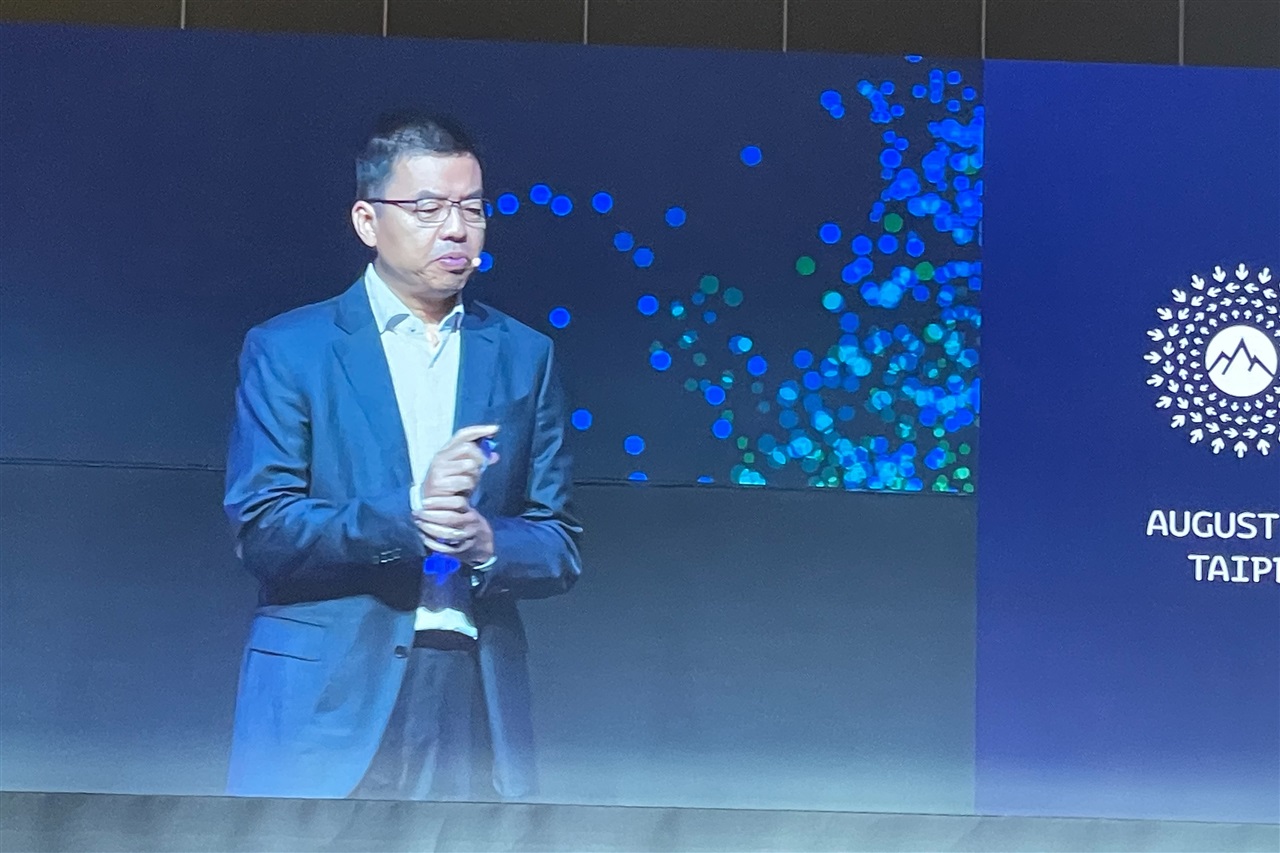
According to Jun He, TSMC’s recent progress suggests the company is now approaching a level of capacity that may finally be close to sufficient. That is a major shift for the AI chip market, where demand has repeatedly outpaced supply as cloud providers, data center operators, and semiconductor designers race to deploy more AI computing power.
TSMC’s CoWoS production performance is also notably strong. The company is reportedly achieving yields above 98% on multiple AI customer products that are already in high-volume manufacturing, with some products reaching as high as 99%. These numbers are significant because advanced packaging for AI chips is highly complex, and strong yields help improve supply, reduce waste, and support faster product delivery.
The expansion of SoIC capacity is another important part of TSMC’s strategy. SoIC, or System on Integrated Chips, enables more advanced 3D chip stacking and tighter integration between different silicon components. As chipmakers look beyond traditional scaling methods, technologies like SoIC are expected to play a larger role in future AI processors, high-performance computing chips, and custom silicon designs.
For the broader AI industry, TSMC’s progress could help reduce pressure on the supply chain. Over the past few years, advanced packaging capacity has been one of the key constraints limiting shipments of AI accelerators. If TSMC can continue increasing output while maintaining yields near 99%, customers may see better availability for next-generation AI hardware.
Still, demand remains extremely high. AI model training, inference workloads, and data center expansion continue to fuel massive orders for advanced semiconductors. Even with years of capacity doubling, TSMC is only now getting close to meeting the needs of its AI customers.
The company’s progress highlights how central advanced packaging has become to the future of computing. In the AI era, performance is no longer driven only by smaller process nodes. Technologies such as CoWoS and SoIC are now essential for connecting powerful processors with memory at the speed and efficiency required for modern workloads.
TSMC’s ability to scale advanced packaging while maintaining excellent yields gives it a strong position in the global AI chip market. If current trends continue, the company could play an even bigger role in enabling the next wave of AI infrastructure, from hyperscale data centers to specialized high-performance computing systems.