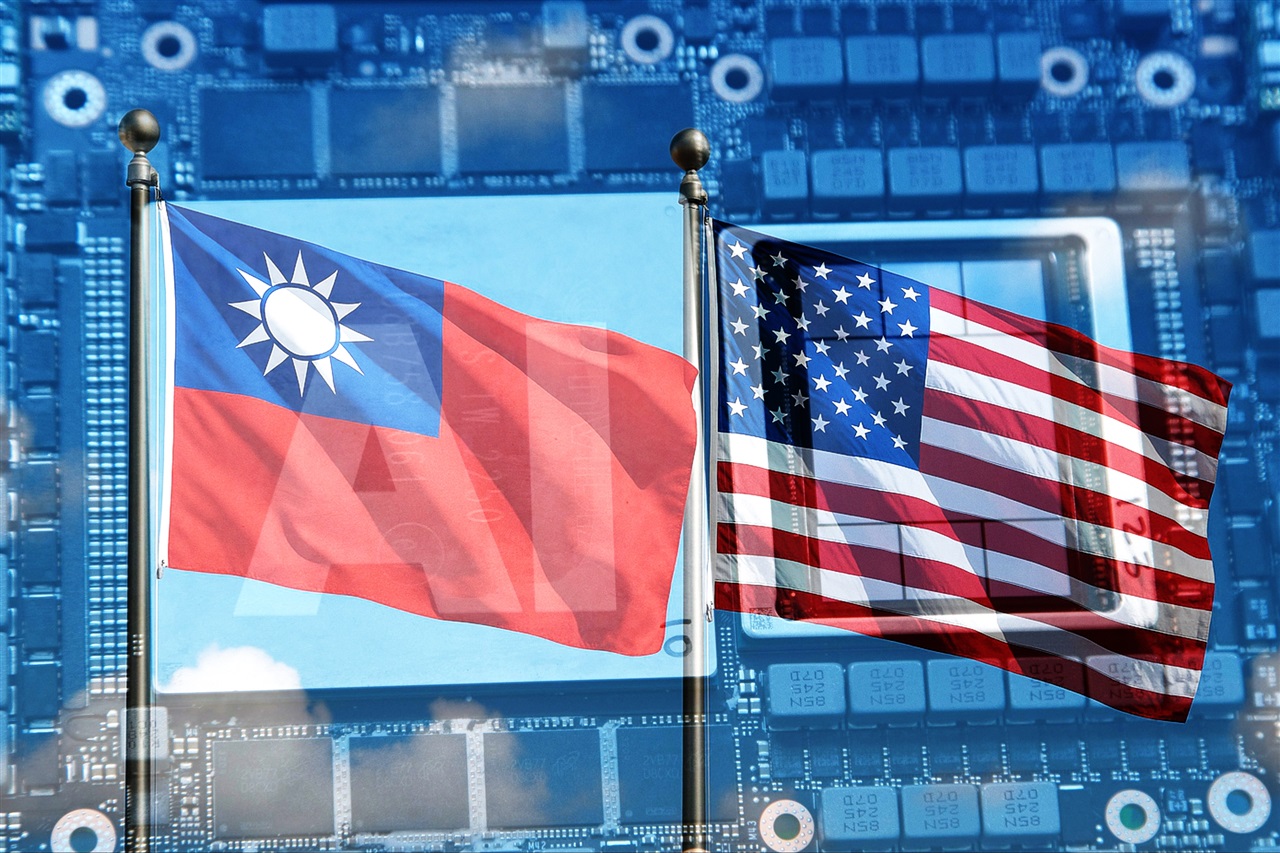
The Trump administration is reportedly closing in on a major trade agreement with Taiwan that could reshape the flow of technology goods into the United States while accelerating domestic chip production. The talks are said to be in the final stretch, with a package designed to lower or roll back certain U.S. tariffs on Taiwanese imports in exchange for new commitments tied to semiconductor manufacturing—particularly expansion plans involving Taiwan Semiconductor Manufacturing Co. (TSMC).
At the center of the developing agreement is a straightforward trade-off: improved market access for Taiwanese goods through reduced tariffs, paired with stronger guarantees that more advanced semiconductor production capacity will be built on U.S. soil. The goal is to strengthen America’s supply chain security for critical components used in everything from smartphones and laptops to cars, defense systems, data centers, and AI hardware.
Semiconductors have become one of the most strategic industries in the global economy, and Taiwan remains an essential player. Any deal that connects tariff relief with chip investment is likely aimed at achieving two outcomes at once—easing trade friction with a key partner while making the U.S. less vulnerable to disruptions in overseas chip supply.
TSMC’s potential manufacturing expansion is especially important because the company produces many of the world’s most advanced chips. Increasing U.S.-based production capacity could help American companies secure more stable long-term access to leading-edge components, while also supporting high-skilled jobs and investment in local manufacturing ecosystems.
If finalized, the agreement may also send a broader signal about U.S. economic strategy: using trade policy not only to manage imports and exports, but to encourage domestic production of critical technologies. For businesses that depend on semiconductors, the deal could become a major development to watch—one that may influence pricing, supply reliability, and future investment decisions across the tech and manufacturing sectors.
Details are still emerging, but the direction is clear: tariff adjustments linked to a push for expanded semiconductor production, with Taiwan positioned as a central partner in the U.S. drive to reinforce chip supply chains and support next-generation manufacturing.