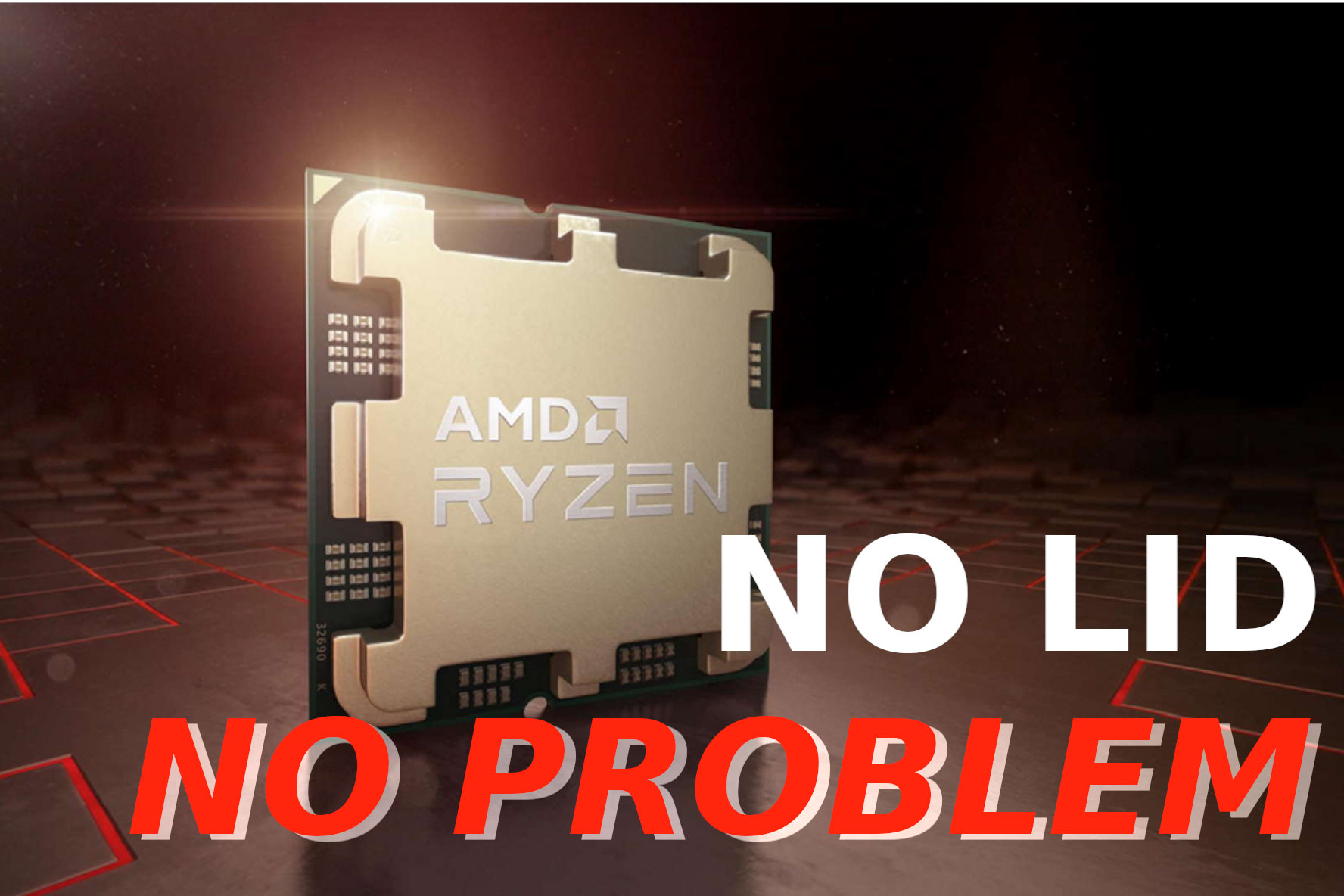
The AMD Ryzen 7 8700G, an affordable and promising option for gamers on a budget, offers significant power with its eight Zen 4 cores and integrated Radeon 780M iGPU. A recent experiment involving this CPU has unlocked its full potential, demonstrating the transformative effects of delidding and using high-performance thermal solutions.
Before any modifications, the Ryzen 7 8700G showed solid performance, reaching speeds between 4,625-4,750 MHz across its eight cores during a Cinebench R23 benchmark test, resulting in a score of 16,535 points. Modest performance gains were seen when using AMD’s Precision Boost Overdrive, which increased clock speeds to 4,850 MHz at the expense of higher power consumption, but only added 385 points to the Cinebench score.
Further, a manual overclock yielded better results with a Cinebench score of 17,947, although it raised CPU temperatures to 92 degrees Celsius, highlighting the need for better cooling solutions when pushing the CPU’s limits.
The game changed dramatically when the CPU was delidded—an act of removing the protective lid to replace the stock thermal interface material (TIM). Using a premium Thermal Grizzly KryoSheet thermal pad resulted in a substantial 10-degree Celsius drop in temperatures during stress testing.
But it was the application of Thermal Grizzly’s Conductonaut Extreme liquid metal TIM that truly revolutionized the CPU’s performance. In its default form, the liquid metal reduced the CPU temperature by almost 10 degrees to approximately 57 °C. With Precision Boost Overdrive activated, the Ryzen 7 8700G operated at about 68 °C when running Cinebench, while a manual overclock to 5 GHz after the delid maintained temperatures between 62–64 °C—significantly cooler than the 85 °C pre-delid.
Leveraging the additional thermal headroom provided by the liquid metal, a stable 5.3 GHz overclock across all eight cores was achieved. This aggressive overclock yielded core temperatures close to 80 °C and propelled the Cinebench R23 score to an impressive 20,022—a 21% increase from the original performance.
These experiments underscore the potential that lies within mid-tier CPUs like the Ryzen 7 8700G. Through careful modification and the application of advanced cooling technologies, substantial performance gains can be achieved, transforming these CPUs into powerful components capable of delivering next-level gaming and computing experiences.