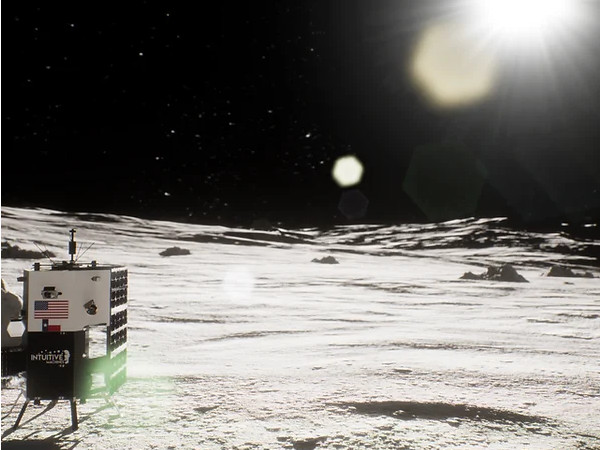
The latest lunar expeditions are taking a different approach to space exploration. Instead of traditional symbols of human triumph such as astronauts and flags, NASA is now opting to send advanced scientific equipment to the moon. This suite of tools, including telescopes, radio antennas, laser measuring devices, and cameras, hold the promise of shaping our understanding of the cosmos and paving the way for subsequent exploratory missions.
Launching on February 15 at 7:00 a.m. CET aboard a Falcon 9 rocket, the mission carries a payload that will set foundational work for the future of space research. Notably, the mission includes several other players in the space industry, illustrating a trend of collaborative efforts in expanding our cosmic knowledge.
The lunar environment offers unique advantages for astronomical observations. Its lack of clouds, atmosphere, and a magnetic field creates an ideal setting for telescopes that seek to capture the beauty and mystery of space with high precision. Although the moon already hosts two telescopes dedicated to observing the ultraviolet spectrum, the newcomers aim to broaden the scope of lunar-based astronomy.
Among the instruments is ILO-X, a compact telescope with a modest 1.2-inch objective lens. Despite its size, ILO-X is a powerful tool designed to peer into the heart of the Milky Way and survey other bright objects in the night sky. This mission will serve as a benchmark to determine the feasibility of transporting larger telescopes to the moon in the future.
Another intriguing device is ROLSES, a radio telescope poised to study the magnetic fields of the Sun and Earth, as well as their interactions from the moon’s vantage point. As Venus and Mars lack intrinsic magnetic fields, the moon provides a perfect platform for these observations. The findings from ROLSES could play a critical role in detecting distant exoplanets that have their own magnetic fields, which is considered a potential indicator of life-supporting conditions.
The ambitions for lunar-based astronomy do not end there. Future initiatives include the construction of a 6-mile radio telescope, which, in an optimal scenario, would have the capacity to identify numerous planets that could support life.
An additional goal is to capture an image of the universe at 30 megahertz in the short-wave range. This feat cannot be accomplished from Earth due to these frequencies being reflected back by our upper atmosphere—a phenomenon that allows shortwave radio programs to have a vast reach. Thus, the moon stands as a unique observational point for such scientific endeavors.
While these ambitions underscore grand plans for cosmic studies, what en route to the moon right now are the precursors to such advanced research equipment. These miniature versions of the larger vision aim to lay the groundwork for a more detailed exploration of space—a vision that seems far more inspiring than commercial moon tourism or lunar mining prospects.