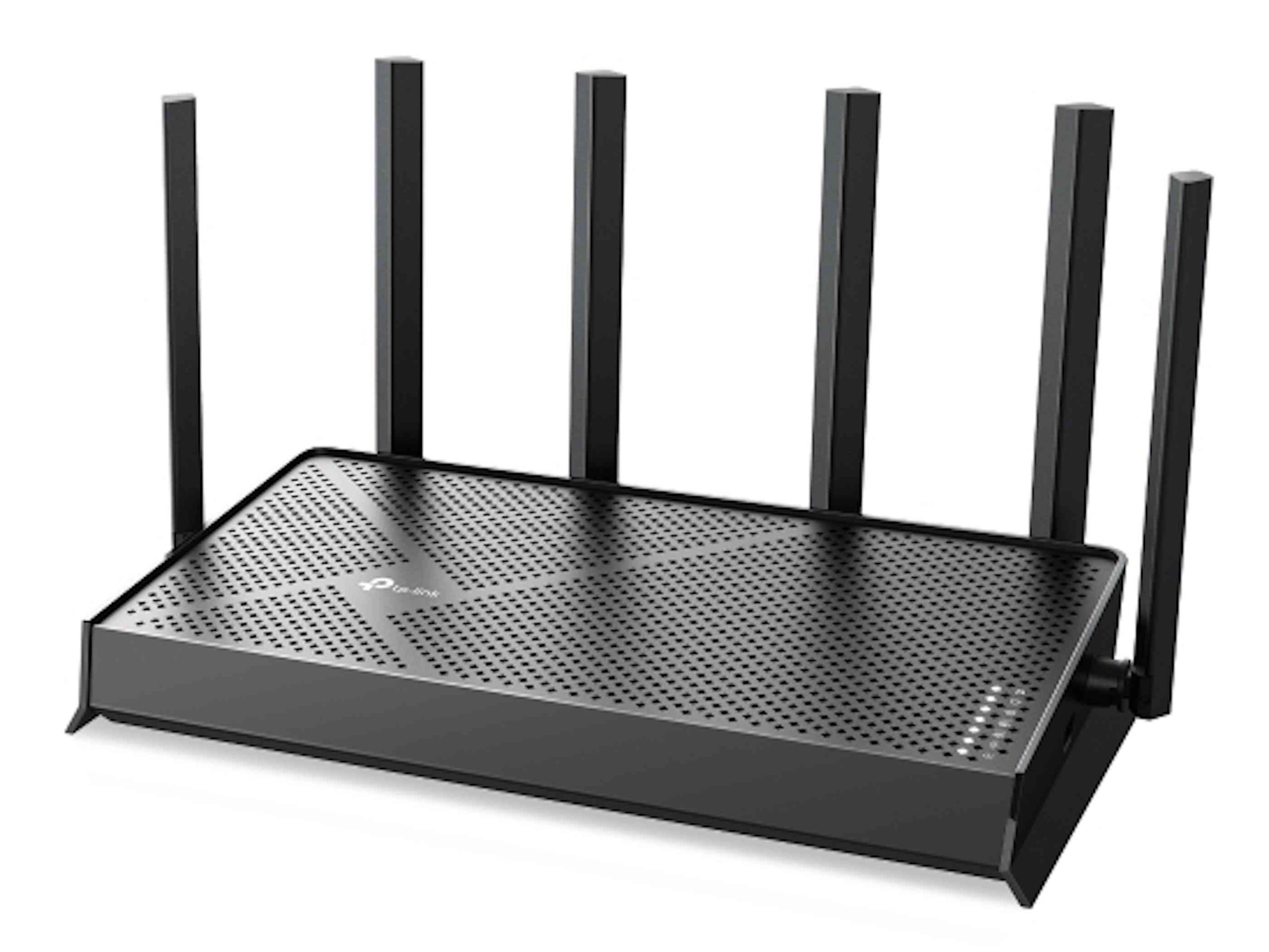
TP-Link has introduced the Archer BE670, a new WiFi 7 router aimed at users who want faster wireless performance, strong whole-home coverage, and plenty of high-speed wired connections. Built with WiFi 7 features and multi-band support, it’s designed to handle busy households where streaming, gaming, video calls, and smart home devices all compete for bandwidth at the same time.
One of the Archer BE670’s biggest selling points is its tri-band setup, including support for the 6GHz band. TP-Link lists peak wireless speeds of up to 5,765 Mbps on 6GHz and up to 5,765 Mbps on 5GHz, while the 2.4GHz band reaches up to 688 Mbps. In real-world terms, this gives compatible devices more room to breathe, especially in environments where the 5GHz band is already crowded. The router also supports MU-MIMO and OFDMA, two key technologies that help manage multiple connected devices more efficiently by improving how data is shared across the network.
For coverage, TP-Link positions the Archer BE670 as a solid choice for larger homes, including three-bedroom layouts. It comes with six external antennas, and for people who need even more range or better performance in dead zones, the router can be expanded into a mesh network using EasyMesh. That means you can add compatible nodes later to extend coverage without replacing your entire setup.
Wired networking is another area where the Archer BE670 focuses on power users. The router includes five Ethernet ports total, with standout options for high-bandwidth connections: one 10 Gbps port and one 2.5 Gbps port, each configurable as either WAN or LAN. This flexibility is useful depending on your internet service and hardware. For example, if your internet plan doesn’t exceed multi-gig speeds, it may make more sense to use the 10 Gbps port for a NAS or a high-performance desktop rather than reserving it for the modem. Alongside those faster ports, there are three more Gigabit Ethernet ports for typical wired devices like smart TVs, game consoles, or streaming boxes.
There are a couple of notable limitations to keep in mind. The Archer BE670 does not include a USB port, which means you can’t easily plug in an external drive and share it across the network as a simple alternative to a NAS. On the upside, it does support creating separate networks for IoT devices, a useful option for better organization and potentially improved security for smart home gear.
Pricing-wise, TP-Link lists the Archer BE670 at $299, putting it in the higher-end router category for shoppers who want WiFi 7 speeds, 6GHz support, mesh expandability, and multi-gig Ethernet options in one package.