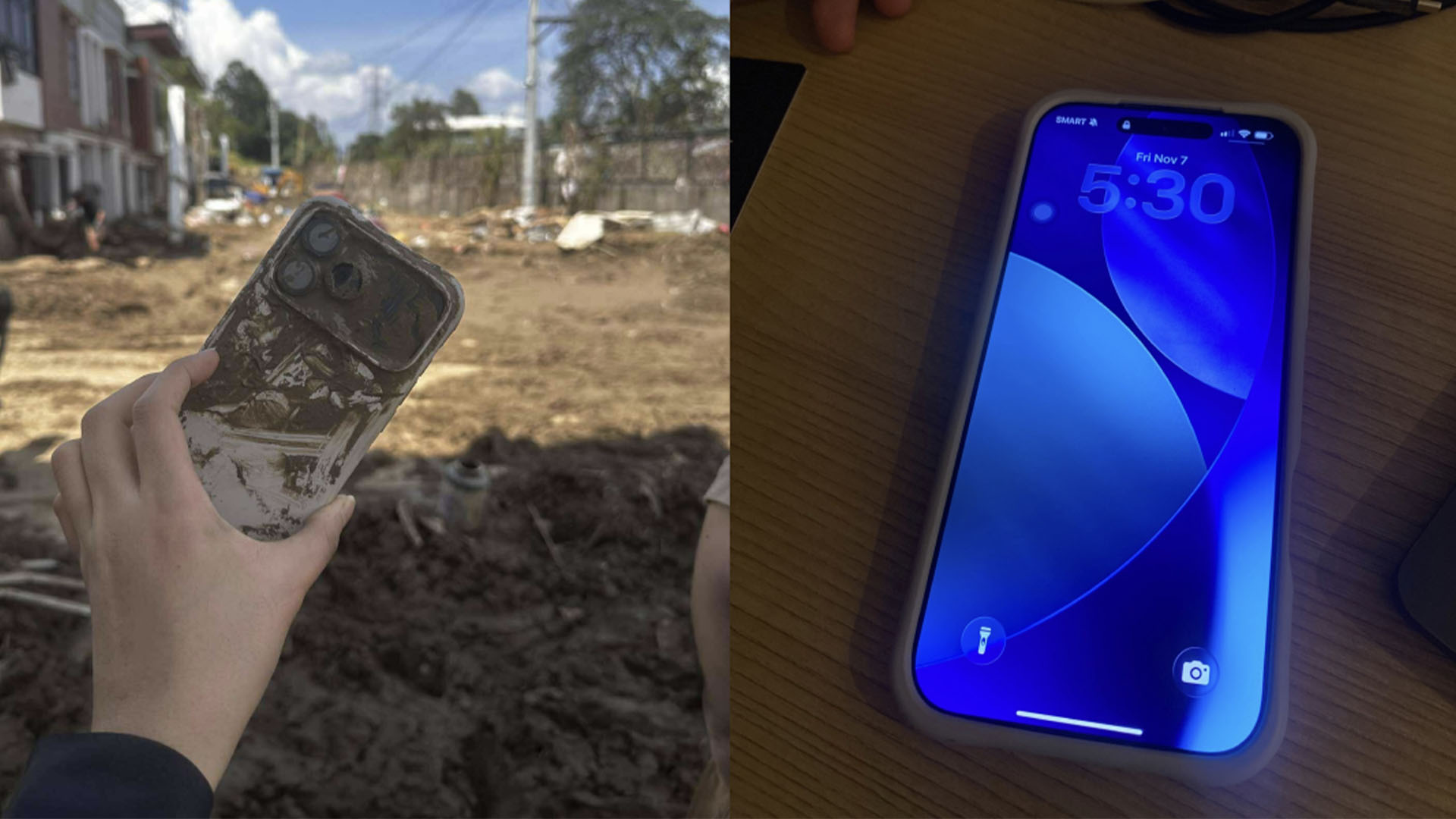
When Typhoon Kalmaegi tore through the Philippines on October 31, Cebu was among the hardest-hit areas. The cyclone dissipated on November 7, but not before claiming lives and leaving millions in damage. Amid the destruction, one survivor’s story stands out: a smartphone buried in mud for days powered back on, and an old laptop became a lifeline.
A Reddit user, known as bricksandcanvas, shared how the storm destroyed his home and swept away his belongings, including what appears to be an iPhone 17 Pro or iPhone 17 Pro Max. After the floodwaters receded, he searched the area and found the phone lodged in thick mud three days later. Despite the ordeal, the device showed no visible damage and started working, a result that likely owes a lot to its IP68 water and dust resistance. He didn’t specify how much battery the phone lost while it was buried, but its survival alone was a shock.
Not everything made it through. His newer M4 MacBook Pro succumbed to water damage, a reminder that laptops generally aren’t water-resistant. What saved the day was an older Intel-powered MacBook he’d kept tucked away. That forgotten machine turned into a crucial tool for getting online and asking for help.
The survivor described walking barefoot for roughly three kilometers to reach a hospital for stitches after cutting his foot in the chaos. With no cash on hand, he pleaded for treatment and promised to return to pay the next day. Afterward, he found a local shop where a kind stranger shared mobile data so he could connect to Wi‑Fi and message his mother to arrange a hotel room and regroup. In a situation where every minute mattered, that aging Intel MacBook provided the only reliable way to communicate.
There’s a broader lesson here. Manufacturers build in features like IP68 protection to give devices a fighting chance against dust and brief immersion, but survival in real-world disasters is never guaranteed. In this case, the iPhone’s durability was impressive, yet the unexpected hero was an old laptop that kept working when it counted most.
If your phone or laptop is ever caught in floodwater or mud, consider these immediate steps:
– Do not charge or power it on if it’s wet. Electricity and moisture can cause permanent damage.
– Gently rinse off mud with clean, fresh water if recommended for the device, then dry it thoroughly. Avoid heat sources.
– Leave the device powered off for at least 24–48 hours to allow moisture to evaporate.
– If possible, remove accessories, eject SIM trays, and dab visible moisture with a lint-free cloth.
– Seek professional inspection, especially for laptops, which lack water resistance.
– Keep older, functional devices as backups, and maintain offline copies of critical documents and emergency contacts.
This account from Cebu is a stark reminder of the power of preparedness. Water-resistant phones can survive more than you might expect, but when disaster strikes, redundancy matters. An overlooked, older computer became a bridge to medical help, family support, and a place to recover—proof that sometimes the most valuable tech is the one you didn’t plan on needing.