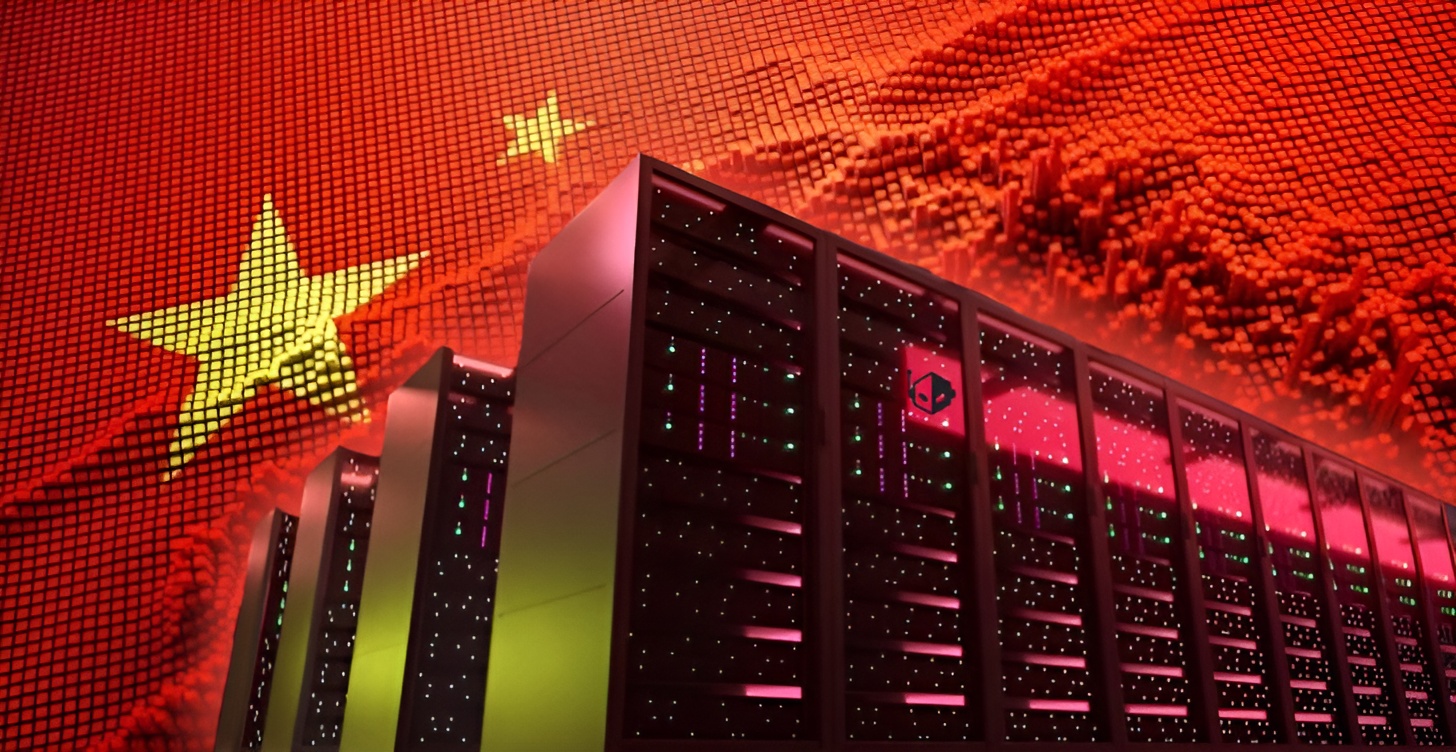
China’s rapid ascent towards establishing a robust artificial intelligence (AI) infrastructure, once regarded as a significant leap forward, appears to have hit a snag. Despite China’s ambitious strides in AI development to establish global dominance, a report indicates a concerning trend: an overwhelming 80% of its AI computing resources are currently sitting idle due to excessive and arguably unnecessary investments.
Amid the ongoing tech rivalry with the United States, China poured billions into AI to ensure it stayed at the forefront of technological advancements. Yet, the recent slowdown in the data center sector suggests this massive injection of funds has not delivered the expected returns. The fading boom in data center construction underscores the financial challenges, leading the industry to reevaluate its economic prospects.
A data center project manager noted that once-prized AI GPUs, especially those from tech giant NVIDIA, are now being sold at significantly reduced prices. This adjustment comes in response to a tepid domestic demand that has left many traders scrambling to offload their inventory. Moreover, AI-related projects are struggling to attract new investments as profitability remains elusive, pressing many companies to reassess their financial strategies.
Further compounding the situation is the launch of AI models like DeepSeek, which has altered the economic landscape by suggesting that AI development might not necessitate substantial financial resources. This shift has prompted investors to liquidate their data center assets at prices significantly lower than the market standard to remain financially viable.
China’s AI enthusiasm initially emerged as a beacon of economic rejuvenation. With dwindling interest in regional real estate and internet sectors, local economic leaders viewed AI infrastructure as the next potential goldmine. Investors, driven by a fear of missing out, rushed to capitalize on short-term gains, hoping to see their stocks soar. However, many now find themselves in a challenging position, confronted by an unexpected slowdown.
China is not alone in revisiting its AI strategies. Globally, tech leaders, including Microsoft, are also recalibrating their infrastructure investments by pulling back on data center leases. While this doesn’t signify the end of the AI era, it does highlight a shifting investor sentiment towards more cautious, strategically-adjusted investments rather than speculative pursuits. This realignment might define the next phase of AI development, balancing ambition with economic prudence.