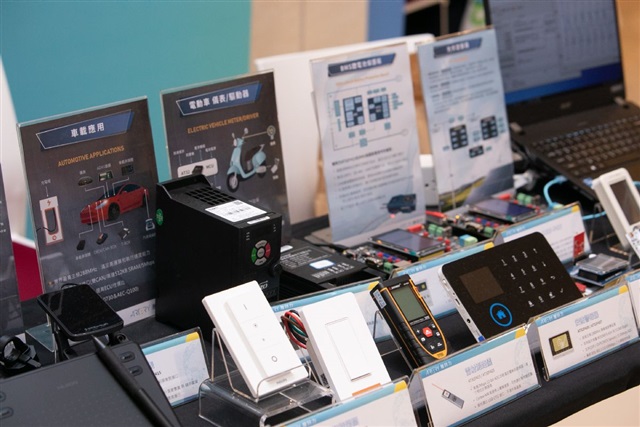
In recent years, China’s MCU (Microcontroller Unit) industry has witnessed significant growth, particularly in the automotive sector. Chinese MCU suppliers have been strategically expanding and developing their presence within this niche market, tapping into the high demand for sophisticated automotive electronics. As vehicles become increasingly reliant on advanced technology for functions ranging from engine management to in-car entertainment, the role of reliable and efficient MCUs has never been more critical.
Chinese suppliers are not just emerging; they are thriving by capitalizing on the domestic market’s vast demand and the government’s supportive policies for local semiconductor advancement. This has allowed them to progressively scale up their operations and begin to stand toe-to-tow with international giants.
While the Chinese players are making inroads in the automotive industry, their Taiwanese counterparts have also been making their own moves to regain market share. The Taiwanese semiconductor industry, noted for its profound foothold in the global electronics supply chain, is bouncing back after facing its set of challenges. By focusing on innovation, quality control, and customer relationships, Taiwanese MCU suppliers are gradually recovering the market share they might have lost to the emerging Chinese firms.
The growth of Chinese MCU suppliers in the automotive industry suggests a competitive yet dynamic market landscape. As the technology continues to evolve, both Chinese and Taiwanese companies are anticipated to continuously adapt and enhance their offerings to meet the demands of the modern automotive industry.
Recent trends such as electric vehicles (EVs), autonomous driving, and connected car ecosystems further push the envelope, requiring more sophisticated and integrated MCUs. These developments present a prime opportunity for Chinese MCU suppliers to showcase their capabilities while also prompting Taiwanese firms to innovate continuously.
Understanding the changing dynamics of the MCU market in the context of the automotive industry can offer unique insights into the broader semiconductor sector. For professionals and businesses navigating this environment, it is vital to keep abreast of the advancements made by Chinese and Taiwanese firms, their market strategies, and the implications of these moves in the face of global semiconductor demand.
Adapting to the shifts in the industry can involve several actionable steps:
1. **Continuous Research and Development**: Investing in R&D to stay ahead of technology curves is essential for both suppliers and automotive manufacturers.
2. **Strategic Partnerships**: Collaborating with industry partners can help companies gain access to new markets and share technological expertise.
3. **Quality and Reliability Focus**: With the increasing complexity of automotive electronics, maintaining high standards for quality and reliability is critical for maintaining competitiveness.
4. **Supply Chain Diversification**: Building a resilient and diversified supply chain can help manufacturers mitigate risks associated with geopolitical tensions and market fluctuations.
5. **Market Adaptation**: Keeping an eye on market trends and being ready to adapt quickly to consumer demands can be the difference between leading and lagging behind in this fast-paced sector.
Companies and stakeholders in the automotive and semiconductor industries can benefit from examining the strategies implemented by both Chinese and Taiwanese MCU suppliers. By doing so, they may find new pathways to growth and innovation in the evolving landscape of automotive technology.