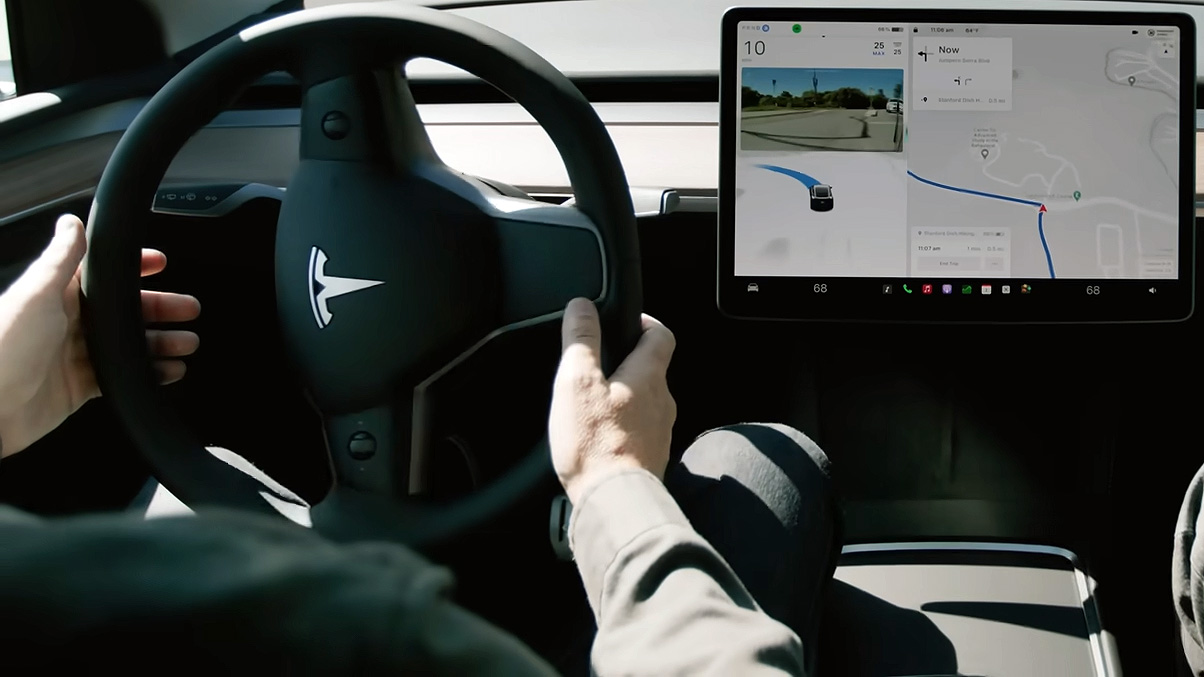
In an evolving landscape of automotive technology, recent developments in autonomous driving legislation and legal cases have become noteworthy. In Canada, particularly in British Columbia, strict new laws targeting autonomous driving have emerged. The region’s Motor Vehicle Act now prohibits the usage of Level 3-5 autonomous driving systems on its roads without explicit authorization. This means that vehicles equipped with such advanced capabilities are not only subject to fines if the systems are used, but they are also forbidden from driving on public roads altogether.
The distinctive attribute of Level 3 autonomous vehicles is the ability to make some driving decisions independently, such as overtaking slower cars, yet they still demand the driver’s attention and ability to intervene if necessary. To sidestep these regulatory constraints before launching its Full Self-Driving (FSD) feature in Canada, Tesla has categorized its Autopilot and FSD functionalities as Level 2 systems, which require more substantial engagement from the driver.
In related news, Tesla has recently settled a lawsuit involving a fatal Autopilot crash to prevent the case from going to trial. The settlement amount remains undisclosed. The case centered around a Model X vehicle, operated by an Apple engineer named Walter Huang, which collided with a highway barrier while on Autopilot. Tesla had initially argued that Huang was distracted, allegedly playing a video game on his phone at the time of the crash. To support this claim, Tesla enlisted Apple to verify Huang’s phone activity.
However, the National Transportation Safety Board (NTSB) in the United States underscored multiple factors contributing to the accident, linking fault not only to the driver but also to Tesla for potentially overstating the capabilities of the Autopilot system and to the California highway authority for not repairing the previously damaged barrier involved in the crash.
The family of Walter Huang contended that at the time of the incident in 2018, there wasn’t a significant amount of detailed information or warnings about the limitations of Tesla’s driver-assist systems available. Electing not to push forward to a trial that would have involved opening statements and cross-examinations—which might have held implications for future cases or regulatory scrutiny—Tesla instead chose to reach a settlement with Huang’s relatives.
While Tesla seems adept at navigating both the advancements in technology and the accompanying legal complexities, the recent legislation in Canada and outcomes of legal disputes represent an ongoing negotiation between innovation, safety, and the necessary oversight in the rapidly changing realm of autonomous driving. Consumers looking to participate in this future of transportation must remain cognizant of their region’s legal landscape and the responsibilities imparted by these emergent technologies.