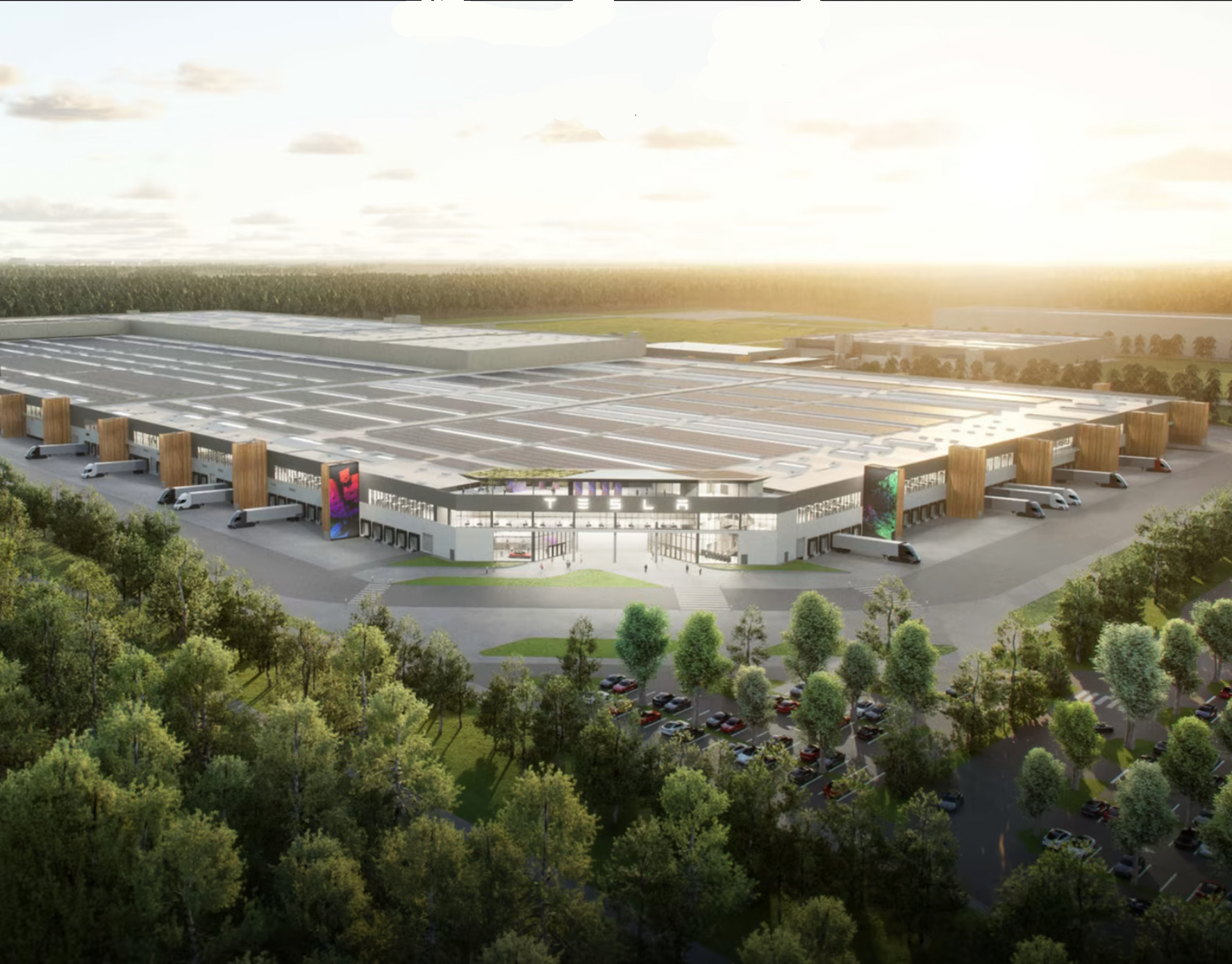
### Tesla Gigafactory’s Proposed Expansion Faces Legal Challenge Despite Approval
Tesla’s Gigafactory in Berlin, which plays a crucial role in the company’s European electric vehicle production, is facing a significant hurdle as it tries to expand. Despite receiving local council support, the expansion plans have come under fire from environmental groups and nearby residents.
The factory’s extension involves clearing a significant portion of the forest, which has not only environmental activists up in arms but also local residents who fear the potential impact on the area’s ecology. The site’s location in a water protection area adds another layer of concern, highlighting the delicate balance between industrial development and environmental conservation.
Public opposition to the expansion was evident in a recent consultation where almost two-thirds of local residents voiced their disapproval. Yet, the Grünheide local council decided to move forward with the project, allowing for the construction of additional logistics spaces and a freight depot.
Attempts at a compromise have emerged, with Tesla proposing to reduce the amount of forest to be cleared from 100 hectares to 50 hectares. Efforts to assuage the environmentalists’ concerns include the promise to preserve 70 hectares of forest and claims that the new freight station will diminish truck traffic—a particular point of contention for the local community.
However, the concessions have not been sufficient to alleviate all concerns. Björn Ellner, the head of the Brandenburg branch of Nabu, a prominent nature conservation organization, has expressed profound disappointment, describing the approval as a ‘bitter blow’ to both democracy and the environment. Nabu is now exploring legal avenues to contest the Gigafactory’s expansion.
Tesla’s ambitions extend beyond the current dispute. The company aims to scale up its annual production from 500,000 to 1,000,000 vehicles. This expansion would inevitably exert more pressure on the region’s infrastructure and resources.
The employment prospects raised by the factory’s growth—currently standing at 12,000 workers—pose significant implications for the local economy as well. The community’s concern for the environment and sustainability must be weighed against the potential economic benefits and job creation.
Tesla, faced with the legal challenge and public resistance, must navigate through complex negotiations and regulatory hurdles. Finding a balance that satisfies both the local community’s environmental concerns and the company’s growth objectives is paramount for the future of the Gigafactory in Berlin. How the situation unfolds will likely serve as a precedent for the intersection of large-scale manufacturing interests and environmental advocacy in Europe.


