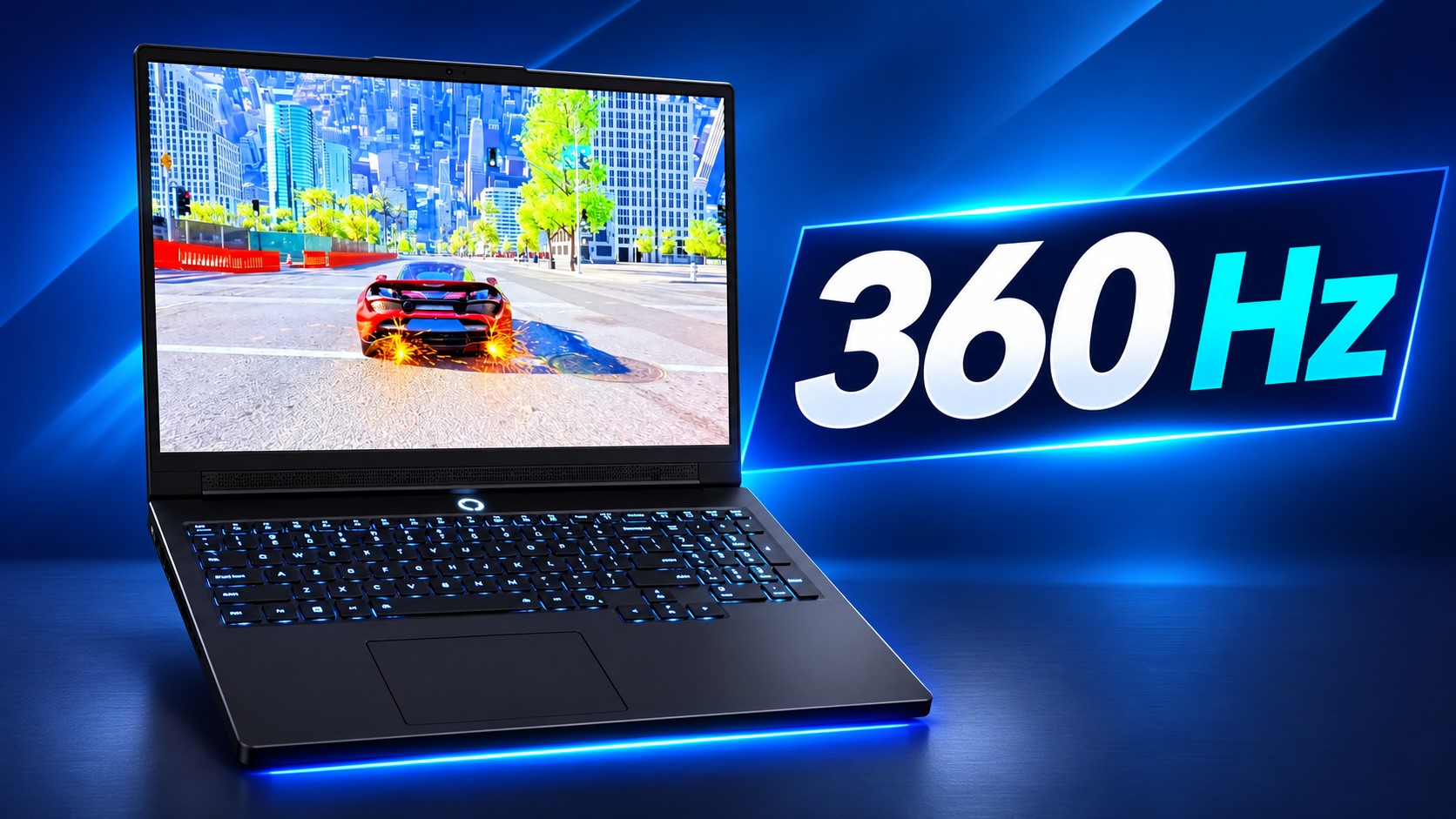
TCL CSOT Shows Off 360Hz 1440p OLED Display on Lenovo Legion Gaming Laptop Prototype
TCL CSOT is pushing gaming laptop displays into faster territory with a new 16-inch OLED panel capable of reaching an impressive 360Hz refresh rate at 1440p resolution. The display was shown on a Lenovo Legion gaming laptop prototype, giving a glimpse at what the next generation of high-end portable gaming machines could offer.
The panel is not a typical OLED screen. It uses inkjet-printed OLED technology, a manufacturing method that sprays liquid organic materials into precise subpixel areas using advanced nozzles. This approach can help lower production costs while also improving text sharpness, which is important for users who want one laptop for both gaming and productivity.
The prototype display features a 2560 x 1440 resolution, often referred to as 2.5K or 1440p, on a 16-inch screen. That combination should deliver a sharper image than standard 1080p gaming laptops while still being more practical for high frame rates than 4K. TCL CSOT also claims the panel can cover 100% of the DCI-P3 color space, making it appealing not only for gamers but also for creators who need vibrant and accurate colors. Peak brightness is said to reach up to 500 nits.
The biggest highlight, however, is the 360Hz refresh rate. For competitive gamers, a higher refresh rate can mean smoother motion, lower perceived input lag, and a more responsive experience in fast-paced titles such as shooters, esports games, and racing games. Moving from 240Hz to 360Hz is a meaningful step for laptop OLED displays, especially at a higher 1440p resolution.
Earlier this year, TCL CSOT supplied a 240Hz inkjet-printed OLED panel for a Lenovo Legion R9000P laptop. The new 360Hz version represents a major upgrade and suggests that OLED gaming laptop panels are advancing quickly.
That said, actually reaching 360 frames per second at 1440p will not be easy for most laptop hardware. Laptop GPUs are generally limited by power and thermal constraints compared with desktop graphics cards. In lighter esports titles, 360fps may be achievable with the right settings, but demanding AAA games will likely fall far below that target. Even so, a 360Hz OLED panel can still improve smoothness and responsiveness across a wide range of frame rates.
The timing also makes sense as the gaming monitor market continues to move toward extremely high refresh rates. Desktop displays have already started pushing far beyond traditional 240Hz and 360Hz limits, while gaming laptops have been slower to catch up, especially with OLED technology. A 360Hz OLED laptop panel could help close that gap and give enthusiasts a more premium portable gaming option.
TCL CSOT says it is working with partners to bring the new panel closer to mass production. However, there is still no confirmed launch date, pricing, or final hardware specification for the Lenovo Legion laptop prototype that was used to demonstrate the display.
If this technology reaches retail laptops soon, it could mark an important moment for high-performance gaming notebooks. A 16-inch 1440p OLED screen with a 360Hz refresh rate, strong color coverage, and inkjet-printed production could become one of the most exciting display upgrades for competitive gamers and laptop enthusiasts alike.


