Taiwan’s Fire-Rescue Robot Dog Passes Extreme Heat Trial, Marking a Major Step for Disaster Response
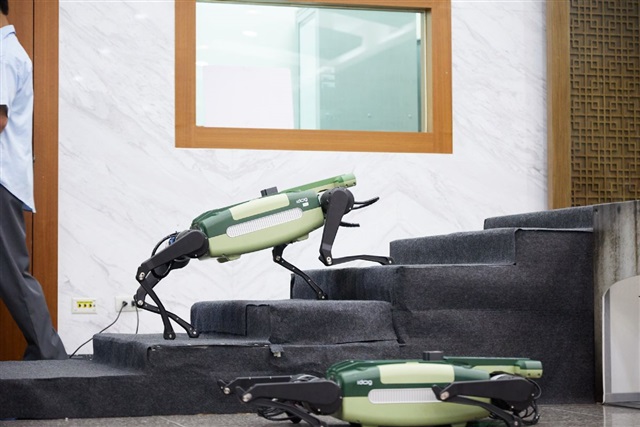
Taiwan has reached a major milestone in emergency robotics with the successful functional verification of its domestically developed quadruped rescue robot. Built to support firefighters in dangerous environments, the robot dog has become the first fire-rescue robot of its kind in the country to pass this important trial.
The test placed the machine in conditions that would be extremely dangerous for human responders, including heavy smoke, intense heat, and ceiling temperatures reaching around 100°C. Despite the harsh environment, the robot was able to move through the scene, proving that it can operate in situations where visibility is low and temperatures are dangerously high.
This achievement is significant because fire scenes are among the most unpredictable and hazardous environments for rescue teams. Smoke can block visibility, heat can rise rapidly, and unstable structures can put firefighters at serious risk. A heat-resistant rescue robot dog can enter these areas first, collect vital information, and help emergency crews make faster and safer decisions.
Unlike traditional wheeled robots, a quadruped robot is designed to walk on four legs, giving it more flexibility when moving across uneven ground, debris, stairs, and tight spaces. This makes it especially useful in disaster zones, burning buildings, collapsed structures, and industrial accident sites where normal equipment may struggle to move.
Taiwan’s rescue robot dog is part of a growing global shift toward using robotics and artificial intelligence in emergency response. As extreme weather, urban fires, and industrial disasters become more complex, technology like this can play a critical role in protecting both victims and first responders.
The successful verification does not mean the robot will immediately replace human rescue teams. Instead, it is expected to become a powerful support tool. Firefighters could use the robot to scout dangerous locations, detect obstacles, assess heat levels, and possibly search for trapped individuals before humans enter the area.
The ability to withstand extreme conditions is one of the most important features for any fire-rescue robot. Electronics, sensors, batteries, and mechanical parts must continue working when exposed to high temperatures and smoke. Passing this functional test shows that Taiwan’s robot platform is moving closer to real-world deployment.
This development also highlights Taiwan’s growing strength in advanced robotics, disaster-response technology, and homegrown engineering. By creating a domestically developed platform, Taiwan can adapt the robot to local rescue needs, train emergency teams more effectively, and continue improving the system based on real firefighting requirements.
As the technology advances, future versions of the robot dog may include improved sensors, stronger heat protection, longer battery life, remote-control upgrades, and more autonomous navigation features. These improvements could make it even more useful in large-scale emergencies where every second matters.
For now, the successful trial is a promising step forward. Taiwan’s fire-rescue robot dog has shown that it can walk into smoke and heat where humans may face life-threatening danger. In the future, this type of rescue robot could become an essential partner for firefighters, helping save lives while reducing the risks faced by emergency responders.