Humanoid Robots Struggle in Their First Real Firefighting Drill at World Robot Games
Humanoid robots have become impressive entertainers. They can dance, run, jump, and even perform backflips. But when it comes to a task that could truly save lives, such as fighting fires and supporting rescue crews, the technology still has a long way to go.
At the second World Humanoid Robot Games, robots faced their first outdoor firefighting and rescue challenge. Unlike last year’s more controlled indoor test, the 2026 event took place inside an actual fire station, giving teams a much more realistic environment. The goal was to see how well humanoid robots could handle emergency-style tasks outside of polished demonstrations and carefully managed lab conditions.
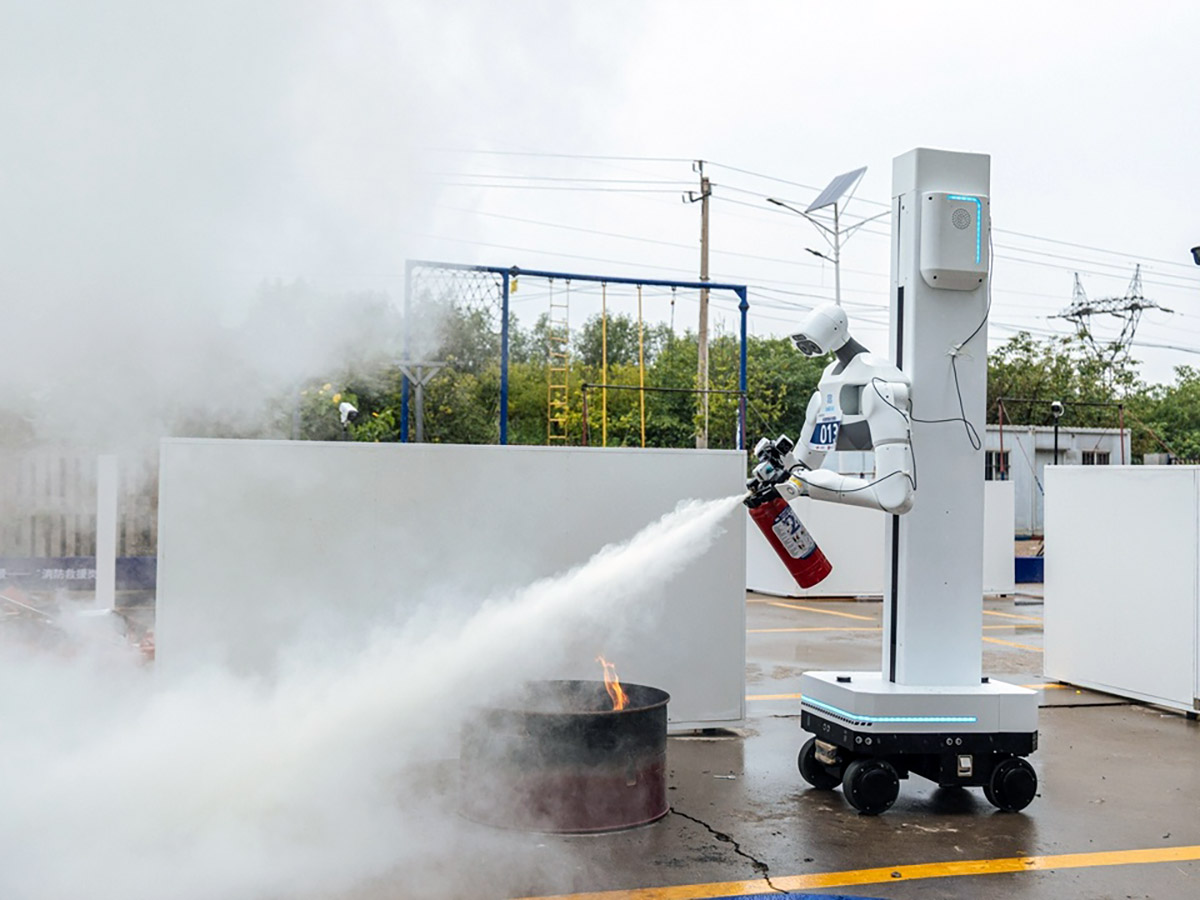
The challenge was demanding. Each robot had 30 minutes to complete several tasks. First, it had to identify a randomly placed hazardous substance using image recognition and report it correctly. Then it needed to locate and shut off three randomly assigned valves. Finally, the robot had to find a fire extinguisher, pick it up, and use it properly to put out a real flame.
Human firefighters were present throughout the test. They lit the fire, monitored the robots’ performance, and judged whether each machine used the extinguisher correctly. This made the event far more practical than a typical robotics showcase, where conditions are often predictable and heavily controlled.
The results showed just how difficult real-world firefighting is for humanoid robots. Outdoor conditions quickly exposed weaknesses in robot vision, movement, balance, and object handling. Rain, changing light, clutter around the fire station, and uneven surroundings made the task much harder than expected.
Out of 12 competing teams on August 16, only three robots completed every stage of the challenge. Most struggled with perception, navigation, or precise hand movements. These are exactly the areas robots must master before they can be trusted in dangerous rescue situations.
One of the strongest performances came from a UniX AI humanoid robot. It managed to complete the full firefighting course within the required time and showed enough precision to finish the task. However, even this successful run revealed the gap between robots and trained human firefighters. The robot moved much more slowly than a person and needed multiple attempts to align its hand properly with the fire extinguisher trigger before it could use it correctly.
The event made one thing clear: humanoid robots are not ready to replace firefighters. Human emergency crews remain far faster, more adaptable, and better at making decisions in unpredictable environments. A firefighter can instantly adjust to smoke, heat, obstacles, faulty equipment, and changing danger levels. Robots still struggle when the environment becomes messy or unpredictable.
Still, the competition was not a failure. In robotics, failed attempts can be extremely valuable. Events like this generate real-world data that teams can use to improve future machines. Every missed valve, dropped movement, delayed reaction, or vision error helps engineers understand what needs to be fixed.
The firefighting challenge will likely help advance robot perception, motion planning, balance control, object recognition, and hand coordination. These improvements are essential if humanoid robots are ever going to assist in disaster response, industrial accidents, chemical leaks, or burning buildings.
For now, the dream of robotic firefighters remains in development. The technology is promising, but the August 16 outdoor rescue challenge showed that impressive robot demos are very different from real emergency work. Dancing and backflipping may look exciting, but identifying hazards, closing valves, and operating a fire extinguisher under pressure is a much tougher test.
The next World Humanoid Robot Games will likely show whether teams can turn this year’s hard lessons into stronger, faster, and more reliable rescue robots. Until then, human firefighters remain unmatched where it matters most: saving lives in dangerous, unpredictable situations.