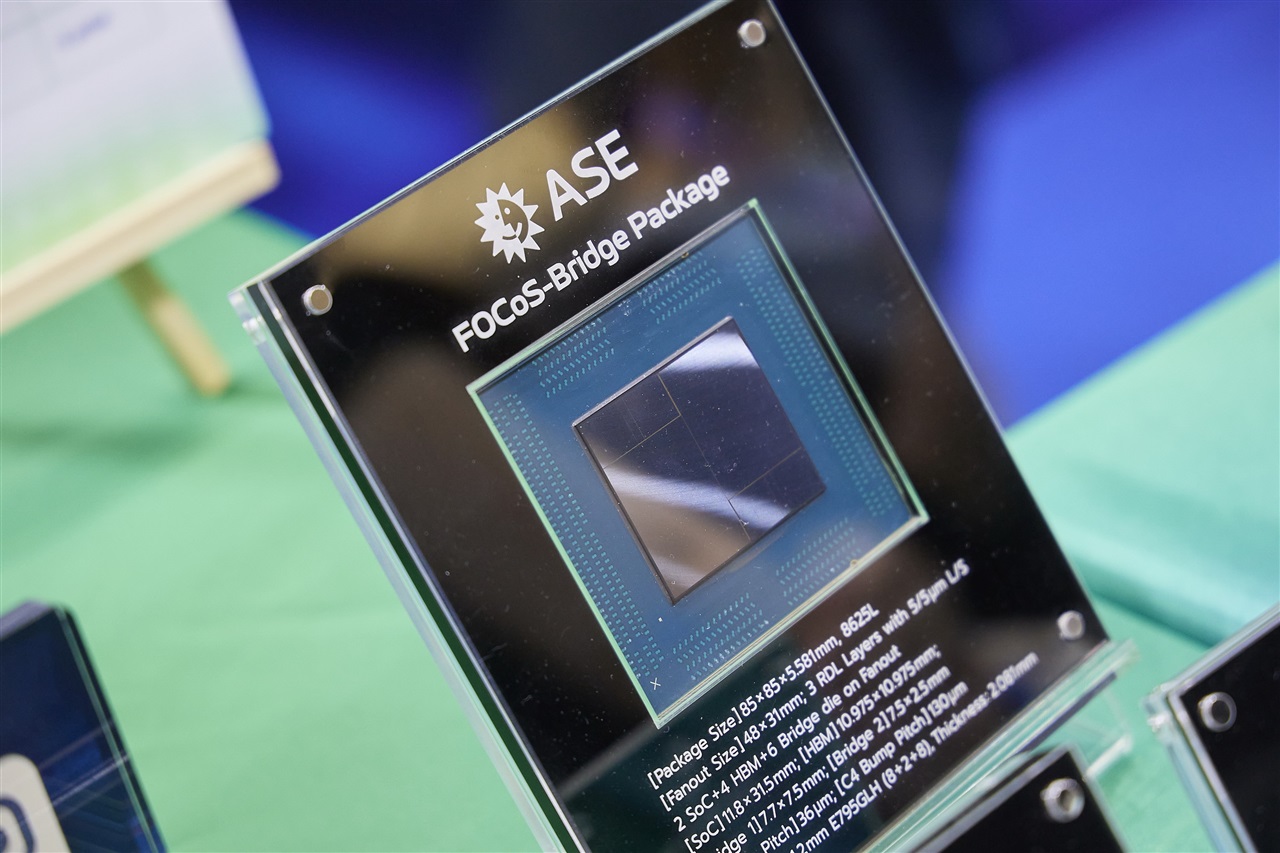
Taiwan’s semiconductor packaging and testing industry is gaining serious momentum in 2026, and the growth story is no longer centered on just one dominant company. Fresh industry figures show that the island’s back-end chip sector is expanding broadly, with many listed firms benefiting from rising demand across artificial intelligence, high-performance computing, consumer electronics, automotive chips, and advanced semiconductor supply chains.
From January through August 2026, 24 publicly listed Taiwanese semiconductor packaging and testing companies generated combined revenue of NT$768.9 billion, or roughly US$24.1 billion. That marks a strong 27.1% increase compared with the same period last year, highlighting the continued strength of Taiwan’s role in the global chip ecosystem.
What makes the data especially notable is that the expansion remains impressive even when the industry’s largest player, ASE Technology Holding, is excluded. The remaining companies still delivered 25.4% year-over-year revenue growth, showing that Taiwan’s back-end semiconductor sector is seeing widespread gains rather than relying on a single market leader.
This broader growth reflects a major shift in the semiconductor industry. As chips become more complex, packaging and testing are becoming increasingly important to performance, reliability, and power efficiency. Advanced packaging is now a key part of chip innovation, especially as AI processors, data center accelerators, and next-generation computing products require tighter integration and more sophisticated manufacturing support.
Taiwan has long been a central hub for semiconductor manufacturing, but its packaging and testing companies are now playing an even larger role in the global supply chain. Demand for back-end semiconductor services continues to rise as chipmakers look for ways to improve performance without relying only on smaller process nodes. This has made packaging technologies such as system-in-package, chiplet integration, and high-density interconnect solutions more valuable than ever.
The strong January-August revenue results also suggest that Taiwan’s semiconductor industry remains resilient despite global market uncertainty. While some parts of the electronics market have experienced uneven demand, sectors tied to AI infrastructure, cloud computing, networking, and automotive electronics continue to drive investment. Packaging and testing firms are well positioned to benefit from this trend because every advanced chip requires precise assembly, validation, and reliability checks before reaching customers.
The growth outside ASE Technology Holding is particularly important for investors and industry watchers. It signals a healthier and more diversified market, where mid-sized and smaller back-end semiconductor companies are also capturing rising demand. This could lead to more capacity expansion, technology upgrades, and stronger competition within Taiwan’s semiconductor supply chain.
As the global appetite for advanced chips keeps rising, Taiwan’s packaging and testing sector is likely to remain a key area to watch. The latest revenue figures show that growth is not just deepening at the top, but spreading across the industry. For the semiconductor market, that means Taiwan’s back-end chip companies are becoming an even more critical force behind the next wave of electronics, AI systems, and high-performance computing products.