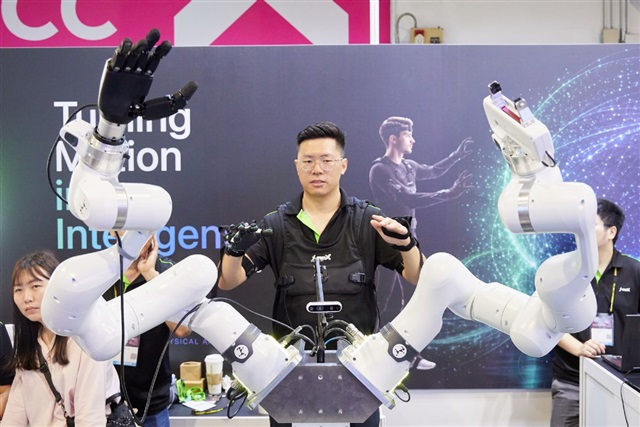
Computex 2026 wrapped up last week with one theme standing out across the show floor: physical AI. While artificial intelligence has often been discussed in terms of chatbots, cloud services, and software tools, this year’s event made it clear that the next major battleground may be the physical world, where AI systems interact with people, objects, factories, homes, and machines in real time.
Robots became one of the most visible ways to show what physical AI can do. From industrial automation to service robots and intelligent machines designed for real-world environments, robotics offered a practical glimpse into how AI could move beyond screens and data centers. Instead of simply processing information, these systems are being built to sense, decide, move, and respond.
However, Computex 2026 had a different tone compared with consumer-focused technology events where robot brands often compete to display the most eye-catching hardware. In Taipei, the focus was less about finished robot products and more about the supply chain behind them. Taiwanese companies appeared to be positioning themselves as key enablers of the physical AI era, providing the components, computing platforms, sensors, servers, chips, and manufacturing expertise needed to power the next generation of intelligent machines.
This shift is important because physical AI requires much more than advanced software. Robots and AI-powered machines need high-performance computing, low-latency processing, reliable connectivity, energy-efficient chips, precision components, and strong integration between hardware and software. Taiwan’s technology ecosystem is already deeply connected to many of these areas, making local suppliers well placed to support the growing robotics race.
The rise of physical AI also reflects a broader change in how the tech industry views artificial intelligence. Generative AI has dominated headlines in recent years, but companies are now looking at how AI can be applied in factories, warehouses, hospitals, retail spaces, transportation systems, and smart cities. In these environments, AI must understand the physical world and act safely within it. That creates new opportunities for robotics platforms and the suppliers that build the foundation beneath them.
At Computex 2026, the message was clear: the future of AI will not only be virtual. It will be embedded in machines that move, work, assist, and automate tasks in the real world. For Taiwan’s suppliers, this could open a major growth opportunity as global demand increases for robotics hardware, AI computing platforms, edge AI systems, and advanced automation technology.
As the robotics race accelerates, the companies that can deliver reliable physical AI infrastructure may become just as important as the brands selling finished robots. Computex 2026 showed that Taiwan is preparing for that future, not by chasing flashy demonstrations alone, but by building the essential technology stack that could power the next wave of intelligent machines.


