### Establishing Taiwan’s First Liquid Cooling Data Center: A Leap into Efficient Computing
The rise of Artificial Intelligence (AI) and High-Performance Computing (HPC) marks a significant milestone in technological advancements, pushing the boundaries of what machines can accomplish. As these technologies continue to scale, there’s an ever-increasing demand for higher performance levels. This surge, however, comes with the challenge of managing high energy consumption—a critical issue that industry leaders are eager to address.
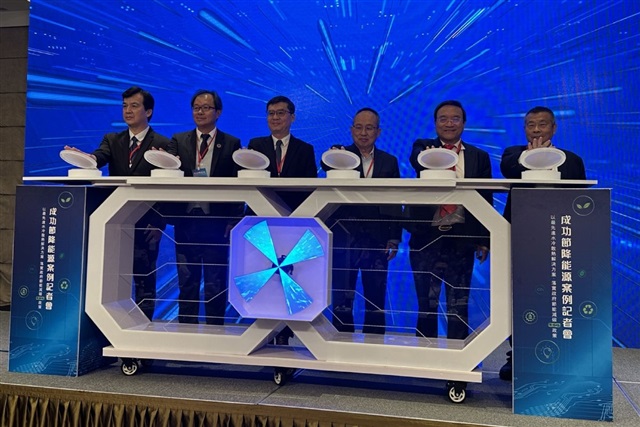
In a groundbreaking development, a collaboration has been forged to create Taiwan’s first liquid cooling data center—a solution that promises to tackle the heat management problems associated with heavy computing tasks. Liquid cooling, considered to be a modern cooling methodology, harnesses the superior heat-absorbing properties of liquids to dissipate the heat generated by servers more effectively than traditional air cooling systems.
This initiative marks a significant progress in the data center industry, as traditional methods of cooling have become less efficient with the escalating heat output of the latest computing hardware. Liquid cooling emerges as a more energy-efficient alternative, providing numerous benefits over the conventional systems, such as lower energy costs, reduced carbon footprint, improved server performance, and a quieter operating environment.
#### Advantages of Liquid Cooling in Data Centers
– **Enhanced Thermal Management**: Liquids have a higher thermal conductivity than air, which means they can carry away heat more effectively. This allows for better temperature control and the potential to pack more powerful hardware into the same space without the risk of overheating.
– **Energy Efficiency**: Liquid cooling systems can reduce the amount of energy required to keep the servers at an optimal temperature. This is not only cost-effective but also beneficial to the environment.
– **Dependability**: With improved temperature control, the likelihood of hardware failures due to overheating decreases, resulting in a more reliable data center operation.
– **Space-Saving Design**: Liquid cooling can help in reducing the space required for cooling systems, allowing for a more compact data center design.
#### Steps to Implement Liquid Cooling in Data Centers
1. **Conduct a Feasibility Assessment**: Evaluate your current infrastructure to determine if liquid cooling is a viable option. Consider factors such as existing cooling solutions, space, budget, and the ability to retrofit or if a new build is necessary.
2. **Choose the Right Cooling Solution**: There are different types of liquid cooling solutions, such as direct-to-chip, immersion, or rear-door heat exchangers. Research and select the one that best fits your needs.
3. **Plan for Integration**: Developing a detailed plan for how the liquid cooling system will be integrated within your existing data center is crucial. This should include considerations for potential downtime, hardware compatibility, and maintenance.
4. **Test the System**: Before full-scale implementation, conduct thorough testing to ensure that the chosen cooling solution works as expected in your specific environment.
5. **Monitor and Optimize**: Once the system is in place, continuous monitoring is necessary to ensure optimal performance. Look out for any potential issues and make adjustments as required.
6. **Training and Safety Measures**: Ensure that your staff is well-trained to handle the new cooling system. Additionally, implementing safety protocols is essential to manage any risks associated with liquid cooling solutions.
#### Trends in Liquid Cooling
Recently, there’s been a noticeable shift towards more sustainable and efficient data center operations, with liquid cooling being at the forefront. Innovations in this space are continuously evolving, with newer and more effective coolants coming into play, as well as advanced system designs that integrate seamlessly with existing technologies.
By adopting liquid cooling, organizations not only ensure that they keep up with the intense computing demands of modern AI and HPC applications but also take a step forward in responsible, environmentally-friendly business practices.
In conclusion, as we witness AI and HPC shaping the future, the adaptation of energy-efficient technologies like liquid cooling in data centers will become increasingly crucial. Taiwan’s initiative in establishing its first liquid cooling data center serves as a trailblazer for others to follow, aligning high-performance computing with sustainable development.