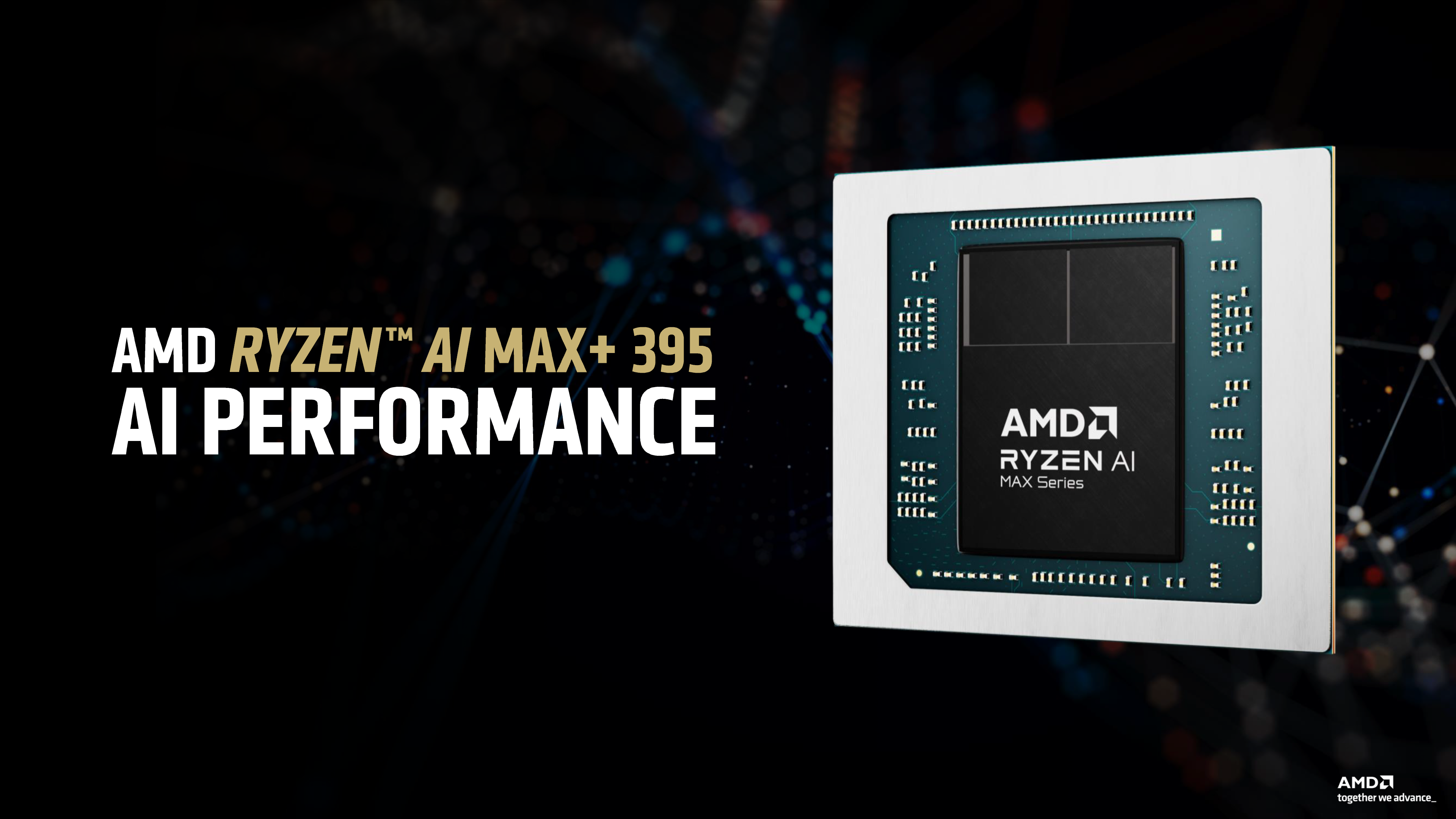
AMD’s Strix Halo processors are generating buzz as they may be making their way from mobile devices to desktop PCs, where they could redefine compact computing with their impressive integrated graphics capabilities. As the first APUs to offer performance levels comparable to modern budget GPUs, Strix Halo is definitely catching the attention of tech enthusiasts.
These processors are designed differently from the traditional Strix Point Zen 5 components, boasting up to 40 Compute Units for the integrated graphics on their I/O die. While initially made for mobile platforms, the Strix Halo can’t simply transition to the typical AM5 socket used in desktops without some innovative adaptations.
Previous moves in the industry, like the Minisforum’s introduction of the BD770i and BD790i, which allowed mobile chips such as the Ryzen 7745HX and 7945HX to be used on desktop setups, provide an encouraging outlook. Recently, in an interview, ASUS China’s General Manager, Tony, expressed interest in bringing Strix Halo to desktop configurations, to which AMD’s CEO, Dr. Lisa Su, appeared receptive.
There is speculation that this transition might manifest in modular systems similar to the already-introduced Framework desktops built around the Ryzen AI 300 series. If this pathway is chosen, it could lead to desktops equipped with high-performance mobile APUs eliminating the need for discrete GPUs for many tasks. Systems could potentially maintain upgradeability in areas like RAM and storage, offering flexibility akin to traditional desktops in a more compact form.
Admittedly, there are trade-offs compared to standard desktop setups, particularly concerning processor and cooling upgrades. Nonetheless, the potential of a compact desktop PC capable of handling modern gaming demands without exorbitant power consumption is captivating. This shift could incentivize OEMs to develop smaller yet powerful mini-PCs, meeting the needs of those seeking portable and efficient solutions without sacrificing graphics performance.
While AMD has not officially announced plans to bring Strix Halo to desktops, the possibilities are exciting and could reshape how we view desktop computing. Enthusiasts and casual users alike could benefit from a new era of compact, high-performance desktops that marry the energy efficiency of mobile APUs with the versatility of desktop systems. More news from AMD is eagerly awaited as this evolution could ignite a significant shift in desktop computing.


