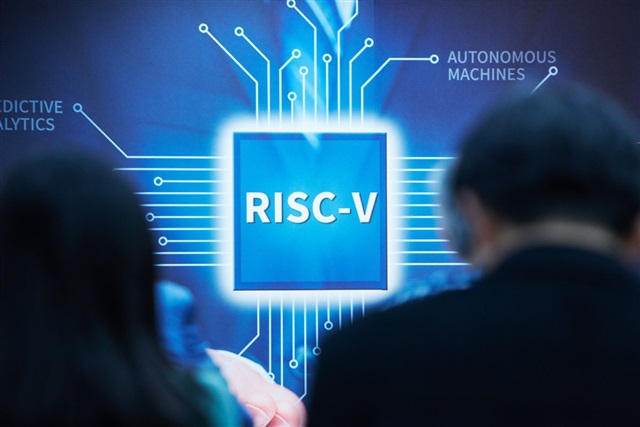
China’s push for homegrown computing is accelerating, and RISC-V is stepping into the spotlight. After years of thriving in edge and embedded devices, the open instruction set architecture is now moving into data-center workloads. Leading the charge, StarFive Technology has introduced Lion Rock, the company’s first RISC-V–based data-center management processor and one of the earliest large-scale commercial deployments of RISC-V in China’s server market.
This shift reflects a broader strategy among AI server vendors in China to reduce reliance on external IP and build self-developed architectures tailored to local needs. By adopting RISC-V, manufacturers gain the flexibility to customize silicon, optimize for specific AI and cloud scenarios, and strengthen supply chain resilience—key advantages in a rapidly evolving infrastructure landscape.
As a data-center management processor, Lion Rock is designed for the critical control plane that keeps servers running reliably. Processors in this class typically handle tasks such as power and thermal management, health monitoring, telemetry, secure boot, and remote provisioning—capabilities that underpin uptime and fleet-wide orchestration in hyperscale environments. Bringing these functions to RISC-V signals growing confidence in the ecosystem’s maturity and readiness for production deployment.
The significance goes beyond a single chip. Moving RISC-V into the data center opens the door to broader adoption across server roles, from management and I/O control to acceleration and specialized compute. For AI workloads, where efficiency, cost control, and rapid iteration matter, an open ISA allows vendors to fine-tune designs without licensing constraints.
There are challenges ahead. Enterprise-grade validation, software toolchain depth, and interoperability with existing platforms require continued investment. But momentum is building as more developers, firmware vendors, and cloud operators standardize around open frameworks and contribute to upstream projects that strengthen the stack.
For data-center operators and OEMs, the emergence of products like Lion Rock offers a preview of a more diversified server silicon landscape—one where customizable RISC-V solutions coexist with established architectures. Expect ongoing progress in security features, power efficiency, and manageability as the ecosystem scales.
In short, StarFive’s Lion Rock marks a milestone: RISC-V is no longer confined to edge devices. It is moving into the heart of server operations in China, aligning with the nation’s broader goals for technological independence while expanding the global footprint of open computing.