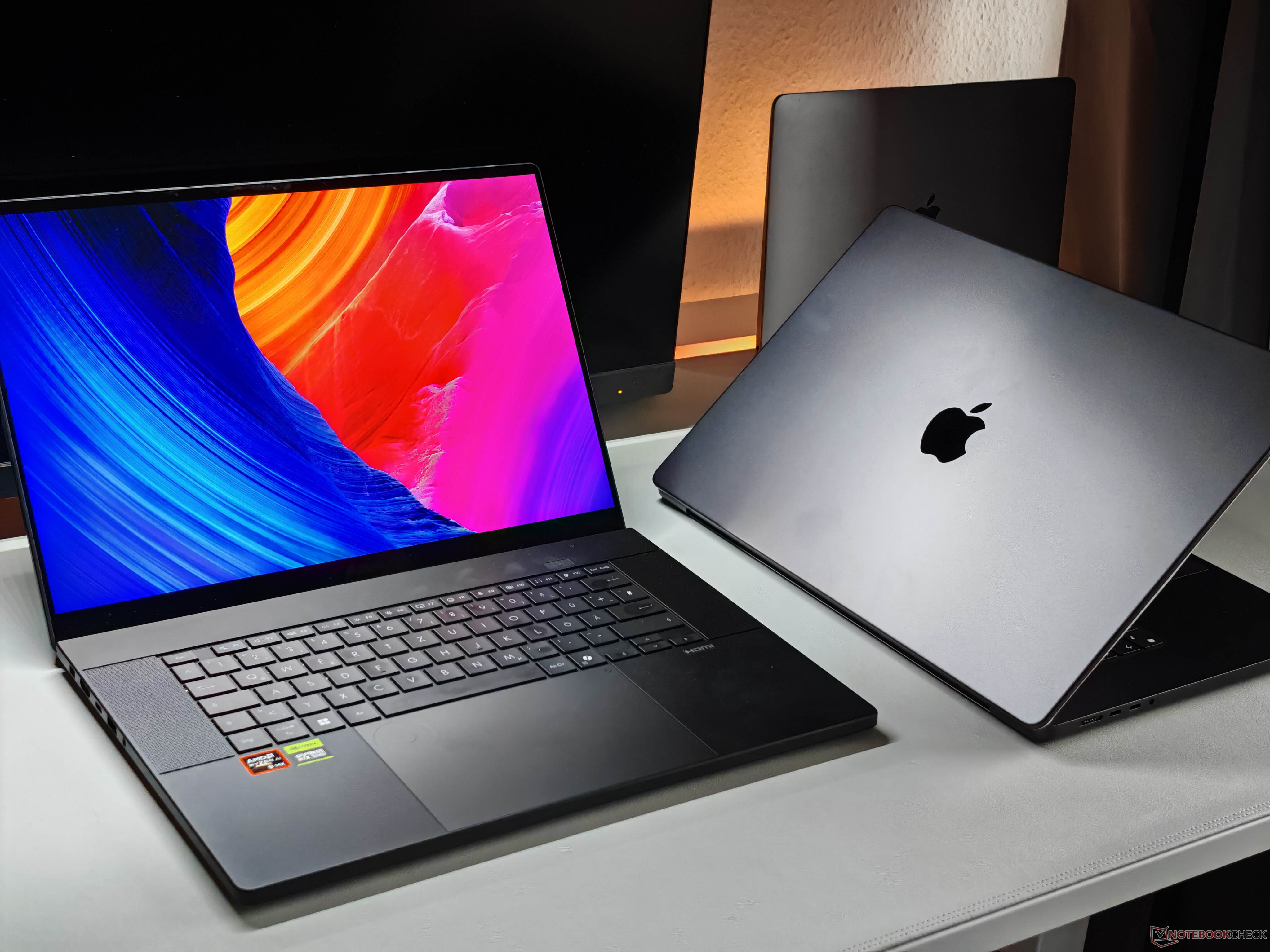
Apple is sticking with Mini-LED displays on its MacBook Pro lineup, and for good reason. These panels deliver a wide P3 color gamut along with a smooth 120Hz refresh rate, making them a strong choice for creators, editors, and anyone who cares about motion clarity and accurate color.
For a long time, many competing laptops leaned on OLED screens but still couldn’t match the MacBook Pro when it came to peak brightness. That gap is finally starting to close thanks to a new generation of tandem OLED panels. This newer OLED approach stacks two illumination layers on top of each other, helping push brightness higher than traditional OLED designs. One of the early laptops to feature this technology is the Asus ProArt P16, signaling that high-end Windows laptops are getting more serious about competing in the premium multimedia and creative space.
When you compare brightness head-to-head, both the MacBook Pro’s Mini-LED and the ProArt P16’s tandem OLED can hit up to 1,600 nits in HDR. That’s excellent for HDR video, highlight detail, and punchy contrast in supported content. The more noticeable difference shows up in everyday SDR use. Apple holds a clear advantage here: with the ambient light sensor enabled, the MacBook Pro can reach up to 1,000 nits in SDR. Turn that sensor off, and brightness drops to around 600 nits, which is much closer to what the Asus delivers in SDR.
HDR performance isn’t just about the panel, though—it’s also about how the operating system handles HDR content. This is where macOS still stands out. It can automatically detect HDR playback and boost brightness intelligently whether the content is playing in a window or fullscreen, and it can keep color profiles working as expected. On Windows laptops, HDR is typically a manual switch you have to enable yourself, and that change can also sidestep color profiles, which can be a frustrating drawback for color-sensitive work.
There is one downside worth noting on the MacBook Pro: brightness gets limited when using sRGB mode, which can feel restrictive if you’re working in that color space and still want maximum brightness.
Overall, the latest tandem OLED laptops are finally catching up in raw HDR brightness, but Apple still leads in SDR brightness flexibility and especially in HDR usability thanks to macOS’s more seamless, creator-friendly handling of HDR content.