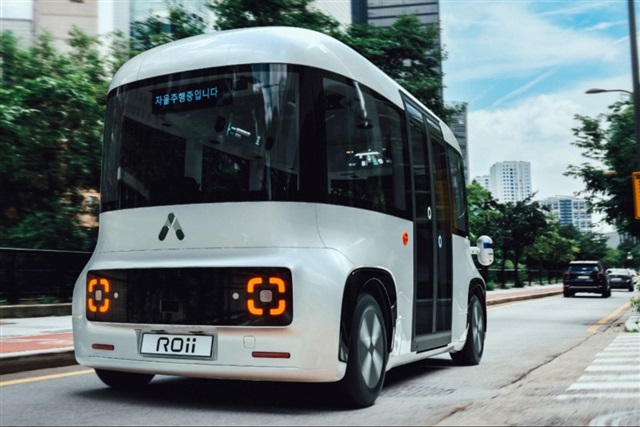
South Korea’s A2Z Bets on Autonomous Buses as Robotaxi Race Accelerates
As autonomous vehicles move from testing grounds to real city streets, the global race is becoming more intense. In the United States, Waymo continues expanding its robotaxi services, while Baidu’s Apollo Go is gaining momentum in China. Their progress is putting pressure on other countries to define their own path in the future of self-driving mobility.
For South Korea, that path may not begin with robotaxis. Instead, local autonomous-driving company A2Z is focusing on a more practical and potentially scalable market: autonomous buses.
The strategy reflects a growing belief that self-driving buses could become one of the most realistic early uses for autonomous vehicle technology. Unlike robotaxis, which must handle countless unpredictable passenger routes, autonomous buses can operate on fixed or carefully managed routes. This makes them easier to monitor, regulate, and improve over time.
South Korea already has strong foundations for smart mobility. The country is known for advanced telecommunications, dense urban infrastructure, and a high level of public interest in new transport technology. These strengths could give local companies an advantage as they develop autonomous public transportation systems.
A2Z’s focus on autonomous buses comes at a critical moment. While major players overseas are building large robotaxi networks, South Korean companies need to prove they can compete in a fast-changing industry. By targeting buses, A2Z may be choosing a route that fits the country’s urban needs and regulatory environment more closely than private ride-hailing services.
Autonomous buses could play an important role in areas where public transport is limited, such as suburban communities, industrial zones, university campuses, airports, and planned smart cities. They may also help reduce driver shortages, improve transportation efficiency, and support safer mobility services when deployed under controlled conditions.
The challenge, however, remains significant. Self-driving vehicles still need to prove they can operate safely in complex traffic environments. Weather, road design, pedestrian behavior, and unexpected obstacles all create difficulties for autonomous systems. Public trust will also be essential, especially for vehicles carrying multiple passengers at once.
Even so, the autonomous bus market may offer South Korea a valuable opportunity. Instead of directly copying the robotaxi model seen in the US and China, companies like A2Z can focus on public transportation, where fixed routes and predictable operations may allow faster real-world adoption.
As the autonomous vehicle industry enters its next phase, South Korea’s success may depend on choosing the right starting point. A2Z’s bet on self-driving buses suggests that the country’s future in autonomous mobility could be built not around private robotaxis, but around smarter, safer, and more efficient public transport.


