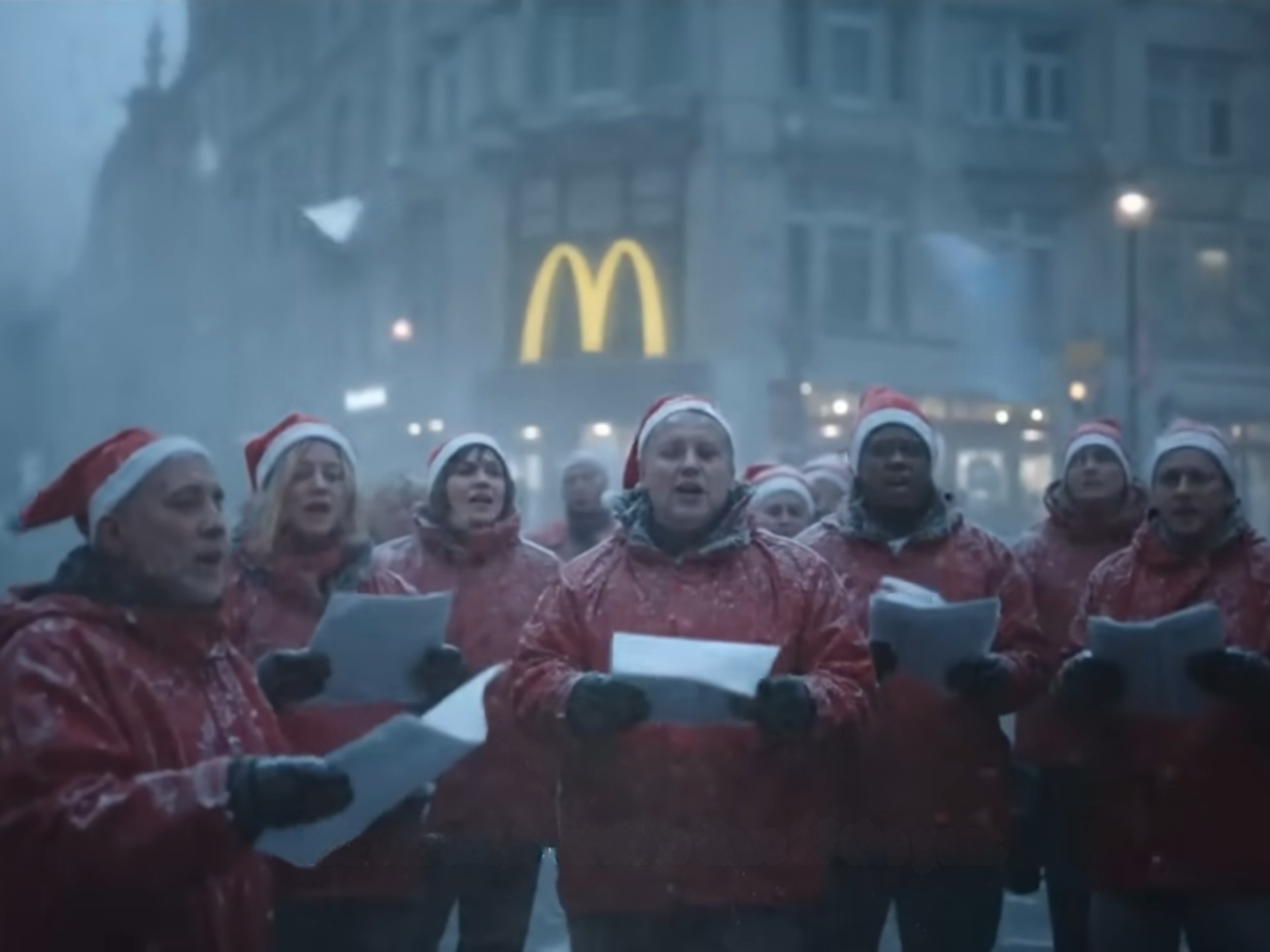
McDonald’s is feeling the heat after releasing a Christmas commercial created entirely with artificial intelligence—an experiment meant to be a tongue-in-cheek take on holiday stress that many viewers instead called unsettling, cold, and “soulless.”
The ad was designed to exaggerate the frantic build-up to Christmas. It shows a bleak, chaotic seasonal rush: Christmas trees on fire, shoppers arguing, gloomy winter weather, and stressed faces everywhere. Over the top of it all plays a warped holiday tune, reimagined as “The Most Terrible Time of the Year.” The concept aims to flip the traditional “holiday magic” formula on its head—painting the outside world as intense and overwhelming, while positioning McDonald’s as a comforting escape and a small moment of calm.
But the execution quickly became the story.
According to widespread reactions online, the commercial’s AI-generated look made it feel more like a nightmare sequence than a festive seasonal spot. Viewers pointed to oddly distorted bodies, empty expressions, and an eerie atmosphere that made the humor hard to find. Many described the experience using the phrase “uncanny valley,” a term often used when artificial humans look almost real—but not quite—triggering discomfort rather than connection.
The backlash grew quickly on YouTube, where responses leaned heavily toward mockery and frustration. McDonald’s initially disabled comments, then later set the video to private. While the official upload is no longer publicly accessible, copies of the ad still circulate on other channels.
Critics didn’t just dislike the visuals. A frequent theme in the pushback was that the commercial felt emotionally hollow, with viewers saying it lacked warmth, genuine holiday spirit, and the human touch people expect from Christmas advertising. The reaction also reflects a broader debate as fully AI-generated commercials become more common: audiences are increasingly questioning whether content made entirely by algorithms can deliver real emotion, authenticity, or relatable storytelling—especially during a season built on nostalgia and sentiment.
The controversy arrives at a moment when AI-made entertainment is drawing sharper scrutiny across platforms. Even other fully AI-generated productions currently streaming on YouTube have been met with similar negativity, suggesting this isn’t just about one brand or one ad, but about how viewers respond when “automation” becomes visible in the final creative product.
For McDonald’s, the message may have been about finding comfort amid holiday chaos. For many viewers, the overwhelming takeaway was different: when a Christmas ad looks and feels artificial, the audience notices immediately—and they don’t always forgive it.