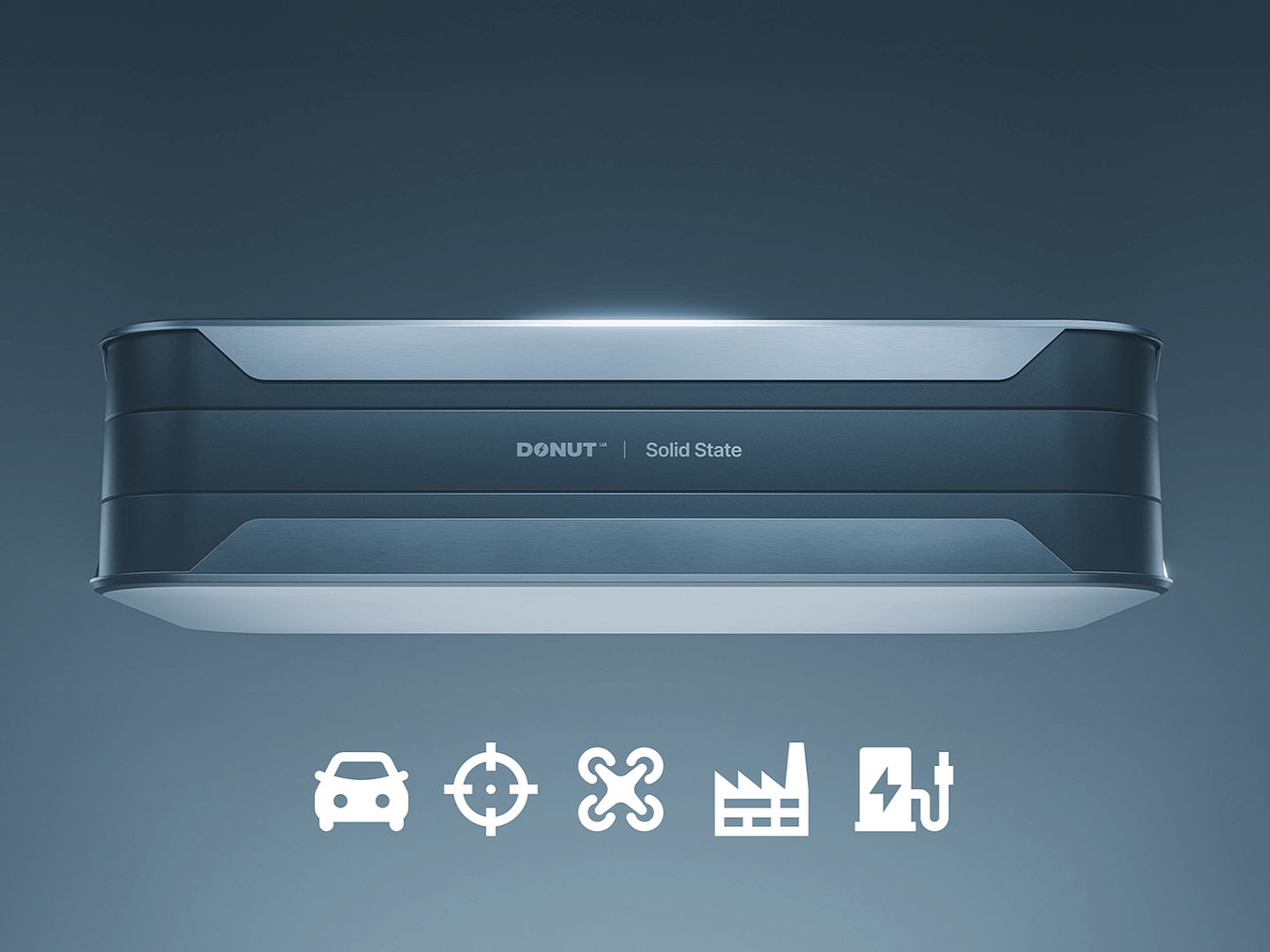
A Finnish startup called Donut Lab is making waves with what it calls the “Donut Battery,” a new solid-state battery it says is nearly ready to redefine energy storage across a wide range of products. The company is positioning its technology as a breakthrough not only for electric vehicles, but also for devices that need reliable power in demanding environments.
That’s a bold move in a battery market already packed with intense competition and rapid shifts in technology. Manufacturers are constantly adjusting to changing raw material costs and supply pressures, especially around lithium, which remains a core ingredient in most modern batteries. These price swings and geopolitical factors keep pushing the industry to look for alternatives and next-generation designs that are safer, cheaper, and easier to scale.
Solid-state batteries are widely seen as one of the most promising “next big things” in this search. They typically replace the liquid electrolyte found in conventional lithium-ion cells with a solid material, aiming to improve safety and performance. The catch: while many major players—such as large automotive brands and electronics leaders—have spent years researching solid-state designs, most are still working through real-world obstacles tied to manufacturing, longevity, cost, and consistent high-speed charging.
Donut Lab claims it has already solved those problems and is ready to move into mass production. According to the company’s own product description, its solid-state battery is designed to deliver a mix of performance and practicality that sounds almost too good to be true.
Here are the headline claims Donut Lab is making about the Donut Battery:
– Energy density of 400 Wh/kg
– Service life exceeding 100,000 charging cycles
– Lower cost than today’s lithium-ion batteries
– Fast charging to 80% in about 5 minutes
– No fire risk, thanks to nonflammable materials
– Environmentally friendly materials sourced from widely available supply chains
If these specifications hold up, they would represent a major leap forward. High energy density could mean longer range or smaller, lighter battery packs. Extremely fast charging would address one of the biggest pain points for EV adoption and intensive device use. And a cycle life measured in the tens of thousands—let alone over 100,000—would dramatically change expectations for battery replacement, long-term ownership costs, and sustainability.
However, industry voices are already pushing back on how realistic these promises are. One battery executive, Yang Hongxin of Chinese manufacturer Svolt Energy, has reportedly dismissed the concept as something that doesn’t exist anywhere in the world today—and therefore isn’t something that should be ready for mass production. That skepticism reflects a broader industry reality: performance gains often come with trade-offs, and it’s rare for any battery technology to improve every major metric at once while also being cheaper and easier to manufacture.
Another key detail fueling doubts is the current lack of independent test certificates or third-party validation. In battery development, outside verification is critical—especially when a company is advertising numbers that would outperform many established benchmarks in multiple categories at the same time.
That said, the wait for real-world answers may not be long. Donut Lab reportedly expects the first Donut Battery units to be delivered in the first quarter of 2026. If that timeline holds, independent testing, teardown analysis, and performance verification should quickly reveal whether this solid-state battery is a genuine breakthrough—or simply an ambitious marketing story ahead of the science and manufacturing reality.
Until then, Donut Lab’s announcement sits at the center of a familiar tech tension: the promise of a “miracle battery” versus the hard constraints of chemistry, scaling, and proof.