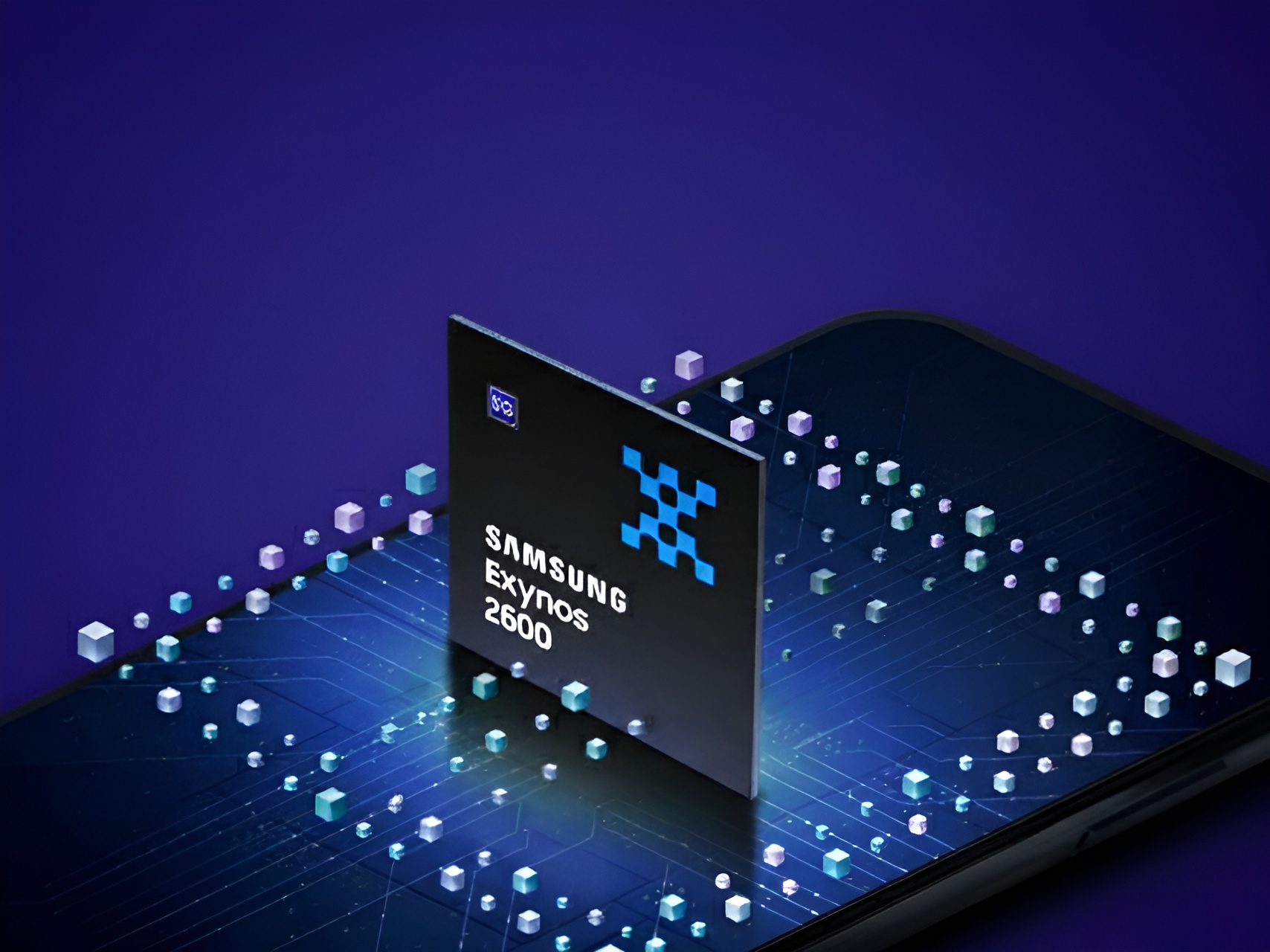
Samsung’s next flagship family is shaping up to be a tale of two chips. Multiple industry reports indicate the Galaxy S26 series will return to a split silicon strategy, with Qualcomm’s Snapdragon 8 Elite Gen 5 powering roughly three-quarters of all units and Samsung’s in-house Exynos 2600 filling the remaining quarter.
Here’s how the split is expected to look across models and regions:
– Snapdragon 8 Elite Gen 5: Standard for the Galaxy S26 Ultra worldwide; also used in many Galaxy S26 and S26+ variants, including models sold in the US and EU.
– Exynos 2600: Deployed primarily in select Galaxy S26 and S26+ versions across South Korea, China, and a range of emerging markets.
This 75/25 balance lines up with recent guidance from Qualcomm leadership. On the previous generation, the Galaxy S25 lineup used Qualcomm across the board. For the S26 family, Qualcomm’s management reiterated a planning assumption of about 75 percent share.
Under the hood, Samsung’s Exynos 2600 is notable for being fabbed on the company’s 2nm GAA process. That matters because the earlier Exynos 2500—built on a 3nm node—reportedly faced low yields and stability setbacks, which curtailed its reach. The 2600, by contrast, is said to have stabilized yields and delivered sizable gains in efficiency and thermal behavior, with improvements on the order of roughly 30 percent. It also features a stronger NPU to boost on-device AI performance, a core focus for the S26 generation.
For buyers, the practical impact will hinge on region:
– If you’re in the US or EU, expect Snapdragon inside the S26 Ultra and likely in most S26 and S26+ units.
– In South Korea, China, and several developing markets, the S26 and S26+ are expected to lean on Exynos 2600.
– The S26 Ultra is slated to be Snapdragon-only, regardless of market.
There’s also a big-money angle. Each Snapdragon 8 Elite Gen 5 reportedly costs Samsung around 250 dollars per unit. If the Galaxy S26 Ultra sells near 16 million units as projected, that alone would translate to roughly 4 billion dollars in payments to Qualcomm for the Ultra model’s processors.
Bottom line: Samsung appears set to balance its cutting-edge in-house 2nm Exynos 2600 with Qualcomm’s flagship silicon, aiming for broad performance consistency while sharpening AI, power efficiency, and thermals. The final regional breakdown could shift as launch nears, but the three-to-one split in favor of Snapdragon looks like the baseline plan for the Galaxy S26 series.